The Magical Tarot of the Golden Dawn
 76
76

The Magical Tarot of the Golden Dawn



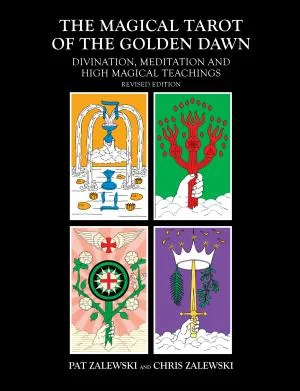
Chris and Pat Zalewski’s *The Magical Tarot of the Golden Dawn* is a formidable compendium that aims for exhaustive coverage of its subject. The authors’ dedication to presenting a complete alchemical system for the deck is a notable strength, offering a level of detail rarely found in comparable works. Their insistence on experimentation as a hallmark of a vital magical system is refreshing, encouraging readers to move beyond rote memorization. However, the sheer density of information, while commendable, can sometimes feel overwhelming, particularly for those new to the intricacies of Golden Dawn correspondences. The chapter on the alchemical associations, for instance, while thorough, requires a solid foundational understanding of alchemical principles to fully grasp. Ultimately, this book serves as a deeply researched reference for dedicated practitioners rather than an introductory guide.
📝 Description
76
### What It Is
This comprehensive volume, *The Magical Tarot of the Golden Dawn* by Chris and Pat Zalewski, presents itself as the definitive exploration of the Golden Dawn tarot system. It functions as an encyclopedic reference, detailing not only the traditional interpretations of each card but also introducing experimental approaches. The authors emphasize the practical application and evolution of the tarot within a magical framework, suggesting that a living system encourages active engagement.
### Who It's For
This work is aimed at serious students of esoteric traditions, particularly those interested in the Hermetic Order of the Golden Dawn and its associated magical practices. Tarot practitioners seeking a deeper, more systematic understanding beyond basic divinatory meanings will find value. Those interested in the intersection of alchemy, gematria, and tarot will also be drawn to its specialized content.
### Historical Context
The Golden Dawn system of tarot, which emerged in the late 19th and early 20th centuries, was a pivotal development in Western esotericism. It synthesized Kabbalah, Hermeticism, alchemy, and ceremonial magic into a cohesive structure for spiritual development and divination. This book situates itself within that lineage, building upon foundational works by figures like S.L. MacGregor Mathers and Aleister Crowley, while also offering new interpretations and practical applications for contemporary practitioners.
### Key Concepts
The text offers detailed analyses of each tarot card, focusing on their correspondences with the Kabbalistic Tree of Life, astrological signs, and elemental forces. A significant contribution is the explicit presentation of an alchemical system applied to the entire deck, a concept less frequently detailed in other Golden Dawn tarot texts. The book also delves into the gematria (numerology) of each card, providing a quantitative layer to their symbolic meanings.
💡 Why Read This Book?
• Gain a comprehensive understanding of the Golden Dawn tarot system, including its specific Kabbalistic and elemental attributions as detailed in the book's extensive card analyses. • Explore a fully articulated alchemical system applied to the entire tarot deck, a unique contribution offering a distinct interpretive lens not commonly found in other texts. • Engage with the concept of gematria as applied to tarot, learning how numerical values of Hebrew letters can illuminate the deeper meanings of each card as presented by the authors.
why_read
⭐ Reader Reviews
Honest opinions from readers who have explored this book.
❓ Frequently Asked Questions
What is the primary focus of The Magical Tarot of the Golden Dawn?
The book's primary focus is a comprehensive exploration of the tarot as utilized within the Hermetic Order of the Golden Dawn system, emphasizing its magical applications and correspondences.
Who are the authors of The Magical Tarot of the Golden Dawn?
The authors are Chris Zalewski and Pat Zalewski, who first published this extensive work on the Golden Dawn tarot in 2019.
Does the book cover alchemical associations for the tarot cards?
Yes, a significant aspect of the book is its detailed presentation of alchemical associations for each tarot card, offering a complete alchemical system for the deck.
What is gematria and how is it used in this book?
Gematria is the practice of assigning numerical values to letters and words. In this book, it is used to explore the numerological significance of each tarot card within the Golden Dawn framework.
Is this book suitable for beginners in tarot?
While thorough, the book delves deeply into specific esoteric systems like the Golden Dawn, Kabbalah, and alchemy, making it more suitable for intermediate to advanced tarot students and esoteric practitioners.
What makes this book different from other Golden Dawn tarot texts?
It uniquely provides a complete alchemical system for the entire deck and emphasizes experimental approaches, marking it as a particularly encyclopedic resource for the Golden Dawn tradition.
🔮 Key Themes & Symbolism
Golden Dawn Tarot System
This work meticulously details the tarot system as developed and utilized by the Hermetic Order of the Golden Dawn. It covers the standard attributions to the Tree of Life, astrological signs, and elements, providing a structured approach to understanding the cards within a ceremonial magic context. The authors present this as a foundational element for advanced magical work and divination, stressing its integrated nature with other GD practices.
Alchemical Correspondences
A central theme is the application of alchemical principles and symbolism to the entire tarot deck. The book offers a detailed system that maps alchemical processes and stages onto the Major and Minor Arcana. This approach provides a unique layer of interpretation, connecting the tarot's wisdom to the Great Work of transformation, a concept deeply rooted in Hermetic philosophy.
Gematria and Numerology
The book explores the gematria, or numerological significance, of each tarot card. By examining the numerical values associated with Hebrew letters and their connection to the card's imagery and traditional meanings, the authors offer a deeper, quantitative understanding. This aspect reinforces the intricate symbolic architecture of the Golden Dawn system.
Experimental Magical Practice
Beyond theoretical exposition, the Zalewskis advocate for active, experimental engagement with the tarot. They posit that a living magical system thrives on personal exploration and application. This encourages readers to move beyond passive study and to integrate the tarot's teachings into their own magical practice, fostering a dynamic relationship with the cards.
💬 Memorable Quotes
“The descriptions of each tarot card are very reliable and very complete.”
— This statement highlights the book's thoroughness and accuracy in detailing the traditional meanings and esoteric correspondences of the tarot cards within the Golden Dawn framework.
“The authors stress experimentation with the tarot, which is a mark of a vibrant magical system.”
— This emphasizes the book's philosophy that true understanding of magical systems, like the tarot, comes through active practice and personal exploration rather than solely theoretical study.
“For the first time a complete alchemical system is given for the whole deck.”
— This points to a significant and unique contribution of the book: the systematic integration of alchemical symbolism and processes across all 78 tarot cards.
“Of particular interest are the alchemical associations and the authors' work on the gematria or numerology of each card.”
— This indicates that the book offers specialized content beyond standard tarot interpretations, focusing on the esoteric connections to alchemy and numerology.
“The last word on the tarot of the Golden Dawn, this veritable encyclopedia covers every aspect of the cards.”
— This assertion frames the book as an authoritative and exhaustive resource for anyone seeking in-depth knowledge of the Golden Dawn tarot tradition.
🌙 Esoteric Significance
Tradition
This work is deeply rooted in the Western Esoteric Tradition, specifically the Hermetic lineage established by the Hermetic Order of the Golden Dawn. It meticulously details the correspondences and symbolic language developed within that order, presenting the tarot not merely as a divinatory tool but as a key component of a comprehensive magical system for spiritual development and initiation.
Symbolism
Key symbols explored include the Tree of Life, where each card is mapped to specific Sephira and paths, and elemental and astrological correspondences. The book also emphasizes alchemical symbolism, interpreting the tarot suits and archetypes through the lens of the prima materia, the four elements, and the processes of transformation inherent in the alchemical Great Work.
Modern Relevance
Contemporary practitioners of Western Esotericism, particularly those engaged with Golden Dawn-derived traditions or seeking to deepen their understanding of tarot's magical applications, draw heavily on this work. It serves as a vital reference for those interested in the intersection of Kabbalah, alchemy, and tarot, informing modern magical curricula and individual study.
👥 Who Should Read This Book
• Students of Hermeticism and the Golden Dawn tradition seeking a detailed and systematic approach to their tarot curriculum. • Tarot practitioners aiming to move beyond basic readings and engage with the cards' deeper esoteric and magical correspondences. • Occult researchers and historians interested in the evolution and detailed application of Golden Dawn magical symbolism.
📜 Historical Context
The late 19th and early 20th centuries saw a burgeoning interest in esoteric traditions, particularly in Britain and Europe, fueled by movements like Spiritualism and Theosophy. The Hermetic Order of the Golden Dawn, founded in 1888, was instrumental in synthesizing Kabbalah, Hermeticism, alchemy, and ceremonial magic into a structured system for occult study and practice. Their approach to the tarot, integrating it with the Tree of Life and other symbolic frameworks, represented a significant departure from purely divinatory decks. While Aleister Crowley later developed his own influential system, the original Golden Dawn tarot attributions remained a cornerstone for many practitioners. This book, published in 2019, revisits and expands upon that foundational work, offering a detailed exploration that builds upon the legacy established by figures like S.L. MacGregor Mathers and William Wynn Westcott.
📔 Journal Prompts
The alchemical associations for the Major Arcana presented in Chapter X.
The gematria assigned to the Court Cards.
The correspondence between the Element of Air and the suit of Swords.
The unique experimental approaches suggested for divination.
The Tree of Life mapping for the Minor Arcana.
🗂️ Glossary
Golden Dawn
A Hermetic esoteric order founded in the late 19th century, influential in the development of modern Western occultism and ceremonial magic, including its specific system of tarot correspondences.
Kabbalah
A complex system of Jewish mysticism and esoteric interpretation, central to which is the Tree of Life, a symbolic map of creation and consciousness used extensively in Golden Dawn tarot.
Tree of Life
A diagram used in Kabbalistic traditions, consisting of ten interconnected spheres (Sephiroth) and twenty-two paths, representing the structure of the cosmos and the human psyche, to which tarot cards are mapped.
Gematria
A method of esoteric interpretation in Jewish mysticism that assigns numerical values to Hebrew letters and words, used in this book to analyze the numerological significance of tarot cards.
Alchemy
An ancient protoscience and philosophical tradition concerned with the transformation of matter, often interpreted symbolically as a path of spiritual purification and enlightenment, applied here to the tarot deck.
Hermeticism
A philosophical and religious tradition based on writings attributed to Hermes Trismegistus, emphasizing divine wisdom, spiritual ascent, and the interconnectedness of the microcosm and macrocosm.
Correspondences
In esoteric systems, the relationships and affinities between different symbolic elements, such as planets, elements, colors, and tarot cards, used for interpretation and magical workings.