Poems
 74
74

Poems



Evander Ashcroft (Alchemy & Hermeticism Editor) — William Blake's "Poems" is an indispensable cornerstone for any serious student of Western Esotericism. Blake’s visionary output, particularly here, serves as a powerful exploration of Gnostic principles, the divine spark within humanity, and the arduous journey from fallen consciousness to spiritual redemption. His masterful use of symbolic language, deeply resonant with alchemical and hermetic traditions, offers unparalleled insights into the nature of the soul and its liberation. The collection's strength lies in its raw, unadulterated spiritual urgency, making it essential reading for scholars and seekers alike who wish to engage with the profound, often challenging, spiritual landscape Blake so vividly mapped.
📝 Description
74
Step into the visionary world of William Blake's "Poems," a collection that transcends mere verse to become a potent conduit for hidden knowledge and profound spiritual insight. Within these pages, Blake, a master of symbolism and mystical allegory, unveils the intricate tapestry of existence, weaving together the divine and the mundane with breathtaking clarity. His verses are not simply words; they are keys, unlocking chambers of the soul and illuminating the eternal truths that lie just beyond the veil of ordinary perception. Explore the profound interconnectedness of all things, the duality of innocence and experience, and the ceaseless dance of creation and destruction. This work is an invitation to those who seek to understand the deeper currents of life, to decipher the language of the cosmos, and to awaken to the infinite potential residing within the human spirit. Blake’s unique fusion of poetic artistry, visionary prophecy, and masterful engraving creates an immersive experience, drawing the reader into a realm where imagination reigns supreme and the sacred is found in the every.
✍️ Author
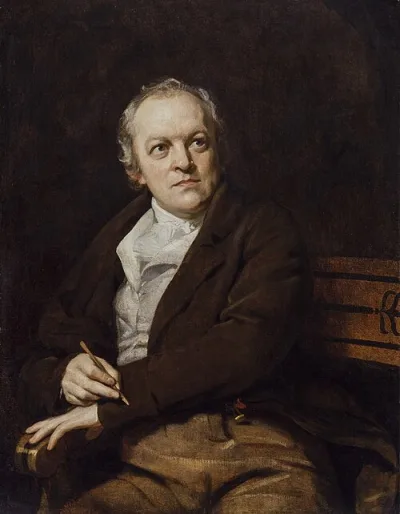
William Blake
William Blake (28 November 1757 – 12 August 1827) was an English poet, painter and printmaker. Largely unrecognised during his life, Blake has become a seminal figure in the history of the poetry and visual art of the Romantic Age.
💡 Why Read This Book?
Delve into the visionary heart of William Blake's "Poems" to unlock profound spiritual insights and explore the interconnectedness of existence. This collection is a treasure trove for seekers of hidden knowledge, offering a unique lens through which to view the divine in the everyday. Ideal for those drawn to symbolism, mysticism, and the power of imagination to transcend material limitations.
⭐ Reader Reviews
Honest opinions from readers who have explored this book.
❓ Frequently Asked Questions
What esoteric traditions influenced William Blake's "Poems"?
Blake was deeply influenced by Gnosticism, Hermeticism, Kabbalah, and Swedenborgianism, all of which informed his unique symbolic language and visionary cosmology.
Are Blake's "Poems" suitable for beginners in mysticism?
While rich in complex symbolism, Blake's "Songs of Innocence and of Experience" offer accessible entry points. Deeper works require more dedicated study but are immensely rewarding.
How does Blake's "Poems" relate to divination or Tarot?
Blake's work is rich in archetypal imagery and symbolic narratives that resonate deeply with the principles underlying Tarot. His poems can offer unique interpretations and intuitive guidance.
What is the significance of Blake's illustrations in his poetry?
Blake's illuminated manuscripts are inseparable from his poems. The illustrations provide a visual language that amplifies the text, offering further layers of esoteric meaning and symbolic depth.
Can Blake's "Poems" be read as a form of spiritual practice?
Absolutely. Engaging with Blake's verses is often considered a contemplative practice, encouraging introspection, the questioning of societal norms, and the awakening of inner vision.
🔮 Key Themes & Symbolism
The Dualities of Innocence and Experience
Blake masterfully navigates the profound contrast between the uncorrupted state of innocence and the hardened, often disillusioned perspective of experience. This duality is not merely a thematic device but a fundamental exploration of the human soul's journey. Innocence represents the primal, divine spark, free from the constraints of reason and societal corruption, while experience signifies the trials, knowledge, and often pain that shape our understanding of the world. Through this lens, Blake reveals the transformative power of suffering and the potential for spiritual growth that lies within confronting the darker aspects of existence, ultimately advocating for a reintegration of these seemingly opposing forces.
The Inner Vision and Divine Imagination
At the core of Blake's "Poems" lies an unwavering belief in the power of the inner vision and the divine imagination as the primary means of perceiving spiritual reality. He posits that true understanding transcends the limitations of empirical observation and rational thought, urging readers to cultivate their imaginative faculties. For Blake, imagination is not mere fantasy but a direct connection to the divine, a faculty that allows us to perceive the eternal within the temporal. This theme challenges conventional modes of knowledge acquisition, suggesting that the most profound truths are revealed not through external study but through internal communion with the infinite creative spirit.
Symbolism and the Language of the Soul
Blake employs a rich and intricate system of symbolism, drawing from diverse spiritual and mythological sources to articulate complex metaphysical concepts. His poems are densely layered with allegorical figures, archetypal images, and potent metaphors that speak directly to the soul. Understanding these symbols is crucial to unlocking the deeper esoteric meanings embedded within his work. From the Lamb and the Tiger to the Chimney Sweeper, each element is imbued with profound significance, representing aspects of the divine, the human condition, and the spiritual journey. Blake's symbolic language serves as a universal tongue, capable of conveying truths that lie beyond the reach of ordinary language.
💬 Memorable Quotes
“Tyger Tyger, burning bright, In the forests of the night;”
— This iconic couplet introduces the primal, awe-inspiring force of creation, symbolizing the untamed, powerful aspect of the divine or the universe that evokes both fear and wonder.
“To see a World in a Grain of Sand And a Heaven in a Wild Flower”
— This profound statement highlights Blake's belief in the infinite contained within the finite, revealing the divine presence and interconnectedness in the smallest details of the natural world.
“For Mercy has a human heart, And Pity has a human face,”
— This verse emphasizes the embodiment of divine virtues in human form, suggesting that compassion and empathy are the earthly manifestations of higher spiritual principles.
“And I cried, 'Help!' thou cried'st not.”
— This poignant line speaks to the individual's isolation and the perceived absence of divine intervention during moments of profound suffering or despair.
“The wild bird is a prisoner of the cage.”
— This metaphor encapsulates the theme of societal or spiritual confinement, illustrating how external structures can stifle the natural freedom and divine potential of the soul.
🌙 Esoteric Significance
Tradition
Blake's "Poems" are deeply rooted in the Western Esoteric tradition, drawing heavily from Gnosticism, Hermeticism, and Christian Mysticism. He sought to unveil a hidden spiritual reality underlying the material world, echoing Gnostic ideas of the divine spark within humanity and the fallen state of creation. His symbolic language and visionary prophecies align with Hermetic principles of correspondence and the microcosm/macrocosm relationship. Blake's unique synthesis of these traditions resulted in a personal mythology that speaks to the soul's journey towards liberation and spiritual reintegration.
Symbolism
The symbolism in Blake's "Poems" is vast and multifaceted. Key symbols include the Tyger (representing divine power, fierce creation, and the terrifying sublime), the Lamb (embodying innocence, Christ-like sacrifice, and divine gentleness), and the Child (representing pure imagination and uncorrupted spiritual perception). The contrasting states of Innocence and Experience are central, representing the soul's journey through the material world. Blake also employs architectural symbols (cities, temples) and natural imagery (flowers, forests) to convey spiritual landscapes and states of consciousness. His symbols are not static but dynamic, representing living forces and spiritual principles.
Modern Relevance
In a modern world often characterized by materialism, rationalism, and societal fragmentation, Blake's "Poems" offer a vital counterpoint. His emphasis on the power of imagination, the interconnectedness of all beings, and the inherent divinity within each individual resonates profoundly. Blake's critique of oppressive structures and his call for spiritual awakening remain remarkably relevant. His work encourages readers to look beyond the superficial, to cultivate inner vision, and to recognize the sacred in the mundane, providing a timeless source of inspiration for personal transformation and a more conscious existence.
👥 Who Should Read This Book
William Blake's "Poems" are essential for anyone seeking to explore the depths of human consciousness and spiritual reality. **Beginners** will find accessible entry points in the "Songs of Innocence and of Experience," offering profound insights into the human condition. **Scholars** of literature, art history, and comparative religion will discover a rich tapestry of symbolism and a unique philosophical system. **Seekers** drawn to mysticism and the esoteric will find a powerful guide to inner awakening and the divine imagination. **Practitioners** of contemplative arts may use Blake's verses as a springboard for meditation and spiritual exploration, uncovering layers of meaning that speak directly to the soul's journey.
📜 Historical Context
William Blake (1757-1827) lived during a period of immense social, political, and intellectual upheaval in Britain, marked by the Enlightenment, the Industrial Revolution, and revolutionary fervor in America and France. This era fostered both radical new ideas and a conservative backlash. Blake, an artist and poet of extraordinary originality, stood apart from prevailing literary conventions. While contemporaries often adhered to neoclassical forms and rationalist philosophies, Blake embraced a visionary, mystical worldview, deeply influenced by the Bible, Neoplatonism, and esoteric traditions. His unique illuminated printing technique, where text and image were etched together, was a radical departure from standard publishing, reflecting his holistic approach to art and spirituality. His work often critiqued the social injustices, religious hypocrisy, and oppressive educational systems of his time, advocating for individual liberty and the spiritual potential of humanity.
📔 Journal Prompts
Reflect on a time when you experienced a profound sense of innocence or a stark moment of disillusionment. How did these experiences shape your perception of the world?
Blake speaks of seeing 'Heaven in a Wild Flower.' Identify a seemingly ordinary object or moment in your life and explore its hidden spiritual significance.
Consider the 'contrary states of the human soul.' Where do you see the interplay of innocence and experience in your own life and in society today?
If imagination is the divine eye, what new realities can it reveal to you? Journal about a vision or insight gained through imaginative exploration.
Blake often critiqued societal institutions. What contemporary 'mind-forg'd manacles' do you observe, and how might one break free through inner vision?
🗂️ Glossary
Illuminated Printing
Blake's unique method of producing books by etching both text and images onto copper plates, which he then printed and hand-colored. This integrated art form reflected his holistic vision of poetry and art.
Gnosticism
An ancient spiritual and philosophical movement that emphasized direct spiritual knowledge (gnosis) and the inherent divinity within humanity, often contrasting this with a flawed material world.
Hermeticism
A philosophical and religious tradition based on writings attributed to Hermes Trismegistus, emphasizing principles like 'as above, so below' and the interconnectedness of the universe.
Archetype
A universal, symbolic pattern or image that recurs across cultures and time, representing fundamental human experiences and psychological themes.
Visionary
One who experiences or expresses profound spiritual or imaginative insights, often through visions or prophetic utterances, as exemplified by William Blake.