Mythic astrology
 78
78

Mythic astrology
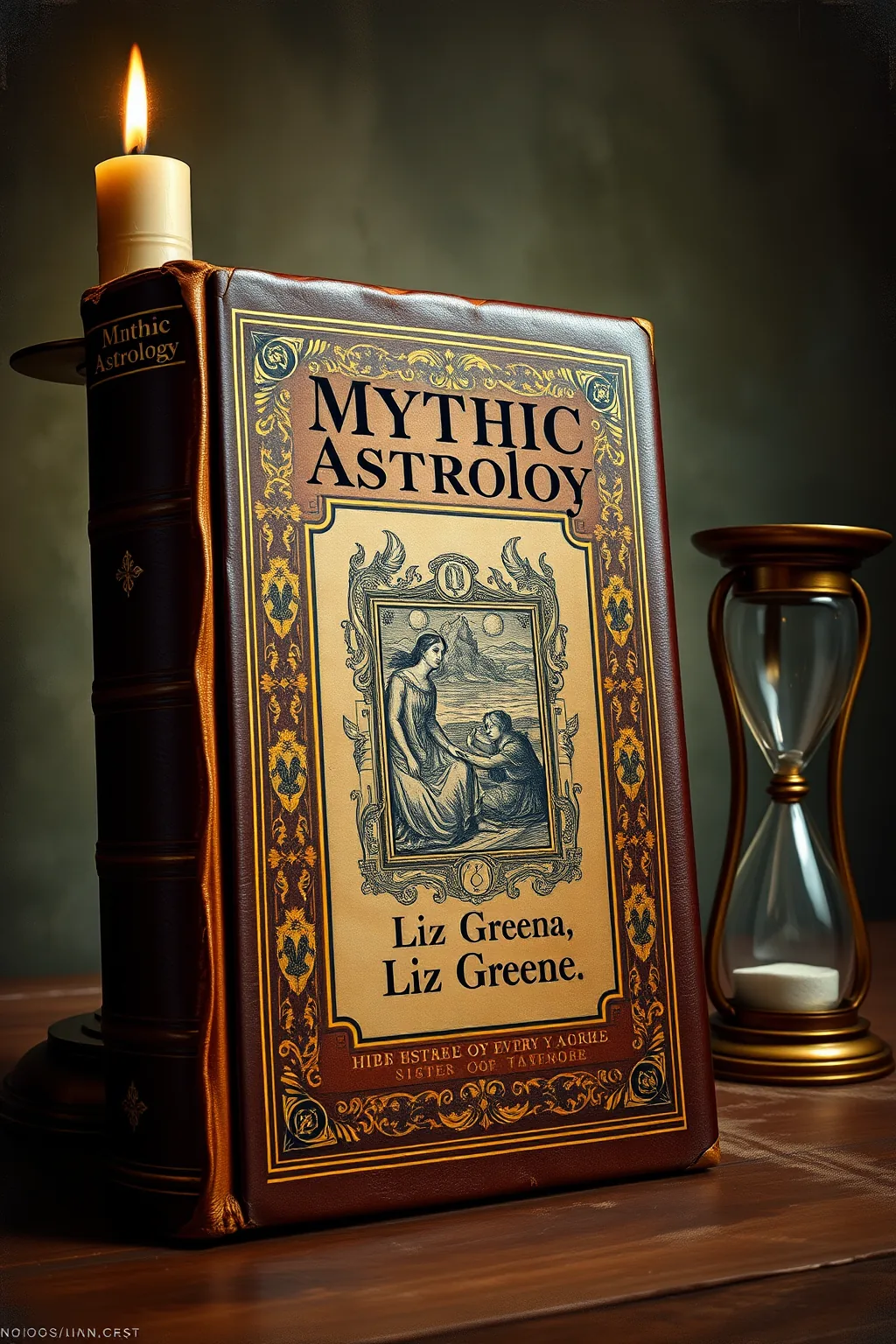
Liz Greene's Mythic Astrology is less a practical guide and more a philosophical treatise on the deep currents of meaning within astrological symbols. Its strength lies in its erudite synthesis of mythology and psychology, offering a compelling argument for astrology as a symbolic language of the psyche. The extensive exploration of planetary gods and their corresponding myths, such as the detailed analysis of Mars as Ares, provides a rich tapestry of archetypal understanding. However, the book's dense prose and academic approach can be a barrier for beginners. A notable passage is Greene's interpretation of the outer planets, linking Uranus, Neptune, and Pluto to the more recent mythological cycles and their psychological implications, which is both challenging and illuminating. Ultimately, Mythic Astrology serves as a vital bridge between the astrological chart and the human story.
📝 Description
78
### What It Is Mythic Astrology by Liz Greene, first published in 1994, offers a deep exploration of the archetypal patterns embedded within astrological symbolism. It moves beyond predictive horary techniques to examine the foundational myths that inform our understanding of the planets, signs, and houses. The work posits that astrology is not merely a system of celestial correspondence but a symbolic language speaking to the soul's journey.
### Who It's For This book is intended for serious students of astrology and depth psychology. Readers who are familiar with basic astrological concepts but wish to understand the deeper symbolic and psychological layers will find it particularly rewarding. It appeals to those interested in the intersection of mythology, psychology, and esoteric philosophy, seeking to integrate these fields into their personal or professional practice.
### Historical Context Published in 1994, Mythic Astrology emerged during a period when psychological astrology was gaining significant traction, building on the foundations laid by figures like Carl Jung and Dane Rudhyar. Greene's work contributed to this trend by systematically linking astrological archetypes to a wide range of classical myths. It stood apart from more deterministic or purely predictive astrological systems prevalent at the time, aligning with a growing interest in symbolic interpretation and the inner life.
### Key Concepts The core of Mythic Astrology lies in its detailed examination of planetary archetypes through the lens of their mythological representations. Greene explores how figures like Saturn, Jupiter, and the Sun, when viewed through the stories of Cronus, Zeus, and Apollo, reveal profound psychological dynamics. The book also addresses the symbolic meaning of the zodiac signs and houses not as abstract points but as narratives of human development and experience, drawing connections to ancient Greek mythology and the broader Indo-European mythic landscape.
💡 Why Read This Book?
• Gain a richer understanding of astrological archetypes by exploring their roots in classical mythology, as detailed in Greene's analysis of planetary figures. • Develop a deeper psychological interpretation of your birth chart, moving beyond surface-level significations to uncover symbolic narratives connected to figures like Cronus. • Appreciate astrology as a symbolic language of the soul, informed by the historical context of psychological astrology's emergence in the late 20th century.
⭐ Reader Reviews
Honest opinions from readers who have explored this book.
❓ Frequently Asked Questions
What is the primary focus of Liz Greene's Mythic Astrology?
The book focuses on interpreting astrological symbols through the lens of classical mythology and depth psychology, exploring the archetypal patterns inherent in planets, signs, and houses.
When was Mythic Astrology first published?
Mythic Astrology was first published in 1994, contributing to the growing field of psychological astrology.
Does this book offer predictive astrological techniques?
No, Mythic Astrology primarily delves into the symbolic and psychological meanings of astrological components rather than offering predictive techniques.
What mythological traditions does the book draw upon?
The book heavily draws upon classical Greek mythology, linking planetary deities and zodiacal figures to their ancient stories and symbolic representations.
Is Mythic Astrology suitable for absolute beginners in astrology?
While accessible, the book's depth and psychological focus might be more rewarding for those with some foundational understanding of astrological concepts.
What role does Jungian psychology play in the book?
The work is deeply influenced by Jungian psychology, particularly the concept of archetypes and their expression through mythological narratives and astrological symbols.
🔮 Key Themes & Symbolism
Planetary Archetypes in Myth
The book meticulously dissects each planet, not as a mere astrological point, but as a divine personage from ancient myth. Greene connects Saturn to Cronus, Mars to Ares, and so forth, demonstrating how the narratives surrounding these deities illuminate their psychological functions and symbolic meanings within the human experience. This approach grounds astrological interpretation in rich, archetypal storytelling, revealing the soul's inherent patterns.
The Zodiac as Narrative
Greene reinterprets the zodiac signs and houses as stages in a symbolic drama of human development. Rather than abstract divisions of the sky, they represent phases of consciousness and archetypal energies that unfold throughout life. This perspective invites readers to see their birth charts not as fixed destiny, but as a map of psychological potentials and mythic journeys, deeply informed by the narrative structures of ancient cosmologies.
Astrology and Depth Psychology
A central theme is the profound connection between astrology and depth psychology, particularly the Jungian understanding of archetypes. Greene argues that astrological symbols function as carriers of these universal psychic patterns, offering a symbolic language that can help individuals understand their inner lives. The book bridges the esoteric tradition of astrology with modern psychological inquiry, treating the horoscope as a blueprint for psychic integration.
The Mythic Dimension of the Self
Mythic Astrology posits that our personal lives are interwoven with timeless mythic narratives. By understanding the archetypal figures and stories that correspond to astrological placements, individuals can gain insight into their own motivations, challenges, and potential for growth. The book encourages a recognition of the self as a participant in a larger, ongoing cosmic and mythological unfolding.
💬 Memorable Quotes
“The archetypal image of the god is the psyche's own image.”
— This interpretation suggests that the mythological figures we associate with planets are not external entities but symbolic representations of our own deepest psychological structures and potentials.
“The planets are the gods, and the gods are the archetypes of the human soul.”
— Greene posits a direct correlation between celestial bodies, divine mythological figures, and fundamental patterns of human consciousness, viewing astrology as a language of these innate psychic blueprints.
“The horoscope is a symbolic map of the soul's journey.”
— This concept frames the astrological chart not as a deterministic prediction, but as a symbolic representation of an individual's psychological landscape and developmental path.
“Mythology provides the stories through which the archetypes are expressed.”
— This highlights the crucial role of narrative in understanding abstract archetypal energies, suggesting that myths are the vehicles that make these deep psychic patterns comprehensible.
“The outer planets represent stages of spiritual evolution beyond the personal ego.”
— This interpretation connects Uranus, Neptune, and Pluto to transpersonal dimensions of consciousness and collective psychic shifts, moving beyond the individual psychological focus of the inner planets.
🌙 Esoteric Significance
Tradition
Mythic Astrology sits within the Western Esoteric Tradition, particularly drawing from Hermeticism and Jungian psychology. It extends the symbolic language of astrology, integrating it with the archetypal psychology pioneered by Carl Jung. While astrology itself is an ancient tradition, Greene's approach revitalizes it by grounding astrological interpretation in mythological narratives and psychological depth, aligning with a modern esoteric impulse to understand the psyche through symbolic systems.
Symbolism
Key symbols include planetary deities like Saturn (Cronus) and Mars (Ares), which are interpreted not just as celestial bodies but as archetypal forces governing psychological states and life stages. The zodiac signs are viewed as mythic narratives of human development, representing distinct phases of consciousness. The underworld figures and heroic journeys described in mythology serve as metaphors for the inner psychic processes revealed in an astrological chart.
Modern Relevance
Contemporary practitioners of psychological astrology and archetypal studies frequently cite Greene's work. Her method of linking astrological symbols to mythological narratives remains a cornerstone for many who explore the psyche through the birth chart. Thinkers in Jungian analysis and comparative mythology also engage with her synthesis, recognizing the enduring power of archetypal patterns expressed through both ancient stories and celestial symbolism.
👥 Who Should Read This Book
• Students of psychological astrology seeking to deepen their understanding of archetypal patterns through detailed mythological connections. • Individuals interested in comparative mythology and its application to personal development, who wish to see how ancient stories illuminate human nature. • Esoteric philosophers and depth psychology practitioners looking for a bridge between symbolic systems and the exploration of the unconscious psyche.
📜 Historical Context
Published in 1994, Liz Greene's Mythic Astrology emerged during a significant period for psychological astrology, a field heavily influenced by Carl Jung's work on archetypes. The book arrived as many astrologers were moving away from purely predictive or event-oriented methods towards a more symbolic and depth-oriented approach. Greene's rigorous connection of astrological planets and signs to a vast array of classical Greek myths, a practice less common in mainstream astrology at the time, offered a sophisticated interpretive framework. This contrasted with more traditional horary or mundane astrology schools. Her work gained significant recognition within the burgeoning psychological astrology community, resonating with thinkers like Howard Sasportas, with whom she often collaborated. The book contributed to solidifying astrology's place as a tool for psychological exploration, distinct from its earlier, more divinatory applications.
📔 Journal Prompts
Reflect on the mythological narrative of Cronus and its connection to your Saturn placement.
Consider the archetypal role of Ares in your life, as suggested by your Mars sign and house.
How does the mythic interpretation of Jupiter's role inform your understanding of your own Jupiter placement?
Explore the symbolic journey represented by your Sun sign's corresponding mythic archetype.
Identify a personal challenge that mirrors a theme found in the myths associated with the outer planets.
🗂️ Glossary
Archetype
A universal, archaic pattern or image that derives from the collective unconscious and is believed to influence the behavior and experience of individuals. In astrology, planets and signs are seen as carriers of archetypal energies.
Psychological Astrology
An approach to astrology that focuses on the symbolic meaning of the birth chart as a map of the psyche, emphasizing personal growth and self-understanding rather than prediction.
Mythic Interpretation
The practice of understanding astrological symbols (planets, signs, houses) through the lens of ancient myths and the deities or heroes they represent.
Collective Unconscious
A concept developed by Carl Jung, referring to a layer of the unconscious mind shared by all humans, containing inherited archetypes and instincts.
Symbolic Language
A system of communication that uses symbols to represent ideas, concepts, or energies. In this context, astrology is viewed as a symbolic language of the psyche.
Daimon
In ancient Greek thought, a divine or semi-divine being or spirit. Greene uses the term to describe the guiding intelligence or inner genius that the astrological chart can help reveal.
Natal Chart
A map of the positions of the planets and celestial bodies at the exact moment of a person's birth, used in astrology to interpret personality and life patterns.