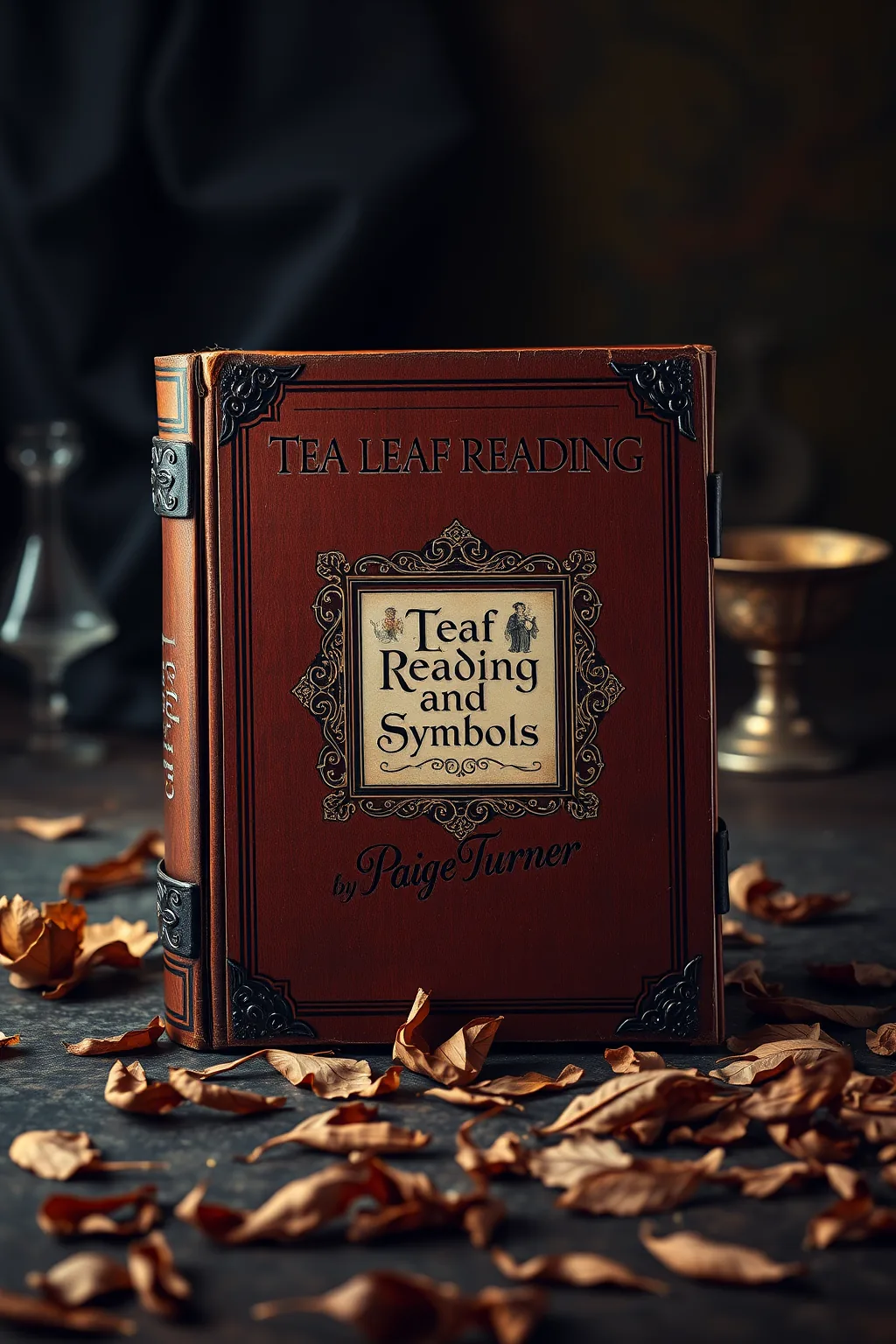
Tea Leaf Reading and Symbols
 61
61

Tea Leaf Reading and Symbols



Sophia Crane (Associate Editor) — Paige Turner's 'Tea Leaf Reading and Symbols' stands as a beacon of clarity and depth within the esoteric arts. This work masterfully deciphers the often-enigmatic language of tasseography, revealing its rich symbolic vocabulary with scholarly precision and an accessible, intuitive touch. Turner's insightful interpretations elevate tea leaf reading from a mere pastime to a potent tool for spiritual growth and self-understanding. The book's strength lies in its comprehensive approach, guiding both neophytes and seasoned practitioners through the nuanced art of pattern recognition and symbolic resonance. It is an indispensable resource for anyone seeking to harness the wisdom held within this ancient divinatory practice.
📝 Description
61
Paige Turner's 'Tea Leaf Reading and Symbols' was first published in 2015.
This book examines the practice of reading tea leaves, moving beyond simple predictions. Paige Turner details how the patterns formed by tea leaves in a cup can reflect an individual's inner thoughts and future events. The text explains the symbolic meanings of various shapes and arrangements that appear, treating them as a form of divination. It aims to help readers interpret these signs to gain insight into their lives. The author presents tea leaf reading as a contemplative practice that can foster self-awareness.
Turner's approach focuses on the symbolic language inherent in the leaves. She suggests that a ritualistic cup of tea can become a tool for understanding oneself and the world. The book covers specific symbols and their interpretations, providing a guide for practitioners. It frames the act of reading tea leaves as a way to connect with subtle energies and gain a different perspective on everyday occurrences. The goal is to transform a common ritual into an occasion for personal reflection and a deeper connection to one's surroundings.
Tea leaf reading, or tasseography, has roots in ancient divination practices. This book fits within the broader category of Western esotericism, which often incorporates elements of symbolism, prophecy, and intuitive insight. It shares common ground with other forms of scrying and augury, drawing parallels between visual patterns and hidden meanings. The practice is often associated with folk magic and spiritualism, aiming to access knowledge not readily available through rational means. Turner's work contributes to this tradition by offering a structured system for interpreting these visual cues.
💡 Why Read This Book?
Uncover the hidden language of the cosmos within your teacup. 'Tea Leaf Reading and Symbols' offers a profound gateway to intuitive wisdom and self-discovery, transforming a simple ritual into a powerful divinatory practice. Ideal for seekers of esoteric knowledge, spiritual practitioners, and those curious about the subtle energies that guide our lives.
⭐ Reader Reviews
Honest opinions from readers who have explored this book.
❓ Frequently Asked Questions
What is the history of tea leaf reading?
Tea leaf reading, or tasseography, boasts a rich history dating back to ancient China, spreading through Persia and Europe. It evolved from observing patterns in other brewed substances and became a popular method of divination.
Do I need special tea for reading?
No, any loose-leaf tea can be used. The key is the residue left behind. Black teas are often preferred for their visible residue, but experimentation is encouraged.
How detailed do the symbols need to be?
The beauty lies in interpretation. Even simple shapes or lines can hold profound meaning when viewed with intuition and context.
Can I read for myself?
Absolutely. Reading for oneself is a powerful way to gain self-insight and connect with your inner guidance.
What is the philosophical significance of tasseography?
It reflects the belief that patterns in the universe, even in a teacup, can offer insights into destiny, subconscious thoughts, and the interconnectedness of all things.
🔮 Key Themes & Symbolism
The Art of Symbolic Interpretation
This theme explores the intricate process of deciphering the visual language of tea leaves. It studies how abstract shapes, figures, and patterns are not random but hold potent symbolic weight, echoing archetypal imagery and universal themes. The text emphasizes cultivating an intuitive connection with these symbols, moving beyond rote memorization to a deeper, resonant understanding. It highlights the interplay between the reader's subconscious and the symbolic narrative presented, fostering a dialogue between the inner and outer worlds.
Ritual and Contemplative Practice
The book positions tea leaf reading as more than a mere technique; it is a sacred ritual designed to foster mindfulness and introspection. The act of preparing and consuming tea becomes a meditative process, creating a sacred space for divination. This theme underscores the importance of intention, presence, and the creation of a tranquil environment conducive to receiving subtle messages. It guides the reader in transforming a daily habit into a profound spiritual practice, a moment of communion with the unseen.
Elements of Ancient Wisdom
This theme traces the historical lineage of tea leaf reading, connecting it to broader traditions of divination and esoteric knowledge across cultures. It positions tasseography as a living link to ancient practices, revealing how humanity has consistently sought meaning and guidance through observing the natural world and its subtle manifestations. The text evokes a sense of timeless wisdom, suggesting that the patterns in our teacups are part of a universal cosmic language that has been understood for millennia.
💬 Memorable Quotes
Direct passages from the work, attributed to the author.
“Each swirl a question, each settled leaf an answer whispered from the unseen.”
— This highlights the divinatory aspect, framing the reading as a dialogue between the querent and a higher or subconscious source of knowledge.
“To read the leaves is to learn the silent language of the cosmos.”
— This elevates tea leaf reading to a universal practice, suggesting it unlocks a deeper, more fundamental form of communication and understanding of universal truths.
“The mundane becomes mystical when viewed through the lens of intention.”
— This emphasizes the transformative power of ritual and mindset, showing how everyday actions can become imbued with spiritual significance.
“Seek not just prediction, but profound self-revelation.”
— This guides the reader toward a deeper purpose for engaging in tea leaf reading, focusing on personal growth and insight rather than solely foretelling future events.
💡 Key Ideas
Editorial paraphrase of the work's core concepts — not direct quotes.
The cup holds more than just spent leaves; it holds reflections of your soul's journey.
This quote emphasizes the profound, personal nature of tea leaf reading, suggesting that the patterns observed are deeply connected to the individual's inner world and life path.
🌙 Esoteric Significance
Tradition
Tea leaf reading is deeply entwined with the Hermetic tradition, emphasizing the principle of 'As Above, So Below.' It aligns with various forms of folk magic and divination that view the microcosm (the teacup) as a reflection of the macrocosm (the universe). It also shares common ground with symbolic systems found in cartomancy and other intuitive arts, focusing on pattern recognition and archetypal interpretation to glean insights.
Symbolism
The symbolism in tea leaf reading is vast and often context-dependent, drawing from nature, everyday objects, and abstract forms. Common symbols include animals representing traits (e.g., a bird for news), celestial bodies (sun, moon), geometric shapes (circles for completion, triangles for stability), and human figures suggesting relationships or events. The interpretation relies on the reader's intuitive connection to the symbol's resonance within the querent's life.
Modern Relevance
In an age often characterized by digital overload and a disconnection from natural rhythms, tea leaf reading offers a grounding and introspective practice. It encourages slow living, mindful observation, and a personal connection to intuition. Its modern relevance lies in its ability to provide solace, clarity, and a sense of empowerment through self-understanding, serving as a bridge between the ancient wisdom traditions and contemporary spiritual seeking.
👥 Who Should Read This Book
This clear text is a treasure for a diverse audience. For the **absolute beginner**, it provides a clear, step-by-step introduction to the fundamentals of tasseography. **Spiritual seekers** will find it a profound tool for deepening their intuitive abilities and connecting with subtle energies. **Practitioners of other divination arts**, such as Tarot or astrology, will discover how tea leaf reading complements their existing skillsets, offering a unique perspective. **Scholars of esoteric history and folklore** will appreciate its meticulous research and contextualization within broader symbolic traditions.
📜 Historical Context
The practice of reading tea leaves, known as tasseography, emerged organically from the ancient tradition of observing patterns in brewed beverages. Its roots can be traced back to China, where the observation of patterns in brewed herbs and leaves was common. As tea culture spread westward, particularly through Persia and into Europe during the 17th and 18th centuries, the practice gained popularity among various social classes. It flourished in Victorian England, where it became a popular parlor game and a serious divinatory art. During this era, a fascination with the occult and esoteric knowledge was prevalent, and tasseography fit seamlessly into this milieu, offering a means to access hidden truths and understand personal destinies in a world increasingly shaped by rapid change and scientific discovery.
📔 Journal Prompts
After reading a cup, what symbol felt most resonant and why?
How did the physical sensation of holding and observing the teacup influence your reading?
What personal narrative or 'story' emerged from the patterns in the leaves today?
Consider a recurring symbol in your readings; what might it represent in your current life situation?
How can the insights gained from this reading be practically applied to your daily life or immediate concerns?
🗂️ Glossary
Tasseography
The practice of interpreting patterns formed by tea leaves, coffee grounds, or wine sediments in a cup to divine the future or gain insight.
Querent
The person for whom a divination is being performed; the individual seeking insight or answers.
Symbolism
The use of symbols to represent ideas or qualities, forming a visual language that carries deeper meanings.
Intuition
The ability to understand something immediately, without the need for conscious reasoning; a gut feeling or inner knowing.
Archetype
A universal, primordial image, symbol, or pattern of behavior that is common to all human beings, often appearing in myths and fairy tales.
This book appears in 3 collections
🔮 Readers Also Liked
Browse all →








From the “Remote Viewing” Collection
View all →








More Free Divination & Tarot Books
View all →