Mr. Hartston's Most Excellent Encyclopedia of Useless Information
 72
72

Mr. Hartston's Most Excellent Encyclopedia of Useless Information



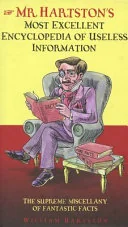
William Hartston’s 2006 compilation, *Mr. Hartston's Most Excellent Encyclopedia of Useless Information*, offers a curious antidote to the pursuit of practical knowledge. Rather than a systematic exploration of esoteric doctrines, it functions as a cabinet of curiosities for the mind, presenting facts so outlandish they loop back to being fascinating. Its alphabetical arrangement, while straightforward, allows for delightful serendipitous discoveries – stumbling upon the average number of times a person blinks in a lifetime or the bizarre origins of certain phrases is a genuine pleasure. A limitation, however, is the sheer breadth of topics, which can sometimes feel disjointed, lacking a unifying esoteric thread that might appeal to the dedicated Hermetic scholar. The section on the origins of the game of Snakes and Ladders, for instance, while amusing, feels detached from any deeper symbolic meaning. Still, for its intended purpose of whimsical distraction, the encyclopedia largely succeeds, providing ample material for contemplation and conversation. It is a book that finds value in the overlooked, demonstrating that even the most trivial fact can hold a peculiar charm.
📝 Description
72
### What It Is Mr. Hartston's Most Excellent Encyclopedia of Useless Information, first published in 2006, presents a compendium of facts and curiosities that defy conventional utility. Organized alphabetically, the work offers a humorous and often surprising exploration of trivia, statistics, and unusual historical anecdotes. It serves as a curated collection of the world's most obscure and amusing pieces of knowledge, designed to entertain and enlighten readers with information they never knew they needed.
### Who It's For This book is intended for anyone with a penchant for the peculiar and a desire for intellectual diversion. Readers who enjoy off-the-wall statistics, unexpected historical footnotes, and the sheer joy of learning random facts will find it particularly appealing. It is for those who appreciate wit, wordplay, and a refreshing departure from the mundane.
### Historical Context The early 2000s saw a burgeoning interest in popular non-fiction that distilled complex subjects or obscure histories into accessible formats. While not directly tied to esoteric movements, the encyclopedia's approach to cataloging the unusual echoes a broader cultural fascination with collecting and categorizing esoteric knowledge, much like the earlier Victorian era's encyclopedic ambitions. The work emerged in a landscape where digital encyclopedias were starting to dominate, yet the appeal of a curated, humor-driven physical book persisted.
### Key Concepts The central concept is the elevation of 'useless' information to an art form. It highlights that knowledge, regardless of its practical application, can possess intrinsic value through its capacity to amuse, surprise, and spark curiosity. The book implicitly argues for the aesthetic and philosophical pleasure derived from the obscure, positioning these facts as a form of intellectual play.
💡 Why Read This Book?
• Gain a unique perspective on knowledge itself by examining the 2006 publication date and its place in the early digital age, understanding how curated trivia offered an alternative to online information. • Discover specific, verifiable curiosities, such as the surprising statistics on everyday human actions or historical oddities, providing concrete examples of 'useless' information. • Experience the intellectual pleasure of the unexpected, finding amusement and a fresh mental stimulus in facts presented without practical agenda, as exemplified by the book's humorous tone.
why_read
⭐ Reader Reviews
Honest opinions from readers who have explored this book.
❓ Frequently Asked Questions
What kind of 'useless information' does Mr. Hartston's book contain?
The encyclopedia features a wide array of trivia, including off-the-wall statistics about human behavior, peculiar historical events, unusual facts about animals, and quirky etymologies, all presented with a humorous and engaging tone.
Is this book suitable for academic study?
While not a scholarly text, the book can be valuable for researchers interested in the history of trivia, popular culture, or the evolution of information dissemination, particularly its 2006 publication context.
How is the information organized within the encyclopedia?
The entries are arranged alphabetically, allowing readers to browse randomly or seek out specific topics of curiosity. Cross-referencing is also employed to connect related or tangential pieces of information.
What is the primary goal of compiling 'useless' information?
The book aims to provide a refreshing and amusing distraction from everyday concerns, demonstrating that knowledge can be entertaining and intellectually stimulating even when it lacks direct practical application.
Who would most enjoy Mr. Hartston's Encyclopedia?
Anyone with a curious mind, a sense of humor, and an appreciation for the peculiar will find this book enjoyable. It's perfect for readers who like trivia, unexpected facts, and light-hearted intellectual exploration.
Does the book include any esoteric or occult information?
While categorized broadly under 'Esoteric' for its unusual nature, the book primarily focuses on general trivia and curious facts rather than specific occult doctrines or practices.
🔮 Key Themes & Symbolism
The Aesthetics of Obscurity
The encyclopedia champions the idea that knowledge holds value beyond its utility. By meticulously cataloging facts deemed 'useless,' such as the number of hairs on a cat or the historical prevalence of specific superstitions, the work elevates trivia to an art form. This approach subtly critiques a purely utilitarian view of learning, suggesting that the sheer wonder and amusement derived from obscure facts constitute a valid form of intellectual engagement. The 2006 publication context further highlights this, offering a curated, tangible alternative to the growing digital ocean of information.
Humor as a Pedagogical Tool
Humor is central to the book's function as a source of 'useless' information. The witty presentation of facts, often juxtaposed in unexpected ways, transforms potentially dry statistics into sources of laughter and surprise. This approach suggests that humor can be a powerful, albeit unconventional, tool for engaging the mind, making the acquisition of even trivial knowledge a pleasurable experience. The alphabetical structure facilitates this by allowing for humorous juxtapositions across different entries.
Cataloging the Unconventional
The act of cataloging itself becomes a theme, mirroring broader esoteric traditions of collecting and classifying hidden or esoteric knowledge. While Hartston's subject matter is light, the encyclopedic format, organizing diverse and seemingly unrelated facts, echoes the systematic approaches found in older hermetic or alchemical texts that sought to map the entirety of creation, albeit on a much more whimsical scale. The 2006 release places this within a modern context of information overload.
The Joy of Randomness
This work celebrates the pure joy of random discovery. Unlike structured learning, browsing the encyclopedia allows for serendipitous encounters with facts that spark unexpected connections or simply provide a moment of delightful absurdity. This embraces the chaotic, non-linear nature of curiosity, suggesting that valuable mental stimulation can arise from unplanned explorations of information, a principle that resonates with certain contemplative esoteric practices.
💬 Memorable Quotes
“Finding the answers to questions you'd never have thought to ask.”
— This captures the essence of the book's appeal: it satisfies an unarticulated curiosity by presenting information that lies far outside the realm of everyday practical concerns or even common knowledge.
“Reading an off-the-wall statistic, or browsing through lists of zany facts is a refreshing and amusing distraction from the tawdry details of everyday life.”
— This highlights the book's primary intended function – not to educate in a traditional sense, but to provide an escape and a source of lighthearted amusement through the exploration of the peculiar.
“Organised alphabetically and cross referenced, this work features hilarious entries.”
— This points to the book's structure and its core value proposition: a systematic yet accessible collection of amusing facts designed for enjoyable, random perusal.
“The sheer joy of learning random facts.”
— This paraphrased concept emphasizes the intrinsic pleasure and entertainment derived from acquiring knowledge, regardless of its practical application, a key theme of the encyclopedia.
“A compendium of curiosities that defy conventional utility.”
— This interpretation frames the book's content not merely as trivia, but as a deliberate collection of the unusual, challenging the notion that all knowledge must serve a practical purpose.
🌙 Esoteric Significance
Tradition
While not a traditional esoteric text in the vein of Hermeticism or Kabbalah, its categorization under 'Esoteric' by some libraries suggests an alignment with the broader Hermetic principle of 'As Above, So Below' – finding the universal in the particular, or the macrocosm reflected in the microcosm, even in the seemingly mundane. It shares with esoteric traditions a fascination for hidden connections and the cataloging of phenomena, albeit with a focus on humor and triviality rather than spiritual attainment.
Symbolism
The encyclopedia itself can be seen as a symbolic representation of the alchemical process of transmutation, turning base 'useless' facts into the gold of amusement and intellectual delight. The alphabetical ordering might symbolize the desire for order and comprehension within a chaotic universe, an attempt to map the unmappable. Specific entries, like those detailing the origins of games or peculiar superstitions, can be interpreted as microcosms reflecting larger cultural or psychological patterns.
Modern Relevance
In an age saturated with data, Hartston's work remains relevant for its emphasis on curated, enjoyable information consumption. Contemporary thinkers and content creators focused on 'infotainment' or the psychology of curiosity draw parallels. Its celebration of the non-essential resonates with mindfulness practices that encourage appreciating the present moment and finding joy in simple observations, a departure from the productivity-driven narratives often found in self-help or spiritual development literature.
👥 Who Should Read This Book
• Curious minds seeking intellectual diversion: Readers who enjoy trivia, unexpected facts, and light-hearted humor will find ample amusement and discover fascinating tidbits they never knew they needed. • Students of popular culture and information history: Those interested in how information is collected, presented, and consumed will find the 2006 publication context and the encyclopedia's format insightful. • Anyone needing a mental palate cleanser: Individuals looking for a refreshing break from dense academic texts or the pressures of everyday life can use this book for enjoyable, low-stakes intellectual exploration.
📜 Historical Context
Published in 2006, *Mr. Hartston's Most Excellent Encyclopedia of Useless Information* emerged during a period of rapid digital expansion, where online encyclopedias like Wikipedia were becoming ubiquitous. Hartston's work offered a curated, tangible counterpoint, emphasizing the value of deliberate selection and humorous presentation over sheer volume. The early 21st century saw a strong market for popular non-fiction that distilled complex or obscure subjects into accessible formats, a trend this encyclopedia tapped into with its focus on trivia. While not directly engaging with academic esoteric discourse, its cataloging of the peculiar echoes the encyclopedic ambitions of earlier eras, such as the Victorian fascination with collecting and classifying diverse phenomena. Its reception was generally positive among popular review outlets, appreciating its light-hearted approach to information, contrasting with the more serious, often arcane, texts prevalent in niche esoteric circles.
📔 Journal Prompts
The encyclopedia's collection of 'useless' facts.
The concept of knowledge's value beyond utility.
Humorous juxtapositions between alphabetical entries.
The act of cataloging the peculiar.
The appeal of random discovery in the 2006 context.
🗂️ Glossary
Off-the-wall statistic
A piece of data or numerical information that is highly unusual, unexpected, or seemingly irrelevant to typical concerns, often presented for humorous or surprising effect.
Tawdry details
Refers to the mundane, unglamorous, or slightly sordid aspects of everyday life that the book aims to distract the reader from.
Zany facts
Facts that are characterized by being ludicrous, eccentric, or wildly unconventional, contributing to the book's humorous and amusing nature.
Alphabetical organization
The systematic arrangement of entries in the order of the letters of the alphabet, from A to Z, providing a structured yet accessible method for browsing content.
Cross-referenced
Indicates that entries within the book contain pointers to other related entries, allowing readers to follow connections and explore interconnected pieces of information.
Compendium
A collection or summary of information, often a compilation of facts or knowledge on a particular subject or range of subjects.
Curiosities
Things that are unusual, interesting, or rare; items that attract attention because of their strangeness or novelty.