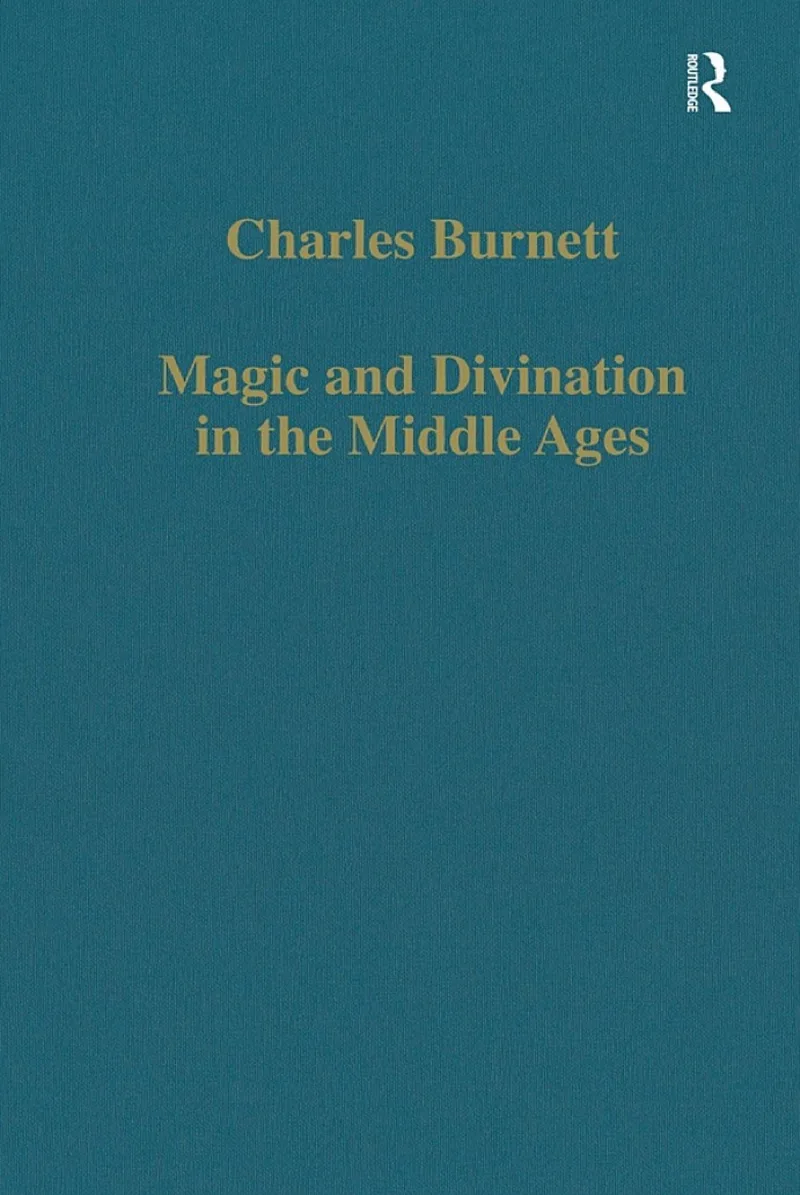
Magic and Divination in the Middle Ages
 72
72

Magic and Divination in the Middle Ages



Burnett's rigorous scholarship in 'Magic and Divination in the Middle Ages' provides a much-needed historical anchor for understanding the complex currents of esoteric thought. His detailed tracing of talismanic texts from classical origins to their medieval Latin adaptations is particularly illuminating, demonstrating how the desire to recover ancient wisdom spurred intellectual exchange. The work's strength lies in its precise cataloging of sources and its clear depiction of the translation movements in 12th-century Spain. A notable limitation is the sheer density of scholarly apparatus, which might prove challenging for those new to the field. The section detailing the influence of Hermes Trismegistus as a catalyst for translation activity is a standout, offering a concrete example of how perceived authority shaped intellectual history. Burnett offers a crucial, if dense, account of a vital transmission process.
📝 Description
72
### What It Is Charles Burnett's 'Magic and Divination in the Middle Ages' meticulously reconstructs the intellectual lineage of talismanic magic, tracing its evolution from classical antiquity through the Arabic world and into the Latin Middle Ages. The work focuses on the transmission and reception of texts attributed to figures like Hermes and Aristotle, revealing how the pursuit of their supposed 'secret knowledge' fueled significant translation efforts.
### Who It's For This book is essential for historians of science, medievalists, and scholars of Western esotericism. It will also appeal to practitioners of magic and divination who seek a deeper understanding of the historical roots and theoretical frameworks underpinning their craft. Readers interested in intellectual history and the cross-cultural exchange of ideas in the medieval period will find it particularly valuable.
### Historical Context Burnett situates the study of magic within the broader intellectual landscape of the Middle Ages, a period marked by intense philosophical debate and the rediscovery of ancient texts. The 12th century, particularly in Spain, emerges as a critical nexus for the translation of Arabic works into Latin, driven by a desire to access the wisdom of classical authorities. This era saw the concurrent development of scholastic philosophy and the preservation of magical traditions.
### Key Concepts The book examines the classification of magic within medieval scientific divisions, the concept of 'secret knowledge' as a driver of textual transmission, and the specific role of talismanic texts. It highlights the importance of figures like Hermes Trismegistus and Aristotle as authoritative sources, even when their attributed works were often later creations or interpretations.
💡 Why Read This Book?
• Gain specific knowledge about the translation efforts in 12th-century Spain, a critical period for the influx of Arabic texts into Latin Europe, understanding how the pursuit of 'secret knowledge' motivated scholars. • Learn about the historical categorization of talismanic magic within medieval scientific divisions, providing a concrete understanding of how magic was understood and studied alongside other disciplines. • Discover the specific role of Hermes Trismegistus and Aristotle as principal authorities whose attributed 'secret knowledge' became a catalyst for the translation and dissemination of magical texts.
⭐ Reader Reviews
Honest opinions from readers who have explored this book.
❓ Frequently Asked Questions
What is the primary focus of Charles Burnett's 'Magic and Divination in the Middle Ages'?
The book focuses on the history and transmission of talismanic magic texts from the Classical period through the Arabic world to the Latin Middle Ages, emphasizing the role of figures like Hermes and Aristotle.
Which historical period does the book primarily examine regarding magic?
The book primarily examines the Middle Ages, with a significant focus on the 12th century, particularly in Spain, as a crucial period for the translation of Arabic texts into Latin.
What role did the search for 'secret knowledge' play in medieval intellectual history, according to this book?
The search for the 'secret knowledge' attributed to ancient sages like Hermes and Aristotle acted as a significant catalyst for the translation activity from Arabic into Latin, enriching medieval intellectual discourse.
What are the main classical and Arabic influences discussed in the book?
The primary authorities discussed are Hermes (Trismegistus) and Aristotle, whose works were central to the medieval understanding and practice of magic, particularly talismanic magic.
How does the book position talismanic magic within medieval science?
The book discusses the terminology of talismanic magic (or necromancy) and its position within the various divisions of science recognized in the Middle Ages, providing context for its intellectual status.
When was 'Magic and Divination in the Middle Ages' first published?
'Magic and Divination in the Middle Ages' by Charles Burnett was first published on 2024-10-28.
🔮 Key Themes & Symbolism
Transmission of Magical Texts
The book details the complex journey of magical texts across cultures and centuries. It highlights how the desire to access perceived 'secret knowledge' from classical and Arabic sources motivated scholars in 12th-century Spain to undertake extensive translation projects into Latin, thereby preserving and disseminating esoteric traditions.
Hermes and Aristotle as Authorities
Burnett emphasizes the pivotal role of Hermes Trismegistus and Aristotle as foundational figures in medieval magical thought. Their attributed wisdom, often transmitted through intermediaries and translations, formed the bedrock of intellectual inquiry into talismanic magic and other occult sciences during the period.
Magic within Medieval Science
The work examines how magic, specifically talismanic magic, was understood and classified within the hierarchical structure of medieval science. It explores the terminology used and the intellectual frameworks that sought to integrate or distinguish magical practices from other branches of knowledge, such as natural philosophy.
The Catalyst of Translation
A central theme is the transformative impact of translation. The influx of Arabic texts into Latin Europe, particularly in the 12th century, was not merely an academic exercise but a vital process that fueled the development of esoteric scholarship and magical practice, driven by the pursuit of ancient, hidden wisdom.
💬 Memorable Quotes
“The search for the ’secret knowledge’ of these ancient sages was a catalyst for translating activity from Arabic into Latin in 12th-century Spain.”
— This statement underscores how the perceived authority and hidden wisdom of figures like Hermes and Aristotle directly motivated the crucial scholarly work of translation, shaping the intellectual landscape of medieval Europe.
“Discussing the terminology of talismanic magic (or necromancy) and its position in divisions of science in the Middle Ages.”
— This highlights the book's focus on the intellectual context of magic, examining how it was defined and categorized alongside other scientific disciplines during the medieval period.
“Tracing the history of talismanic texts from the Classical period through the Arabic world to the Latin Middle Ages.”
— This succinctly outlines the book's ambitious chronological scope, demonstrating its comprehensive approach to understanding the lineage and evolution of magical traditions across diverse cultural milieux.
“The principal authorities are Hermes and Aristotle.”
— This identifies the core classical sources that medieval scholars relied upon for their understanding of magic, signaling their profound influence on the development of esoteric thought during the period.
“The second half of the book continues this tracing...”
— This suggests a structured approach to the subject matter, indicating that the book systematically builds its argument, likely moving from foundational concepts to more detailed explorations of specific historical periods or textual traditions.
🌙 Esoteric Significance
Tradition
This work firmly situates itself within the Hermetic and Neoplatonic traditions, tracing their enduring influence through the medieval period. It examines how texts attributed to Hermes Trismegistus, alongside Aristotelian philosophy, were foundational for the development of Western esoteric practices, particularly talismanic magic, demonstrating a continuous thread of esoteric thought from antiquity.
Symbolism
The book implicitly engages with symbols of authority and hidden knowledge, represented by the canonical figures of Hermes and Aristotle. The 'secret knowledge' itself functions as a symbolic pursuit, driving the material creation and dissemination of texts. Talismans, as objects imbued with specific celestial or spiritual forces, would also be central, representing the practical application of these esoteric principles.
Modern Relevance
Contemporary practitioners of Hermeticism, ceremonial magic, and even certain branches of philosophy and comparative religion continue to draw upon the historical foundations discussed by Burnett. The book provides essential context for understanding the intellectual lineage of modern esoteric movements that seek to revive or reinterpret classical magical traditions and the philosophical underpinnings of their practice.
👥 Who Should Read This Book
• Historians of Medieval Intellectual History: They will gain a deeper understanding of textual transmission, the role of translation in shaping academic disciplines, and the integration of diverse philosophical traditions. • Students of Western Esotericism: This book offers a crucial historical grounding for the study of magic, revealing the specific roots of talismanic practices and the authoritative figures that shaped them. • Scholars of Classical and Arabic Influences: Researchers interested in the cross-cultural exchange of ideas will find detailed evidence of how classical knowledge, filtered through Arabic scholarship, impacted Latinate intellectual life.
📜 Historical Context
Charles Burnett's work emerges within a vibrant field of medieval studies, building upon decades of scholarship concerning the transmission of knowledge from the Islamic world to Christian Europe. The 12th century, often termed the 'twelfth-century renaissance,' was a period of significant intellectual ferment, marked by the establishment of universities and the translation of key philosophical and scientific texts, including those related to magic. While scholasticism, championed by figures like Peter Abelard, sought to systematize knowledge through logic and dialectic, esoteric traditions like talismanic magic were preserved and developed through different channels, often via manuscript circulation and private study. Burnett's research illuminates how this 'secret knowledge,' particularly from Hermes and Aristotle, was not only sought but actively integrated, albeit sometimes controversially, into the broader intellectual currents of the era. The reception of these texts often occurred within scholarly circles eager to expand their classical inheritance.
📔 Journal Prompts
The pursuit of 'secret knowledge' from Hermes and Aristotle as a catalyst.
Talismanic magic's position within medieval scientific divisions.
The significance of 12th-century translation activities in Spain.
The evolution of terminology related to necromancy.
The impact of classical authorities on medieval esoteric thought.
🗂️ Glossary
Talismanic Magic
A branch of magic focused on the creation and use of objects (talismans) believed to possess inherent powers derived from celestial influences or spiritual forces, often employed for protection, influence, or divination.
Necromancy
Historically, a form of divination involving communication with the dead or the invocation of spirits. In the context of medieval magic, the term could sometimes encompass broader practices related to summoning and commanding entities.
Divination
The practice of seeking knowledge of the future or the unknown by supernatural means, such as interpreting omens, casting lots, or consulting oracles.
Hermes Trismegistus
A legendary Hellenistic figure, identified with the Egyptian god Thoth, credited with a body of esoteric philosophical and religious writings (the Hermetica) influential in Renaissance and later occult traditions.
Aristotle
The ancient Greek philosopher whose works, particularly on natural philosophy and metaphysics, were highly influential in the Middle Ages, often forming the basis for scholastic inquiry and, by extension, esoteric interpretations.
Latin Middle Ages
The period in European history characterized by the dominance of the Latin language in scholarship, liturgy, and administration, roughly from the fall of the Western Roman Empire to the beginning of the Renaissance.
Arabic World
Refers to the regions where Arabic was the primary language of scholarship and culture, particularly during the Islamic Golden Age, which preserved and advanced classical knowledge before its transmission to Europe.