De divinatione

 71
71

De divinatione
Cicero's *De divinatione* offers a robust, if ultimately secular, exploration of belief systems that have long captivated the human imagination. The work's strength lies in its methodical dismantling of purported evidence for divination, presenting a compelling case for rational skepticism. Cicero's critique of dream interpretation, for instance, highlights the subjective and often self-fulfilling nature of such practices. However, the text's limitation for the modern esoteric reader is its inherent philosophical stance, which leaves little room for genuine supernatural phenomena. The dialogue format, while classic, can sometimes feel more like a philosophical exercise than a genuine inquiry into the unknown. A passage discussing the omens surrounding Caesar's assassination, which Cicero attributes to coincidence or misinterpretation, starkly illustrates this divide. This treatise serves as a crucial historical document on ancient thought, but not as an endorsement of esoteric practices.
📝 Description
71
### What It Is Cicero's *De divinatione* is a foundational philosophical treatise that critically examines the nature and validity of divination. Composed in 44 BCE, it presents a dialectical argument, primarily through the character of Marcus, against the possibility of predicting future events through supernatural means.
### Who It's For This work is essential for scholars of ancient philosophy, Roman history, and the intellectual history of skepticism. It is also of significant interest to those studying the evolution of religious and metaphysical thought, particularly concerning oracles and prophecy.
### Historical Context Written during the turbulent final years of the Roman Republic, *De divinatione* emerged in an era where divination was deeply embedded in public and private life. Cicero engages with Stoic, Epicurean, and Academic philosophical traditions, directly challenging prevailing beliefs that were also championed by figures like his contemporary, Julius Caesar, who was famously superstitious.
### Key Concepts The text dissects various forms of divination, including dream interpretation, haruspicy (divination by entrails), astrology, and augury. Cicero distinguishes between natural and artificial divination, arguing that perceived predictions are either coincidences, misinterpretations, or deliberate deceptions, rather than genuine supernatural foresight.
✍️ Author
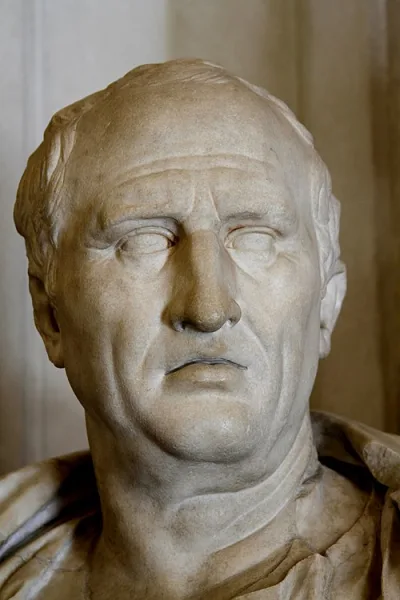
Cicero
The writings of Marcus Tullius Cicero constitute one of the most renowned collections of historical and philosophical work in all of classical antiquity. Cicero was a Roman politician, lawyer, orator, political theorist, philosopher, and constitutionalist …
💡 Why Read This Book?
• Gain a critical understanding of ancient Roman attitudes towards divination, particularly the Stoic and Epicurean arguments Cicero presents in 44 BCE. • Analyze Cicero's logical refutations of various divinatory practices, such as haruspicy and dream interpretation, to sharpen your own critical thinking skills. • Explore the historical tension between rational philosophy and popular belief in the Roman Republic, as evidenced by Cicero's engagement with contemporary societal norms.
⭐ Reader Reviews
Honest opinions from readers who have explored this book.
❓ Frequently Asked Questions
When was Cicero's *De divinatione* originally written?
Cicero's *De divinatione* was composed in 44 BCE, during the final tumultuous years of the Roman Republic, making it a significant philosophical text from antiquity.
What are the main forms of divination Cicero discusses?
Cicero examines several forms, including dream interpretation, haruspicy (examining animal entrails), astrology, augury (interpreting bird flight), and various other omens.
What philosophical schools influenced Cicero's views in *De divinatione*?
Cicero's arguments are heavily influenced by Epicureanism, which denied divine intervention and supernatural causality, and Stoicism, which he uses to present counterarguments before refuting them.
Does Cicero believe in any form of divination?
No, Cicero, particularly through the character of Marcus, argues strongly against the validity of all forms of divination, attributing perceived successes to coincidence, chance, or fraud.
What is the historical significance of *De divinatione*?
It represents a major philosophical challenge to widespread superstitious beliefs in the Roman world and is a key text for understanding ancient skepticism and the history of ideas.
Is *De divinatione* considered an esoteric text?
While it discusses esoteric practices, *De divinatione* itself is primarily a philosophical and skeptical work, offering a critique rather than an exposition of esoteric traditions.
🔮 Key Themes & Symbolism
Skepticism and Rationality
The core of *De divinatione* lies in its robust defense of skepticism against claims of supernatural knowledge. Cicero, through his character Marcus, systematically deconstructs the logical fallacies and empirical weaknesses in various divinatory practices. He posits that apparent successes are mere coincidences or products of human psychology, rather than evidence of foresight. This theme is crucial for understanding the intellectual currents of Roman philosophy and the ongoing debate between faith and reason, particularly as it relates to interpreting the unknown.
The Nature of Prophecy
Cicero meticulously examines different modes of prophecy prevalent in Roman society, from dream interpretation to the pronouncements of oracles and the flight of birds. He differentiates between natural divination (believed to be innate or divinely inspired) and artificial divination (based on established signs and rituals). His analysis seeks to reveal the human agency, whether intentional or unconscious, behind these perceived supernatural messages, thereby demystifying the concept of prophecy itself.
Philosophy vs. Popular Belief
The treatise highlights the intellectual tension between philosophical inquiry and widespread popular belief in the Roman Republic. While many Romans relied on divination for guidance, Cicero, aligning with certain philosophical schools, sought to provide a rational framework for understanding the world. He contrasts the certainty of philosophical reasoning with the ambiguity and potential for manipulation inherent in divinatory practices, illustrating a significant aspect of ancient intellectual life.
Coincidence and Interpretation
A significant argument Cicero employs is the role of coincidence and subjective interpretation in the perceived accuracy of divination. He suggests that humans are prone to finding patterns and meaning where none exist, especially when seeking confirmation of their desires or fears. This psychological angle is used to explain how seemingly accurate prophecies often arise from chance occurrences that are later selectively remembered and emphasized.
💬 Memorable Quotes
“There is no man who is not in some degree his own diviner.”
— This suggests that humans possess an inherent, albeit limited, capacity for intuition or foresight, which Cicero contrasts with the formalized and often fraudulent systems of professional divination.
“For who can doubt that dreams are the reflections of the waking thoughts?”
— Cicero argues that dreams are not divine messages but rather a continuation of our daily thoughts, anxieties, and desires, making their interpretation a matter of psychological analysis, not supernatural insight.
“It is better to believe that a god has not spoken than to believe that he has spoken falsely.”
— This highlights Cicero's skeptical approach, prioritizing a rational understanding of divine silence over accepting potentially erroneous or misleading divine pronouncements.
“There is no sign from the gods which is not attended by chance.”
— This statement underscores Cicero's view that any perceived divine sign is inseparable from the element of chance, making it impossible to definitively attribute an event to supernatural causation.
“The mind is not an observer of the future.”
— A direct assertion challenging the fundamental premise of divination, stating that the human intellect, even in its most refined state, is not equipped to perceive or access future events.
🌙 Esoteric Significance
Tradition
While *De divinatione* is not an esoteric text in itself, it is foundational for understanding the historical critique of esoteric practices within Western philosophy. It engages with traditions that later informed esoteric thought, such as Stoicism's interest in natural signs and the broader Hellenistic fascination with astrology and oracles. Cicero's work serves as a critical lens through which later esoteric thinkers had to engage, either by refuting his skepticism or by reinterpreting divination within more mystical frameworks.
Symbolism
The primary 'symbol' Cicero dissects is the concept of the omen itself—whether it be the flight of birds (augury), animal entrails (haruspicy), or dreams. He treats these not as inherent symbols of divine will, but as phenomena requiring rational explanation. The 'symbolic' act of interpreting entrails, for example, is reduced to empirical observation and chance, stripping it of its perceived mystical or predictive power.
Modern Relevance
Modern skepticism, critical thinking methodologies, and philosophical inquiries into the nature of belief and evidence owe a debt to Cicero's systematic dismantling of divination. Contemporary discussions in psychology concerning confirmation bias and pattern recognition echo his arguments. While many modern esoteric practitioners may disregard his conclusions, his rigorous logical framework remains a crucial point of reference for understanding the historical debate surrounding prophecy and supernatural knowledge.
👥 Who Should Read This Book
• Students of classical philosophy and Roman history seeking to understand the intellectual debates surrounding divination and superstition in antiquity. • Critical thinkers interested in the historical development of skepticism and arguments against supernatural claims, particularly concerning prophecy. • Comparative religion scholars examining the interplay between established religious practices and philosophical critiques in the ancient world.
📜 Historical Context
Composed in 44 BCE, Marcus Tullius Cicero's *De divinatione* emerged during the late Roman Republic, a period marked by profound political instability and the dissolution of traditional institutions. In this era, divination—ranging from augury and haruspicy to dream interpretation—was deeply interwoven into the fabric of Roman civic and religious life, often influencing critical decisions. Cicero, a staunch proponent of Roman tradition yet also a devotee of Greek philosophical skepticism, particularly Academic skepticism, engaged critically with these practices. He directly confronted Stoic philosophers like Posidonius, who defended certain forms of divination, and implicitly addressed the superstitious inclinations of powerful figures like Julius Caesar, who was assassinated in the same year *De divinatione* was likely written. The work stands as a significant philosophical counterpoint to the pervasive belief in omens and prophecies that characterized Roman society, reflecting a broader intellectual struggle between rationalism and deeply ingrained cultural practices.
📔 Journal Prompts
The concept of natural divination, as discussed by Cicero, and its relation to intuition.
Cicero's critique of dream interpretation: how do modern dream analysis techniques differ?
The role of coincidence versus causality in interpreting events, as argued in *De divinatione*.
Reflect on the societal reliance on omens in Cicero's Rome versus contemporary reliance on data.
The character of Marcus's arguments against haruspicy and their logical structure.
🗂️ Glossary
Divination
The practice of seeking knowledge of the future or the unknown by supernatural means. Cicero's work critically examines various forms of this practice.
Haruspicy
A form of divination originating in ancient Rome, involving the examination of the entrails of sacrificed animals, particularly the liver, to predict future events.
Augury
An ancient Roman practice of divination that involved observing the flight of birds and their eating habits to interpret the will of the gods.
Stoicism
A school of Hellenistic philosophy that emphasized virtue, reason, and self-control. Stoics believed in a rational, ordered universe but differed on the nature of divine intervention.
Epicureanism
A philosophy founded by Epicurus, advocating that the greatest good is to seek modest pleasures in order to attain tranquility and freedom from fear and pain.
Skepticism
A philosophical attitude of doubt towards knowledge, claims, or beliefs. Cicero often employed Academic skepticism, which suspends judgment.
Omen
An event regarded as a portent of good or evil. Cicero analyzes the perceived significance of omens, often attributing them to chance or misinterpretation.