Science of time
 61
61

Science of time



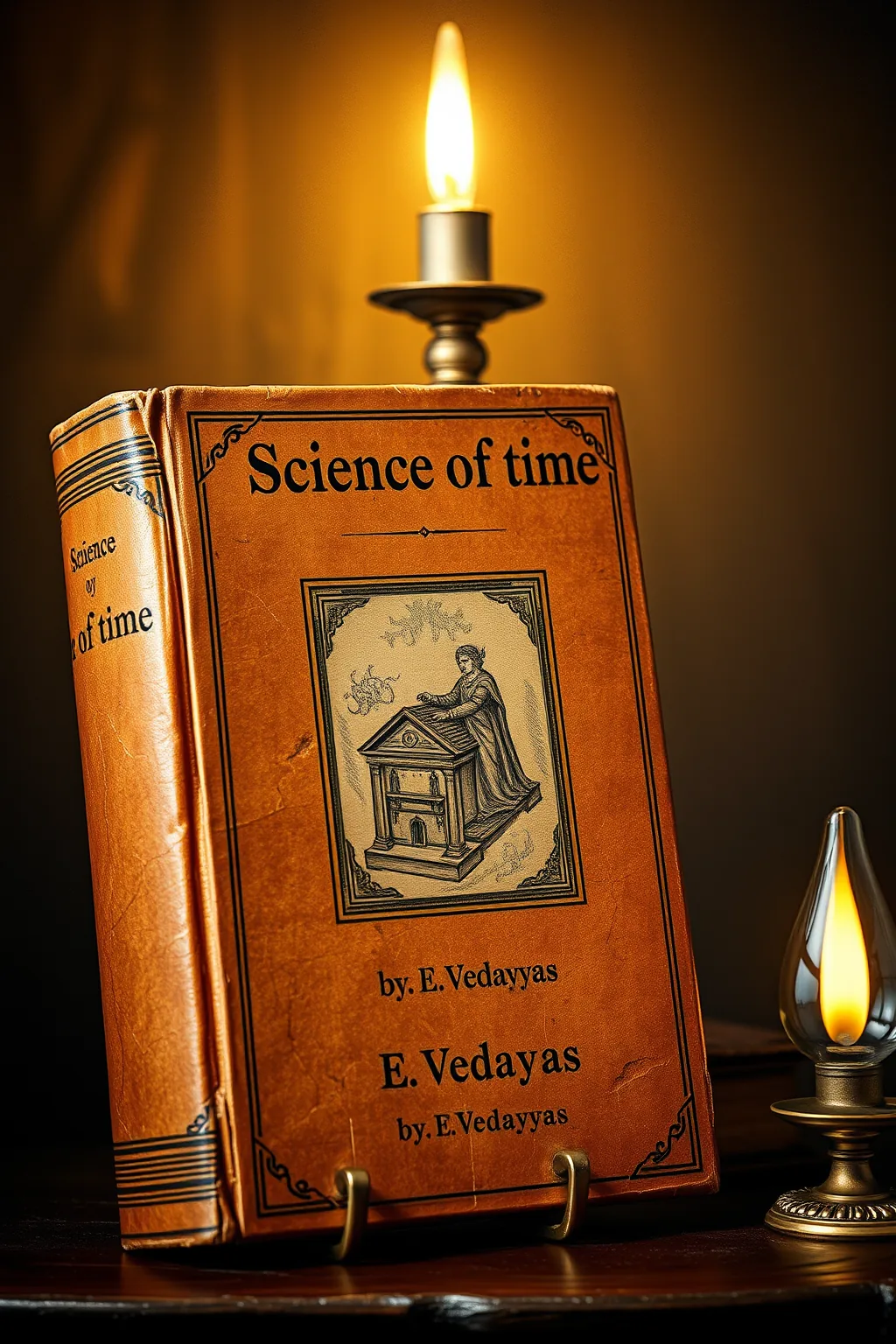
E. Vedavyas's 'Science of Time' is a masterclass in Vedic cosmology, offering an unparalleled scholarly yet deeply spiritual interpretation of temporal mechanics. This work brilliantly synthesizes complex philosophical concepts with the rich tapestry of Hindu astrology, revealing time as a living, breathing entity. Vedavyas's profound insights into the Vedas illuminate the esoteric underpinnings of cosmic cycles and their impact on human consciousness. Essential reading for students of esotericism, comparative religion, and advanced practitioners of Vedic sciences seeking to unlock the hidden dimensions of time.
📝 Description
61
E. Vedavyas's 'Science of Time' (published 2020) examines Vedic cosmology's view of temporality.
Published in 2020, E. Vedavyas's 'Science of Time' examines the Vedic understanding of temporality. The book details how Hindu traditions perceive time not as a simple linear flow, but as a cyclical force tied to cosmic processes. Vedavyas unpacks the esoteric interpretations of time, connecting it to consciousness and the universe's cycles of creation, preservation, and dissolution.
The work uses specific symbolism and philosophical arguments to present time as a multidimensional aspect of spiritual growth. It encourages a view of time that extends beyond ordinary perception, suggesting its interwoven nature with human evolution. The author seeks to illuminate the metaphysical principles that shape our existence.
This book engages with the esoteric traditions of Hinduism, particularly the philosophical and cosmological frameworks found in Vedic texts. It focuses on interpretations of time that are not part of mainstream scientific or philosophical discourse. By examining concepts like cyclical time (kalpa, yuga) and its relation to divine consciousness and universal cycles, Vedavyas situates the book within a lineage of Indian spiritual thought that views time as a fundamental element of existence, distinct from its Western linear conception.
💡 Why Read This Book?
Uncover the profound, esoteric dimensions of time as understood through the ancient Vedic scriptures. 'Science of Time' offers a unique lens on cosmic cycles, consciousness, and the spiritual significance of temporal flow. Ideal for seekers of hidden knowledge, scholars of Eastern philosophies, and practitioners of Hindu astrology who wish to deepen their understanding of time's metaphysical role.
⭐ Reader Reviews
Honest opinions from readers who have explored this book.
❓ Frequently Asked Questions
What is the primary focus of 'Science of Time'?
The book's primary focus is the esoteric and cosmological interpretation of time, drawing extensively from the ancient Vedic texts and Hindu traditions.
How does this book relate to Hindu astrology?
It intricately links the concept of time within Vedic philosophy to the principles and interpretations found in Hindu astrology, revealing their interconnectedness.
Who is the intended audience for this book?
The book is intended for serious students of esotericism, philosophy, religious studies, and those interested in a deeper, spiritual understanding of time.
Does the book offer practical applications?
While deeply philosophical, the insights can inform one's spiritual practice and understanding of life's cyclical nature, offering a framework for deeper contemplation.
What makes this book 'esoteric'?
It delves into hidden meanings, symbolic interpretations, and metaphysical principles related to time that are not typically found in mainstream scientific or philosophical discourse.
🔮 Key Themes & Symbolism
Vedic Conception of Time
This theme looks at the profound and complex understanding of time within the Vedic corpus. It moves beyond a linear perception, exploring concepts like Yugas (cosmic ages), Kalpas (days of Brahma), and the cyclical nature of existence. Vedavyas illuminates how time, in the Vedic worldview, is not merely a measurement but a dynamic force interwoven with consciousness, karma, and the unfolding of the universe. The focus is on the philosophical and spiritual implications of these temporal cycles, suggesting a grand cosmic rhythm that influences all sentient beings and their spiritual journeys.
Astrological and Cosmological Interplay
This theme examines the intrinsic connection between the Hindu astrological system and the Vedic understanding of time. It explores how celestial movements are not just indicators but are seen as manifestations of deeper temporal energies. The book dissects the symbolic language of Hindu astrology, revealing its role in interpreting the ebb and flow of cosmic time and its impact on earthly events and individual destinies. It highlights the ancient wisdom that views the cosmos as a living clock, with planets and stars acting as celestial gears in the grand mechanism of time.
Time as a Spiritual Dimension
This central theme posits time not just as a physical or temporal construct but as a spiritual dimension accessible through higher consciousness. Vedavyas argues that the Vedic seers perceived time as a field of spiritual potential, a canvas upon which the soul's journey unfolds. The book explores how understanding the true nature of time can lead to liberation from its perceived limitations, offering a path towards transcending temporal bondage and realizing one's eternal essence. It emphasizes the transformative power of aligning with cosmic time through spiritual practice and wisdom.
💬 Memorable Quotes
Direct passages from the work, attributed to the author.
“The Vedas whisper secrets of time, revealing cycles within cycles, a divine rhythm of creation.”
— This emphasizes the esoteric knowledge held within the Vedic scriptures, portraying time as a complex, multi-layered phenomenon governed by a sacred, ordered cosmic pulse.
“Astrology charts the pulse of time, mirroring the soul's journey through cosmic tides.”
— This connects the practice of astrology directly to the temporal mechanics discussed, suggesting it's a tool for understanding one's personal narrative within the larger cosmic timeline.
“To understand time is to glimpse the face of eternity, beyond the fleeting moments.”
— This points to the ultimate spiritual realization that can be achieved through grasping the true nature of time, transcending its perceived limitations and touching the infinite.
“The universe breathes in time, exhaling epochs of being and non-being.”
— This poetic metaphor illustrates the dynamic, cyclical nature of the cosmos as described in Vedic thought, where periods of manifestation and dissolution are integral to its existence.
💡 Key Ideas
Editorial paraphrase of the work's core concepts — not direct quotes.
Time is the silent sculptor of existence, shaping destinies across cosmic epochs.
This quote captures the active, formative power of time within the Vedic worldview, highlighting its role in the grand unfolding of reality and the predetermined paths of beings.
🌙 Esoteric Significance
Tradition
This work is deeply rooted in the Vedic tradition of Hinduism, specifically its philosophical and cosmological branches. It draws upon the vast corpus of Vedic literature, including the Rigveda, Yajurveda, Samaveda, and Atharvaveda, as well as Upanishadic thought and classical Ayurvedic and Jyotisha (astrological) texts. The esoteric significance lies in its exploration of concepts like Brahman (ultimate reality), Maya (illusion), and the cyclical nature of cosmic time (Yugas and Kalpas), which are central to this tradition's mystical worldview and its understanding of consciousness.
Symbolism
The book unravels the strong symbolism associated with time in Vedic thought. Key symbols include the Wheel of Time (Kala Chakra), representing cyclicality and destiny; the Cosmic Egg (Brahmanda), symbolizing the universe born from primordial time; and the divine figures associated with time, such as Kala (personification of time) and Yama (god of death and justice, often linked to time's passage). Vedavyas interprets these symbols not merely as decorative elements but as profound pointers to the underlying mechanics of existence and the spiritual lessons embedded within temporal phenomena.
Modern Relevance
In an era often characterized by a linear, fast-paced perception of time and a focus on material progress, 'Science of Time' offers a vital counterpoint. Its exploration of cyclical time, consciousness, and the interconnectedness of all things provides a framework for understanding our place within a larger cosmic order. The book's insights can foster a greater sense of mindfulness, patience, and spiritual purpose, encouraging readers to transcend the anxieties of temporal limitations and connect with a deeper, more enduring aspect of reality. It offers a philosophical and spiritual anchor in a rapidly changing world.
👥 Who Should Read This Book
This profound work is essential for seekers of hidden knowledge and those fascinated by the metaphysical underpinnings of existence. Scholars of comparative religion, Eastern philosophies, and ancient cosmology will find its rigorous Vedic analysis invaluable. Practitioners of Hindu astrology and Ayurveda will gain a deeper appreciation for the temporal forces they engage with. Even beginners curious about the spiritual dimensions of time and the wisdom of ancient India will find 'Science of Time' an useful and transformative read, offering a unique perspective that transcends conventional understanding.
📜 Historical Context
Written during a period of renewed interest in ancient Indian wisdom and its universal applicability, E. Vedavyas's 'Science of Time' emerges as a crucial bridge between traditional Vedic scholarship and modern metaphysical inquiry. The late 20th and early 21st centuries have witnessed a global resurgence of interest in Eastern philosophies and esoteric traditions, seeking alternatives to materialistic worldviews. Vedavyas's work contributes significantly to this dialogue, offering a rigorous yet accessible interpretation of the Vedas that speaks to contemporary seekers. It stands as a proof of the enduring relevance of ancient insights into cosmology and the nature of reality, situating itself within a lineage of scholars who have sought to illuminate the profound depths of Vedic thought for a global audience.
📔 Journal Prompts
Reflect on a personal experience where time seemed to bend or expand. How might Vedic concepts of time explain this phenomenon?
Consider the concept of Yugas. How does understanding these vast cosmic cycles influence your perception of your own lifespan and the progression of human history?
Meditate on a symbol of time from your own cultural background or from this book. What deeper meanings does it reveal to you?
How does the Vedic idea of time as a cyclical force, rather than strictly linear, change your approach to planning and setting goals?
Explore the relationship between your personal consciousness and the perceived flow of time. Are there moments when you feel more connected or disconnected from the present?
🗂️ Glossary
Vedas
The oldest scriptures of Hinduism, considered divine revelations, containing hymns, rituals, philosophical insights, and guidance on various aspects of life and the cosmos.
Yuga
A cyclical epoch in Hindu cosmology, representing a vast period of time that marks the gradual decline and eventual renewal of dharma (righteousness) and consciousness in the universe.
Kalpa
A cosmic day of Brahma, the creator god in Hinduism, comprising 1,000 Yugas, representing an immense span of time during which the universe is created and maintained.
Jyotisha
The traditional Hindu system of astrology, which studies celestial phenomena and their influence on earthly events and individual destinies, deeply intertwined with concepts of time and karma.
Brahman
The ultimate reality or absolute consciousness in Hinduism, the supreme spiritual principle that underlies all existence, often described as timeless and eternal.
This book appears in 2 collections
🔮 Readers Also Liked
Browse all →








From the “Astrology” Collection
View all →









More Free Astrology & Cosmology Books
View all →