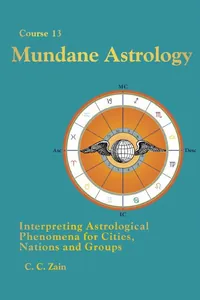
Essentials of Mundane Astrology
 76
76

Essentials of Mundane Astrology
The first published edition of Essentials of Mundane Astrology in 2018 was a welcome, albeit late, consolidation of a complex astrological sub-discipline. Its strength lies in its methodical breakdown of principles, moving from planetary significations to national horoscopes with logical progression. A particularly illuminating section details the application of planetary rulerships to specific countries and their governments, offering a concrete method for analysis often missing in more generalized texts. However, the work suffers from its anonymous authorship; the lack of a named astrologer or a clear lineage makes it difficult to place within specific interpretive traditions or to assess potential biases. The text feels more like a compilation of established techniques than an original contribution, and at times, the explanations can become overly technical without sufficient illustrative examples. Despite these limitations, it offers a solid, if somewhat dry, introduction for those committed to mastering this challenging field.
📝 Description
76
Essentials of Mundane Astrology offers a systematic guide to interpreting celestial influences on collective events.
This text details the principles and methods for analyzing astrological influences on societies, governments, and global phenomena. It aims to equip readers with the tools to understand the celestial underpinnings of historical cycles and contemporary events. The work is intended for students and practitioners of astrology who wish to expand their focus beyond individual horoscopes. It is particularly useful for those interested in political astrology, economic forecasting, and the astrological study of societal shifts. Researchers of historical trends and individuals curious about astrological interpretations of world events will also find value in its comprehensive approach.
Mundane astrology, as presented here, traces its lineage through ancient Babylonian and Hellenistic practices, developing through medieval and Renaissance periods. Figures like Ptolemy and William Lilly contributed to its methodology. While personal astrology often takes precedence today, a renewed interest in celestial influences on a global scale has emerged in the 21st century. This resurgence prompts a re-examination and codification of mundane astrology's principles for modern study. The book covers core concepts such as planetary cycles, the application of zodiacal signs and houses to nations and institutions, and the analysis of major astrological aspects concerning global events.
The study of mundane astrology connects celestial patterns to the fate of nations and the broader human community. Its historical roots are found in early astrological traditions that observed the cosmos not just for personal guidance but for understanding the cycles of empires and societies. This tradition views earthly events as being in correspondence with celestial movements, using planetary positions and configurations to forecast or explain collective phenomena. It represents a significant branch of astrological thought that seeks to understand the larger cosmic order as it manifests in human history and governance.
💡 Why Read This Book?
• Learn the specific techniques for analyzing the astrological influences on national and global events, moving beyond individual natal charts. This book details methods for constructing and interpreting horoscopes for countries, a core component of mundane astrological practice. • Understand the significance of planetary cycles and aspects as they relate to collective human affairs, such as economic trends or political shifts. The work explores how long-term planetary movements, like Saturn's cycles, are applied to macro-level forecasting. • Gain practical skills in applying astrological principles to historical analysis and contemporary world events. You will be able to identify astrological correlations with major societal occurrences discussed within the text's framework.
⭐ Reader Reviews
Honest opinions from readers who have explored this book.
❓ Frequently Asked Questions
What is Mundane Astrology and how does it differ from natal astrology?
Mundane Astrology focuses on world events, national trends, and collective phenomena, using astrological principles to interpret societal shifts. It contrasts with natal astrology, which analyzes the birth chart of an individual to understand their personal life and destiny.
What are the key astrological elements used in Mundane Astrology?
Key elements include planetary cycles, the interpretation of zodiacal signs and houses as applied to nations, and the analysis of major astrological aspects in relation to global events and significant historical moments.
When was Essentials of Mundane Astrology first published?
Essentials of Mundane Astrology was first published in 2018. This indicates it is a relatively recent compilation of established mundane astrological techniques.
Who is the author of Essentials of Mundane Astrology?
The author of Essentials of Mundane Astrology is unknown. The book was first published in 2018, and no author is credited on the original edition.
Does the book provide historical examples of Mundane Astrology in action?
While the book lays out principles, its primary focus is on the methodology of mundane astrological analysis. It aims to equip readers to apply these methods to historical and contemporary events themselves.
Is this book suitable for complete beginners to astrology?
This book is best suited for individuals with a foundational understanding of astrological concepts, as it delves into a specialized branch. Beginners might benefit from introductory astrology texts before tackling mundane astrology.
🔮 Key Themes & Symbolism
National Horoscopes
The construction and interpretation of horoscopes for entire nations form a central theme. This involves identifying key astrological factors, such as the ascendant, midheaven, and planetary placements at the time of a nation's founding or a significant historical event. The work explores how these charts can be used to understand a nation's character, its political landscape, and its potential future trajectories, providing a framework for astrological analysis of collective destiny.
Planetary Cycles and World Trends
This theme focuses on how the longer-term cycles of planets, particularly outer planets like Jupiter, Saturn, Uranus, and Neptune, correlate with significant shifts in global affairs. The book examines how conjunctions, oppositions, and other major aspects between these celestial bodies can align with periods of economic upheaval, political transformation, or major societal changes, offering a lens to understand historical patterns.
Astrology of Institutions
Essentials of Mundane Astrology extends astrological analysis to institutions, governments, and major societal structures. It discusses how to apply astrological principles to understand the dynamics of these entities, including their formation, leadership, and influence on the broader population. This involves applying house systems and planetary rulerships to interpret the functioning and impact of political bodies and established organizations.
Interpreting Collective Events
The book provides methodologies for interpreting astrological influences on collective human experiences, such as wars, economic depressions, and social movements. It emphasizes the importance of understanding the interplay between planetary configurations and the unfolding of historical events, suggesting that celestial patterns offer symbolic insights into the underlying forces driving human collective action and societal evolution.
💬 Memorable Quotes
Direct passages from the work, attributed to the author.
“Mundane astrology applies celestial principles to the affairs of nations and the collective populace.”
— This statement captures the core purpose of the book: to demonstrate how astrological techniques, typically used for individuals, can be adapted to understand the larger currents affecting societies and governments.
“The cycles of Saturn and Jupiter hold particular significance for economic and political shifts.”
— This highlights a key concept in mundane astrology, emphasizing the long-term, impactful nature of outer planetary movements and their correlation with major societal transformations.
“A nation's horoscope provides a symbolic blueprint for its historical trajectory.”
— This suggests that the astrological chart cast for a country's inception or a central moment acts as a foundational map, offering insights into its inherent characteristics and potential developmental path.
“Planetary ingressions into cardinal signs often herald periods of significant societal change.”
— This points to specific astrological phenomena—planets entering certain zodiacal signs—as potential indicators for times of major disruption or transformation on a global scale.
“Understanding the rulers of the houses for a national chart is crucial for interpretation.”
— This emphasizes the importance of applying the traditional rulerships of astrological houses to a national chart to understand which planetary energies govern specific areas of national life, such as leadership or finance.
🌙 Esoteric Significance
Tradition
This work fits within the broader Hermetic and Western Esoteric traditions, which have historically incorporated astrological principles into their understanding of macrocosm and microcosm. Mundane astrology, specifically, draws from ancient Chaldean and Hellenistic astrological methods, adapting them to analyze collective human affairs. It departs from purely individualistic astrological interpretations, seeking to align celestial movements with the grander cycles of history and civilization, a common concern in esoteric philosophy.
Symbolism
Key symbols include planetary ingressions, particularly those of Jupiter and Saturn, which are seen to mark significant shifts in economic and political climates. The zodiacal signs are also vital, representing archetypal energies that color national characteristics or major global trends. Houses, when applied to national charts, symbolize specific domains of collective life, such as government (10th House), finance (2nd House), or conflict (12th House).
Modern Relevance
Contemporary practitioners of political and economic astrology, as well as researchers exploring cyclical theories of history through an esoteric lens, draw upon the foundational principles outlined in this book. Thinkers interested in the astrological underpinnings of global events, social movements, and geopolitical shifts find its systematic approach valuable for contemporary analysis.
👥 Who Should Read This Book
• Students of political and economic astrology seeking structured methodologies for analyzing world events and national trends beyond individual horoscopes. • Researchers of historical cycles and societal transformations interested in applying esoteric frameworks to understand collective human destiny. • Practicing astrologers looking to expand their scope to include mundane applications, offering clients insights into broader societal influences affecting their lives.
📜 Historical Context
The study of Mundane Astrology boasts a lineage stretching back to antiquity, with its principles integrated into the astrological practices of Babylonian, Hellenistic, and later medieval Islamic and European scholars. Figures like Claudius Ptolemy, in his Tetrabiblos, discussed celestial influences on climate and the fates of empires, laying early groundwork. During the Renaissance, astrologers like William Lilly continued to apply these techniques to interpret political events and national fortunes, often in response to the turbulent socio-political landscapes of their times. While personal natal astrology gained prominence in the 20th century, a resurgence of interest in mundane astrology emerged in the late 20th and early 21st centuries, partly fueled by a desire to understand globalized events and societal transformations. This work, first published in 2018, arrives in an era where global interconnectivity and rapid change prompt renewed engagement with celestial interpretations of collective human destiny.
📔 Journal Prompts
The application of planetary cycles to national horoscopes.
Your interpretation of a Saturn-Jupiter conjunction's effect on a specific nation.
The role of cardinal signs in periods of societal upheaval.
How the 10th house ruler influences a country's leadership.
The symbolic meaning of planetary ingressions into a nation's chart.
🗂️ Glossary
Mundane Astrology
A branch of astrology focused on interpreting the astrological influences on collective human affairs, including national events, political trends, economic cycles, and societal shifts.
National Horoscope
An astrological chart cast for a specific nation, typically based on its founding date or a significant historical moment, used to analyze its characteristics and destiny.
Planetary Cycles
The recurring patterns of planetary movement, especially the slower-moving outer planets, which are believed to correlate with significant long-term trends in human history and society.
Planetary Ingressions
The moment a planet moves from one zodiacal sign into the next. These are often considered significant astrological markers for shifts in energy or influence.
Zodiacal Signs
The twelve divisions of the ecliptic, each representing a distinct archetypal energy or mode of expression, applied in mundane astrology to national characteristics or global trends.
Houses
The twelve divisions of the astrological chart, representing different areas of life or experience. In mundane astrology, they are applied to interpret specific facets of a nation or institution.
Rulerships
The traditional association of specific planets with zodiacal signs and astrological houses, indicating which celestial bodies govern particular areas of a chart or national affairs.


![The celestial science of astrology vindicated, from the calumny of those who are biggotted [sic] against what they do not understand, by R. Phillips. 1785](/img/thumb/the-celestial-science-of-astrology-vindicated-from-the-calumny-of-those-who-are-biggotted-sic-against-what-they-do-not-understand-by-r-phillips-1785-phillips-r-astrologer.webp)