Mental Alchemy
 76
76

Mental Alchemy
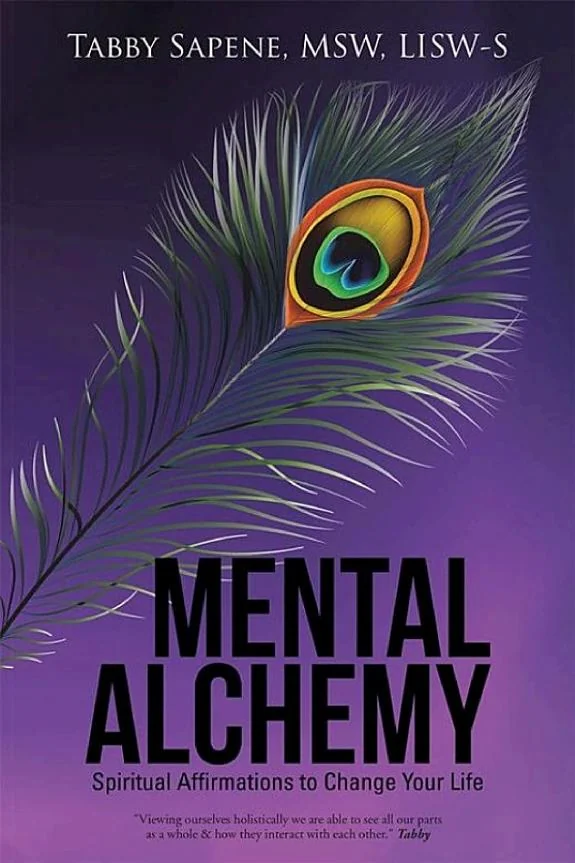
Tabby Sapene's Mental Alchemy offers a refreshing, grounded perspective on personal evolution, moving beyond abstract spiritual notions to actionable psychological techniques. The author's background as an MSW and LISW-S lends a credible, therapeutic weight to the exploration of affirmations as a means to shift deeply ingrained patterns. A particular strength is the consistent linkage between ancient alchemical symbolism and modern cognitive reframing, making potentially obscure concepts tangible. However, while the book excels at outlining the 'how-to' of affirmation use, it could benefit from more explicit case studies or deeper dives into the psychological mechanisms at play beyond the basic premise of pattern disruption. The initial chapter on the historical parallels between alchemy and mental transformation, though brief, provides a compelling hook. Overall, Mental Alchemy serves as a valuable, accessible guide for anyone seeking to consciously remold their inner world.
📝 Description
76
Tabby Sapene's 2023 book, Mental Alchemy, frames personal change as an alchemical process.
Tabby Sapene's "Mental Alchemy" provides a practical method for self-transformation. The author, a licensed social worker, guides readers to identify and alter limiting beliefs and habitual thought patterns that affect well-being. The book draws a direct comparison between ancient alchemy's goal of turning base metals into gold and the internal work of changing one's mental and emotional state.
This work is for individuals who want a structured way to find balance in their physical, mental, emotional, and spiritual lives. It suits those unhappy with their current situation, feeling trapped by old habits, or seeking deeper self-understanding and clearer perception of their surroundings. Sapene's approach is for people ready to commit to self-directed change and actively engage in reshaping their inner world.
The book's core idea that the mind can be a crucible for transformation echoes historical esoteric thought. Traditions from Egyptian Hermeticism to Renaissance alchemy explored inner refinement. Sapene adapts these concepts, using psychological language and modern therapeutic techniques to make them accessible, moving beyond the ritualistic or symbolic methods of earlier eras.
💡 Why Read This Book?
• You will learn to employ affirmations as a specific tool for dismantling unproductive thought patterns, directly referencing the book's central 'mental transmutation' concept, which offers a practical alternative to passive self-help. • You will gain an understanding of how ancient alchemical principles, like changing lead into gold, can be applied to personal psychological growth, as detailed in the book's historical context sections from 2015. • You will feel empowered to cultivate a deeper self-awareness and emotional balance by actively engaging with Sapene's methods, moving beyond vague desires for change to concrete, repeatable practices.
⭐ Reader Reviews
Honest opinions from readers who have explored this book.
❓ Frequently Asked Questions
What is the primary goal of the affirmations discussed in Mental Alchemy?
The primary goal is to achieve physical, mental, emotional, and spiritual balance by changing previous patterns that no longer serve one's highest good, as outlined by Tabby Sapene MSW LISW-S.
How does Mental Alchemy connect to ancient alchemy?
The book likens the ancient alchemical process of changing lead into gold to the internal work of transforming limiting beliefs and thought patterns into positive, life-affirming ones.
Who is the author, Tabby Sapene MSW LISW-S?
Tabby Sapene is a psychotherapist with Master of Social Work (MSW) and Licensed Independent Social Worker-Supervising (LISW-S) credentials, bringing a professional, therapeutic perspective to the subject.
When was Mental Alchemy first published?
Mental Alchemy was first published on October 2, 2015, marking its entry into contemporary literature on self-improvement and esoteric thought.
Does the book offer a structured approach to self-improvement?
Yes, the book focuses on using affirmations as a structured method to elicit a deeper way of seeing oneself and the world, facilitating personal change.
What kind of 'patterns' does the book aim to change?
The book aims to change previous mental, emotional, or spiritual patterns that are identified as no longer serving the individual's highest good or impeding their balance.
🔮 Key Themes & Symbolism
Affirmations as Transmutation
The central theme revolves around the deliberate use of affirmations not as mere positive statements, but as potent tools for psychological transmutation. Drawing an analogy from historical alchemy, where base metals were believed to be converted into gold, Sapene posits that conscious, directed affirmations can transform negative or limiting thought patterns into constructive and empowering ones. This process is presented as a disciplined practice, requiring consistency to fundamentally alter one's internal landscape and, consequently, their perception of reality.
Holistic Balance
Mental Alchemy emphasizes the interconnectedness of an individual's physical, mental, emotional, and spiritual well-being. The book argues that true personal growth and a sense of wholeness are achieved when these dimensions are in harmony. It provides a framework for readers to identify imbalances and offers practical techniques, primarily through affirmations, to cultivate equilibrium across all facets of their being. This holistic approach aims to foster comprehensive personal development.
Self-Perception and Worldview
A significant focus is placed on how internal states shape external experiences. The book guides readers to develop a 'deeper way of seeing yourself and the world around you.' By changing underlying beliefs and thought processes, individuals can shift their subjective reality, leading to a more positive and functional interaction with their environment. This theme underscores the power of the mind to construct and reconstruct personal experience.
Ancient Wisdom Modernized
Sapene bridges the gap between ancient esoteric traditions and contemporary psychological understanding. The book uses the metaphor of alchemy, a practice shrouded in secrecy for millennia, to illustrate principles that are now accessible through modern therapeutic language. This connection provides historical depth and a sense of enduring wisdom, while the application of these concepts is firmly rooted in practical, actionable steps for the modern seeker.
💬 Memorable Quotes
Direct passages from the work, attributed to the author.
“Focusing on using affirmations to change previous patterns that no longer serve your highest good.”
— This captures the book's core methodology: affirmations are presented as active agents for dismantling outdated mental and emotional structures that impede personal progress and well-being.
“Elicit a deeper way of seeing yourself and the world around you.”
— This highlights the transformative potential of the practices within the book, suggesting a shift in perception that moves beyond superficial observation to a more profound, insightful understanding of self and reality.
“In ancient teachings, alchemy was described as changing lead into gold.”
— This serves as the foundational metaphor for the book, illustrating the concept of transmutation – the idea that something seemingly base or negative within oneself can be transformed into something valuable and pure.
“As great teachers, alchemists shared their knowledge with initiates, students in their sacred groups that were cloaked in secrecy for many millennia.”
— This contextualizes the ancient practice of alchemy, emphasizing its historical role as a hidden wisdom tradition passed down through select groups, setting the stage for its modern reinterpretation.
“This book focuses on using affirmations to change previous patterns.”
— A direct statement of purpose, clearly indicating that the primary vehicle for change discussed in the text is the strategic application of affirmations to modify ingrained behaviors and thoughts.
🌙 Esoteric Significance
Tradition
The work aligns with the Hermetic tradition, particularly its emphasis on the principle of 'As Above, So Below,' which suggests a correspondence between the macrocosm (the universe) and the microcosm (the individual). While not overtly steeped in Kabbalistic or Gnostic numerology, its focus on inner transformation and the mind's power to shape reality echoes fundamental Hermetic tenets regarding mentalism and the influence of thought.
Symbolism
The central symbol is 'alchemy' itself, representing the process of transmutation. The transformation of lead (representing base, unrefined states of being, ignorance, or negative patterns) into gold (representing spiritual enlightenment, wisdom, and perfected states) is the core symbolic parallel. The book implicitly uses the 'crucible' of the mind as the vessel for this alchemical work.
Modern Relevance
Sapene's approach speaks to contemporary therapeutic modalities that utilize affirmations, such as positive psychology and certain branches of CBT. It also speaks to the modern resurgence of interest in practical spirituality and self-directed transformation, drawing parallels with concepts found in modern manifestation teachings and neuro-linguistic programming (NLP), albeit grounded in a more classical alchemical metaphor.
👥 Who Should Read This Book
• Individuals seeking practical, structured methods for personal growth who feel stuck in old thought patterns. They will benefit from Sapene's clear guidance on using affirmations as a tool for 'mental transmutation.' • Practitioners of esoteric or spiritual traditions interested in bridging ancient wisdom with modern psychological techniques. They will appreciate the book's reinterpretation of alchemical symbolism for contemporary self-awareness. • Licensed therapists or social workers looking for accessible frameworks to help clients reframe limiting beliefs. Sapene's MSW LISW-S credentials lend credibility to the therapeutic application of these concepts.
📜 Historical Context
Published in 2015, Tabby Sapene's *Mental Alchemy* emerged in an era where mindfulness, cognitive behavioral therapy (CBT), and positive psychology were gaining widespread traction. While these fields often focus on observable behaviors and thought processes, Sapene's work taps into a deeper, more symbolic lineage, drawing parallels with historical esoteric practices. The book's reinterpretation of alchemy, a tradition historically associated with figures like Nicolas Flamel in 14th-century France, positions it within a resurgence of interest in Hermeticism and ancient wisdom traditions, albeit presented through a modern psychological lens. Unlike purely academic or strictly ritualistic explorations of alchemy, Sapene's approach emphasizes practical application for personal well-being, distinguishing it from contemporary movements that might have focused more narrowly on, for instance, Jungian archetypes or purely secular self-help techniques.
📔 Journal Prompts
Reflection on the 'mental transmutation' of a specific limiting belief.
Identifying current patterns that no longer serve your highest good.
How can affirmations elicit a deeper way of seeing your immediate environment?
Exploring the connection between your mental state and physical sensations.
Mapping the alchemical journey from 'lead' to 'gold' within your own life.
🗂️ Glossary
Affirmations
Positive statements consciously chosen and repeated to challenge and change subconscious limiting beliefs, thereby influencing thoughts, feelings, and behaviors.
Mental Alchemy
The core concept of the book, referring to the process of transforming negative or limiting mental and emotional patterns into positive, empowering ones, analogous to ancient alchemical transmutation.
Patterns
Recurring, often unconscious, ways of thinking, feeling, or behaving that are established through habit or past experience.
Highest Good
A state or outcome that is maximally beneficial and aligned with the ultimate spiritual or personal potential of an individual.
Transmutation
The act of changing or converting something from one form, substance, or state into another, particularly used here in a psychological context.
Balance
A state of equilibrium across physical, mental, emotional, and spiritual dimensions, leading to holistic well-being.
Initiates
Individuals who have undergone a process of learning and were admitted into the secret knowledge or practices of a particular group or tradition, especially in ancient mystery schools.
This book appears in 1 collection
🔮 Readers Also Liked
Browse all →






From the “Mental Alchemy” Collection
View all →









More Free Alchemy & Hermeticism Books
View all →