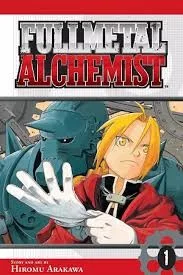
Fullmetal Alchemist, Vol. 15
 80
80

Fullmetal Alchemist, Vol. 15
Volume 15 of Fullmetal Alchemist finds the series hitting a stride of escalating peril and intricate revelations. Hiromu Arakawa masterfully balances moments of intense action with the slow burn of uncovering the vast conspiracy at play. The depiction of the Homunculi and their motivations, particularly in this section, feels especially nuanced, moving beyond simple villainy to explore their manufactured existences. A particular strength lies in the visual storytelling; Arakawa’s panel layouts effectively convey both the chaos of battle and the quiet dread of discovery. However, the sheer density of plot threads can occasionally make the pacing feel slightly compressed, requiring close attention to track every development. The exploration of Father's ultimate goals and the sacrifices made by various factions is compelling, though some secondary character arcs might feel underserved as the main narrative tightens. Ultimately, this volume serves as a critical pivot point, ratcheting up the tension for the dramatic conclusion.
📝 Description
80
Fullmetal Alchemist, Vol. 15, published in 2006, intensifies the Elric brothers' quest for the Philosopher's Stone.
This 2006 installment of Hiromu Arakawa's manga follows Edward and Alphonse Elric as their pursuit of the Philosopher's Stone draws them deeper into conflict with the Homunculi. The narrative advances the brothers' understanding of the conspiracy surrounding them, with rising stakes and complex character interactions. The plot thickens as they uncover more about the forces opposing them and the true cost of their alchemical endeavors.
Fullmetal Alchemist, Vol. 15 was released as the manga medium gained significant international traction. The series, which started in 2001, had already established a large fanbase. This volume arrives at a point where the story moves past initial setup to directly confront the main antagonists and the ethical dilemmas inherent in the Elrics' quest. Its success mirrored a broader increase in the global popularity of Japanese popular culture.
Within the broader tradition of alchemical literature, this volume of Fullmetal Alchemist continues to examine core principles like Equivalent Exchange. It presents these concepts not as literal transformations but as metaphors for sacrifice, consequence, and the human drive for knowledge. The series uses alchemical symbolism to discuss the moral limits of scientific advancement and the inherent dangers of seeking power beyond human understanding. It places the characters in situations that test their humanity against the pursuit of forbidden power, reflecting on creation and destruction.
💡 Why Read This Book?
• Learn about the concept of Equivalent Exchange as it's challenged and redefined through the Elric brothers' desperate measures, understanding its philosophical weight beyond simple transaction. • Witness the visual manifestation of alchemical principles and the dark nature of the Homunculi, gaining insight into Arakawa's unique symbolic language. • Trace the unfolding conspiracy involving Father and the military, appreciating how Hiromu Arakawa builds narrative tension through interwoven plotlines and character betrayals.
⭐ Reader Reviews
Honest opinions from readers who have explored this book.
❓ Frequently Asked Questions
When was Fullmetal Alchemist, Vol. 15 originally published in Japan?
Fullmetal Alchemist, Vol. 15 was originally published in Japan in 2006, continuing the serialized run of Hiromu Arakawa's acclaimed manga series.
What is the core alchemical principle explored in Fullmetal Alchemist?
The core alchemical principle is Equivalent Exchange, the idea that to gain something, something of equal value must be lost or sacrificed.
Who are the primary antagonists in the Fullmetal Alchemist series?
The primary antagonists are the Homunculi, artificial beings created by Father, who serve his ultimate, malevolent goals.
What is the significance of the Philosopher's Stone in the story?
The Philosopher's Stone is a legendary alchemical artifact believed to bypass the law of Equivalent Exchange, allowing for the creation of matter without sacrifice.
What type of narrative structure does Fullmetal Alchemist employ?
Fullmetal Alchemist employs a complex, overarching narrative structure with numerous subplots, character arcs, and a central mystery that unfolds gradually across volumes.
How does the series address the nature of humanity?
The series addresses the nature of humanity by exploring themes of soul, life, sacrifice, and the moral choices characters make, often contrasting humans with artificial beings like the Homunculi.
🔮 Key Themes & Symbolism
The Burden of Knowledge
This volume relentlessly explores the perilous path of acquiring forbidden knowledge. Edward and Alphonse Elric's quest for the Philosopher's Stone, a means to circumvent Equivalent Exchange, plunges them into a world of shadowy organizations and existential threats. The narrative highlights how knowledge, particularly concerning the true nature of alchemy and the state's machinations, comes at a steep price, demanding profound sacrifices and confronting characters with horrifying truths about their world and themselves.
Artificial Life and Humanity
The nature of the Homunculi, beings created artificially yet exhibiting complex desires and flaws, forces a re-examination of what constitutes humanity. As their origins and purposes are further revealed, the distinction between creator and created, natural and artificial, blurs. This volume probes the essence of a soul and the potential for sentience and suffering in non-biological forms, challenging traditional definitions of life and personhood within the series' alchemical framework.
The State and Control
Fullmetal Alchemist, Vol. 15 critically examines the pervasive influence and often sinister machinations of state power. The military, ostensibly a force for order, is revealed to be deeply entangled with clandestine experiments and the manipulation of its citizens. The series questions the ethics of governmental control, the use of power for hidden agendas, and the sacrifices demanded in the name of national security or advancement, particularly through the actions of figures like King Bradley.
Sacrifice and Consequence
Central to the narrative is the unforgiving principle of Equivalent Exchange, emphasizing that every action, particularly those involving alchemical transmutation, carries an equal and opposite consequence. This volume showcases characters making immense sacrifices, both voluntary and forced, in their pursuit of goals or survival. The narrative unflinchingly portrays the physical, emotional, and ethical toll of these choices, underscoring that even the noblest intentions can lead to devastating outcomes.
💬 Memorable Quotes
Direct passages from the work, attributed to the author.
“The law of Equivalent Exchange dictates that to obtain something, something of equal value must be lost.”
— This fundamental principle of alchemy in the series serves as both a guiding rule and a source of immense conflict, constantly forcing characters to weigh the cost of their desires against inevitable sacrifice.
“We are not tools to be used and discarded.”
— This sentiment, often echoed by characters questioning their predetermined roles or artificial origins, speaks to a yearning for autonomy and recognition of inherent worth beyond one's creation or purpose.
“The greatest obstacle is not the enemy before you, but the doubt within yourself.”
— This internal struggle highlights the psychological warfare inherent in the Elric brothers' journey, where self-doubt and moral quandaries often prove more formidable than physical adversaries.
“Even if I lose my way, I will find a path forward.”
— This reflects a core tenet of resilience and determination, emphasizing the characters' refusal to be defeated by setbacks and their commitment to continuing their quest despite overwhelming odds.
“What is the meaning of a soul if it can be so easily manipulated?”
— This question arises from the unsettling nature of the Homunculi and the dark alchemical practices, forcing a contemplation of what truly defines life and consciousness beyond mere existence.
🌙 Esoteric Significance
Tradition
The series draws heavily from Western Hermeticism, particularly its alchemical traditions, and Gnostic concepts of flawed creators and hidden truths. The pursuit of the Philosopher's Stone, the exploration of transmutation, and the fundamental law of Equivalent Exchange are direct alchemical metaphors. The Homunculi can be seen as akin to Gnostic Archons or failed creations from a flawed demiurge (Father), embodying spiritual or existential imprisonment.
Symbolism
Key symbols include the Ouroboros, representing cycles of life, death, and rebirth, and often linked to the Homunculi themselves. The Alchemical Circle, essential for transmutation, signifies order, containment, and the manipulation of fundamental forces. The concept of the 'Gate' represents the ultimate mystery of existence, death, and the origin of souls, a profound threshold characters attempt to breach.
Modern Relevance
Contemporary thinkers exploring transhumanism and artificial intelligence often find parallels in the series' depiction of artificial life and the blurring lines between human and machine. The ethical debates surrounding advanced science and the potential for misuse echo discussions in bioethics and techno-philosophy. The series' exploration of systemic corruption and the individual's struggle against oppressive forces remains relevant in political and social discourse.
👥 Who Should Read This Book
• Students of comparative mythology and religious studies: To analyze how classical alchemical and Gnostic themes are reinterpreted within a modern narrative framework. • Fans of intricate world-building and political thrillers: To appreciate the complex geopolitical landscape and the layered conspiracy uncovered throughout the series. • Aspiring writers and artists: To study Hiromu Arakawa's masterful visual storytelling, character development, and thematic integration in manga.
📜 Historical Context
Published in 2006, Fullmetal Alchemist, Vol. 15 arrived during a flourishing period for Shonen manga, with series like Naruto and Bleach also achieving massive international success. Hiromu Arakawa's work distinguished itself through its mature thematic explorations and intricate plotting, moving beyond typical genre fare. The series' blend of alchemy, military intrigue, and philosophical questions about humanity resonated with a global audience. While not facing overt censorship, its complex narrative and dark undertones set it apart from lighter fare. Contemporary manga authors like Tite Kubo (Bleach) were exploring similar themes of destiny and power, but Arakawa's consistent focus on the ethical ramifications of scientific and alchemical pursuits, particularly referencing the law of Equivalent Exchange, provided a unique intellectual anchor for the story.
📔 Journal Prompts
The implications of Father's grand plan for the concept of Equivalent Exchange.
Reflect on the moral compromises made by characters seeking the Philosopher's Stone.
Analyze the symbolic representation of the Homunculi and their relation to humanity.
Consider the nature of souls as depicted through alchemical principles.
Explore the relationship between state power and hidden alchemical societies.
🗂️ Glossary
Alchemy
The ancient proto-scientific and philosophical tradition concerned with the transmutation of matter, the creation of the Philosopher's Stone, and the elixir of life.
Equivalent Exchange
The fundamental law of alchemy within the series, stating that to gain something, something of equal value must be sacrificed or lost.
Philosopher's Stone
A legendary alchemical substance said to enable transmutation of base metals into gold and grant immortality or eternal life.
Homunculi
Artificial humans created through forbidden alchemy, often embodying specific sins and serving a shadowy antagonist known as Father.
Transmutation
The alchemical process of changing one element or substance into another, requiring a transmutation circle and understanding of Equivalent Exchange.
State Alchemists
Alchemists employed by the Amestrian military, granted special privileges in exchange for their services and loyalty to the state.
Amestris
The primary nation in which the Fullmetal Alchemist story is set, characterized by a strong military presence and a complex political structure.
🔮 Readers Also Liked
Browse all →








More by 荒川弘
All books →





More Free Alchemy & Hermeticism Books
View all →