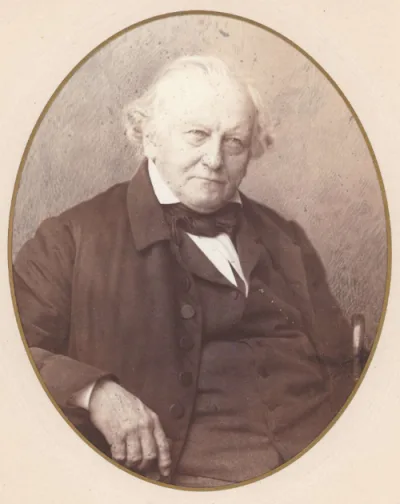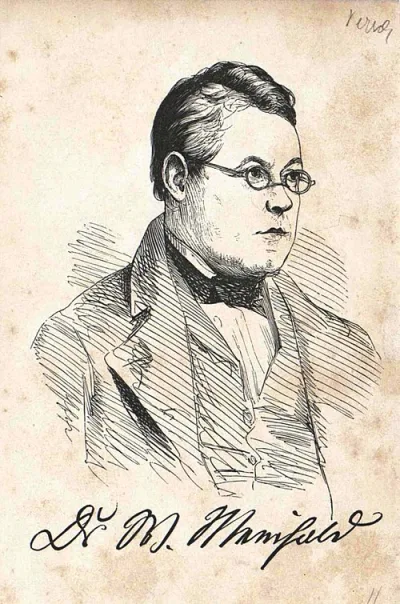
Wilhelm Meinhold
Wilhelm Meinhold was a Pomeranian priest and author known for his Gothic romance novels about witches.
Johannes Wilhelm Meinhold, born in 1797 on the island of Usedom, was a Pomeranian Lutheran priest and author. His early life was shaped by the Napoleonic Wars, and he pursued theological studies at the University of Greifswald. Meinhold served as a priest in various locations on Usedom for over two decades before moving to Farther Pomerania. His career as a priest concluded early due to insubordinate behavior. He passed away in 1851 in Berlin-Charlottenburg. Meinhold was also a creative figure, working as a poet, playwright, and novelist. His literary legacy is primarily built upon two historical Gothic romance novels that gained significant recognition.
Early Life and Ministry
Born Johannes Wilhelm Meinhold on February 27, 1797, in Lütow on the island of Usedom, he grew up in a region influenced by the Napoleonic Wars. His father, Georg Wilhelm Meinhold, was a Lutheran priest. In the autumn of 1813, Meinhold began his studies at the University of Greifswald in Swedish Pomerania. Following his theological training, he commenced his clerical career, serving as a priest in Koserow on Usedom from 1821 to 1827. He then moved to Krummin, also on Usedom, where he remained a priest for the subsequent seventeen years. His tenure as a clergyman eventually ended prematurely due to his insubordinate conduct.
Literary Contributions
Wilhelm Meinhold's enduring fame rests on his two historical Gothic romance novels. The first, "Maria Schweidler, die Bernsteinhexe," was published anonymously in 1838. This work was later translated into English as "The Amber Witch" by Lucie, Lady Duff-Gordon, and released in 1843. His second notable novel, "Sidonia von Bork, die Klosterhexe," appeared in 1847. This tale of a sorceress was translated into English by Jane Wilde, mother of Oscar Wilde, and published in 1849 under the title "Sidonia the Sorceress." The latter novel was also notably printed by William Morris's Kelmscott Press in 1894, indicating its lasting appeal within literary and artistic circles.
Books by Wilhelm Meinhold
7 free public domain books · Read online or download