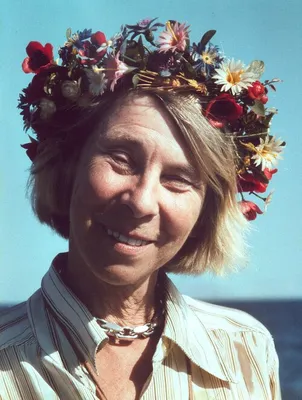
Tove Jansson was a Finland-Swedish author and artist, renowned for her Moomin stories and adult fiction, blending art, philosophy, and introspective themes.
Tove Jansson, a Finland-Swedish author and artist, was born into an artistic family and pursued her studies in art across Helsinki, Stockholm, and Paris. She began her career by painting, illustrating, and writing short stories and articles for various publications. Jansson gained international recognition for creating the Moomin series, a collection of children's books that began with "The Moomins and the Great Flood" in 1945. These stories, featuring the Moomintroll family, evolved from adventurous tales to more introspective and psychologically complex narratives, reflecting Jansson's own life experiences and philosophical explorations.
Beyond her Moomin works, Jansson also authored novels and short story collections for adults, including the semi-autobiographical "Sculptor's Daughter" and the acclaimed "The Summer Book." Her adult fiction often delves into themes of family, memory, and the human condition, drawing inspiration from her personal life and relationships. Jansson's artistic output extended to painting, illustration for classic books, and satirical cartoons during World War II, showcasing a multifaceted creative talent that spanned various genres and mediums throughout her life.
The Moomin Universe: From Whimsy to Existentialism
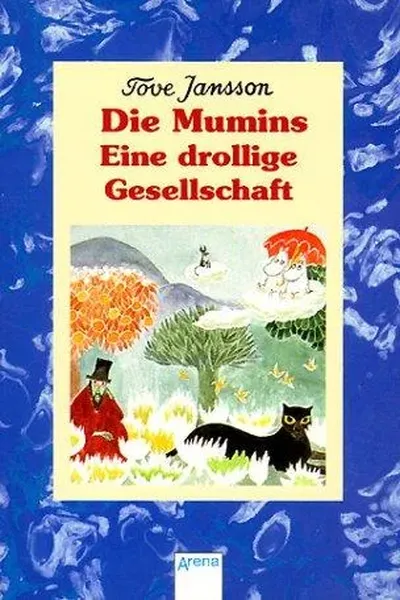
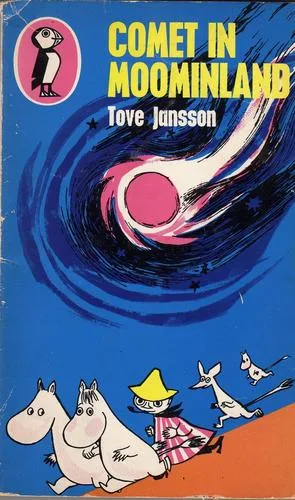
Tove Jansson is most celebrated for her creation of the Moomin characters and their world. Initially conceived as a kinder version of a caricature, the Moomintrolls, a family of white, hippopotamus-like creatures, first appeared in "The Moomins and the Great Flood." While the early Moomin books, written during World War II, featured adventurous plots involving comets and floods, they also contained undertones of danger and the unknown. Jansson's Moomin narratives evolved significantly, particularly after "Moominland Midwinter." Later works, such as "Moominpappa at Sea" and "Moominvalley in November," became increasingly introspective and psychologically profound. These books explored themes of isolation, existential loneliness, and the challenges of navigating difficult emotions, with "Moominvalley in November" being particularly somber, reflecting personal loss. Jansson's decision to cease writing Moomin stories after this period marked a shift towards more mature and philosophical explorations in her subsequent adult fiction.
Artistic Roots and Multifaceted Expression
Born into a family of artists, Tove Jansson's creative journey was deeply influenced by her upbringing. Her father was a sculptor, and her mother a graphic designer and illustrator, fostering an environment rich in artistic expression. Jansson herself received formal art training in Helsinki, Stockholm, and Paris, holding her first solo exhibition in 1943. Her artistic talents were not confined to painting; she also worked as an illustrator for book covers, advertisements, and postcards, and created murals for public buildings. During World War II, she contributed satirical cartoons to the magazine Garm, using her art to comment on political events and figures with sharp wit. Her illustrations extended to classic works like "Alice's Adventures in Wonderland" and "The Hobbit," demonstrating her versatile command of visual storytelling across different genres and contexts.
Adult Fiction: Introspection and Familial Echoes
Transitioning from her beloved Moomin stories, Tove Jansson penned significant works of adult fiction that delved into more complex human experiences. Her semi-autobiographical novel "Sculptor's Daughter" (1968) marked her entry into this literary sphere, followed by five more novels and five short story collections. "The Summer Book," her most recognized adult novel, beautifully captures the intimate relationship between a young girl and her grandmother during a summer on an island. This work, like much of her adult fiction, draws heavily on her personal life, with characters often modeled after her family members, including her niece and mother. These narratives explore themes of memory, nature, aging, and the quiet moments of life, presented with a blend of gentle observation and profound insight, resonating with readers through their emotional depth and understated philosophical underpinnings.
Key Ideas
- Exploration of existential themes and loneliness within children's literature.
- The evolution of narrative from adventure to psychological depth.
- The influence of family and personal life on artistic creation.
- Satirical commentary on political events through illustration.
Books by
5 free public domain books · Read online or download