Shakespeare, William
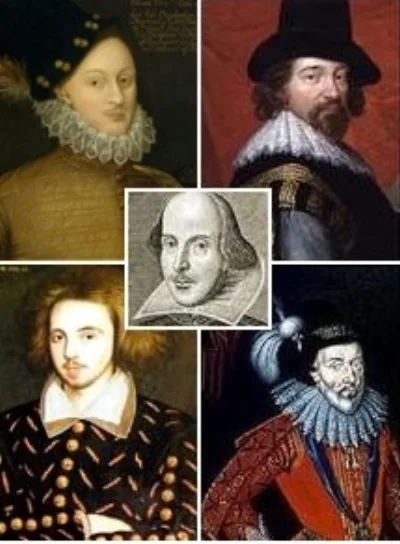
The Shakespeare authorship question posits that William Shakespeare of Stratford did not write the works attributed to him.
The Shakespeare authorship question refers to the ongoing debate regarding whether William Shakespeare, the man from Stratford-upon-Avon, was the true author of the plays and poems attributed to him. Proponents of alternative authorship theories, often termed 'anti-Stratfordians,' suggest that Shakespeare was merely a pseudonym or a front for another individual or group who, for various reasons like social standing or security, preferred to remain anonymous. This perspective gained traction in the mid-19th century, fueled by perceptions of Shakespeare's humble origins and seemingly limited education contrasting with the profound genius and breadth of knowledge displayed in his works.
While this debate has generated considerable interest and numerous proposed candidates, the vast majority of literary historians and Shakespearean scholars dismiss it as a fringe theory. They point to substantial documentary evidence supporting Shakespeare of Stratford's authorship, including title pages, contemporary testimonies, and official records. These scholars maintain that the evidence for Shakespeare is consistent with the standard methods used to attribute works to other writers of his era, and that no comparable direct evidence exists for any alternative candidate. The authorship was not questioned during Shakespeare's lifetime or for centuries after his death.
Arguments for Alternative Authorship
Anti-Stratfordian arguments typically aim to disqualify William Shakespeare of Stratford by highlighting perceived discrepancies between his known life and the sophistication of the works. They often propose that a conspiracy shielded the true author's identity, explaining the lack of direct evidence for their preferred candidate. A common assertion is that the plays and poems demonstrate an advanced education, familiarity with court life, foreign languages, and geography, suggesting an author of aristocratic or scholarly background. Critics point to the absence of personal letters or manuscripts from Shakespeare and the mundane nature of surviving biographical records, such as birth, marriage, and property documents, as evidence that he was not the author. Furthermore, the surviving signatures of Shakespeare are sometimes characterized as rudimentary, interpreted by skeptics as signs of illiteracy or limited education, contrasting with the eloquent and learned content of the works.
Scholarly Rebuttals and Evidence
Scholars and literary historians largely reject the authorship question, classifying it as a fringe theory. They emphasize the convergence of documentary evidence supporting Shakespeare of Stratford's authorship, which includes title pages bearing his name, contemporary accounts from fellow writers and historians, official records like the Stationers' Register, and testimonies from actors and theatre personnel who worked with him. These scholars argue that biographical interpretations of literature are unreliable for authorship attribution and that the evidence for Shakespeare is the same type and quantity as that used for all other authors of his period. They explain gaps in the historical record by noting the generally low survival rate of documents from the Elizabethan and Jacobean eras. The lack of contemporary questioning of Shakespeare's authorship, both during his life and for centuries afterward, is also cited as significant.
The Role of Social Background and Education
A central point for anti-Stratfordians is the perceived incompatibility between Shakespeare's background and the content of his works. Born and raised in Stratford-upon-Avon, a market town, his father was a glover and town official. The family's use of marks instead of signatures, and the limited evidence of literacy among Shakespeare's daughters, are often presented as indicators of an uneducated household. Anti-Stratfordians argue that the plays, which depict women composing and reading letters and show familiarity with aristocratic pursuits like hunting and falconry, could not have been written by someone from such a background. They suggest that the author possessed an intimate knowledge of court politics and culture, and a worldview that seemed unsympathetic to commoners or those seeking social advancement, unlike that of Shakespeare's father or potentially Shakespeare himself.
Key Ideas
- The Shakespeare authorship question posits that the works attributed to William Shakespeare were written by someone else.
- Anti-Stratfordians believe Shakespeare was a front for an anonymous author, often citing social rank, security, or gender as reasons for anonymity.
- Scholarly consensus supports Shakespeare of Stratford-upon-Avon as the author, based on documentary evidence.
- Arguments against Shakespeare often focus on his perceived humble origins, lack of formal education, and limited biographical records.
- Proponents of alternative candidates claim superior knowledge and aristocratic sensibility evident in the works.
Books by Shakespeare, William
3 free public domain books · Read online or download
![The Tempest: The Works of William Shakespeare [Cambridge Edition] [9 vols.]](/img/thumb/the-tempest-the-works-of-william-shakespeare-cambridge-edition-9-vols-shakespeare-william.webp)