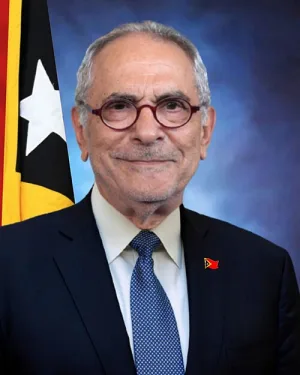
✍️ Author Biography
Pinchas Winston
🌍 Jewish
📚 2 free books
⭐ Known for: Und willst du nicht mein Bruder sein ... D...
Timothy Garton Ash is a historian and commentator focused on modern European history, particularly Eastern Europe and its transitions.
Timothy Garton Ash, born in 1955, is a British historian and author recognized for his extensive work on the contemporary history of Europe, with a particular emphasis on Central and Eastern Europe. He has held academic positions at the University of Oxford and Stanford University's Hoover Institution. His scholarship delves into the former Communist regimes, the events of 1989, and the integration of Eastern Bloc nations into the European Union. Garton Ash also explores broader themes of political freedom, diversity, and free speech within the European context.
His career began with journalistic roles, covering significant events in Poland and other Eastern Bloc countries during the 1980s. His experiences, including being monitored by the Stasi in East Berlin, have directly informed his writing. He has been a vocal commentator on geopolitical shifts, advocating for liberal democracy and expressing concerns about rising populism and authoritarianism. Garton Ash's work is characterized by its engagement with current events and its analysis of historical transformations.
Academic and Early Career
Timothy Garton Ash received his education at prominent institutions, including Exeter College and St Antony's College at Oxford University, where he studied Modern History. His postgraduate studies took him to Free University and Humboldt University in Berlin, the latter as the first British exchange student to East Berlin. It was during his time in East Berlin, under surveillance by the Stasi, that he abandoned a doctoral thesis on Nazi-era Berlin to focus on the German Democratic Republic. This period of observation and his interactions with the regime directly influenced his later book, 'The File'. His early career included significant journalistic assignments, reporting from key events like the Lenin Shipyard strike in Poland, where he met Lech Wałęsa, and covering political shifts in Czechoslovakia, Hungary, Albania, and Bosnia and Herzegovina.
Focus on Central and Eastern Europe
A central theme in Garton Ash's work is the history and transformation of Central and Eastern Europe. He has extensively documented the experience of former Communist regimes, their encounters with secret police, and the pivotal Revolutions of 1989. His research examines how these nations transitioned to membership in the European Union. Garton Ash is known for his essay 'Does Central Europe Exist?', which explored the region's identity as an anti-Soviet force. He has observed and reported on significant moments, such as Viktor Orbán's 1989 speech and the fall of the Berlin Wall. His analyses often highlight the challenges of maintaining political freedom and diversity in the post-communist era, particularly in relation to free speech.
Geopolitical Stance and Commentary
Garton Ash identifies as a liberal internationalist and a proponent of liberal democracy and the 'free world,' viewing the European Union and the United States as key representatives of these ideals. He has expressed concerns regarding the rise of figures like Vladimir Putin and Donald Trump, and the Brexit movement, advocating for a strong liberal European identity. He has been critical of conservative and populist leaders within EU nations, such as Viktor Orbán, and has voiced regret over the shift towards populism and authoritarianism in countries like Poland. His commentary, published in outlets like The Guardian and the New York Review of Books, often engages with current international affairs and the defense of democratic values.
Key Ideas
- The historical trajectory and identity of Central and Eastern Europe.
- The challenges and evolution of liberal democracy in a globalized world.
- The significance of free speech and human rights, particularly in post-communist states.
- The geopolitical dynamics between the West, Russia, and former Eastern Bloc nations.
Notable Quotes
“historian of the present”
“soldier behind enemy lines”
“very nasty regime indeed”
“Does Central Europe Exist?”
“being British has changed into something worth preserving, especially in a world of migration where peoples are going to become ever more mixed up together. As men and women from different parts of the former British empire have come to live here in ever larger numbers, the post-imperial identity has become, ironically but not accidentally, the most liberal, civic, inclusive one.”