Patrick Olivelle
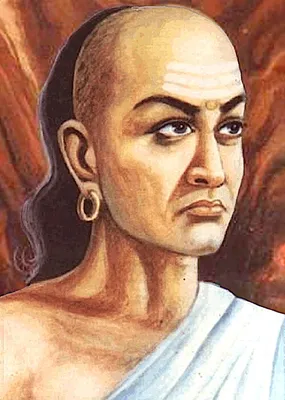
Chanakya, a legendary Brahmin, aided Chandragupta in founding the Maurya Empire, with his story appearing in various ancient traditions.
Chanakya is a figure from legendary narratives spanning from the 4th to 11th centuries CE, who is credited with helping Chandragupta establish the Maurya Empire. He is traditionally identified with Kautilya and Vishnugupta, the supposed author of the Arthashastra, an ancient Indian treatise on statecraft. However, modern scholarship suggests the Arthashastra was likely composed by multiple authors centuries after the Mauryan period, with the attribution to Chanakya serving to lend prestige to the text.
The narratives surrounding Chanakya and Chandragupta are not based on documented historical records but rather on legendary accounts. Scholars have identified four distinct versions of these legends: a Buddhist version from Sri Lanka (5th-6th centuries CE), a Jain version based on earlier sources (12th century CE), a Kashmiri version (11th century CE), and a version presented in Vishakhadatta's Sanskrit play Mudrarakshasa (4th-8th centuries CE). Despite variations, these stories generally depict Chanakya as a Brahmin who, after feeling insulted by the Nanda king, resolves to overthrow him and install Chandragupta on the throne.
Buddhist Narrative of Chanakya
The Buddhist tradition, primarily found in Sri Lankan chronicles like the Mahavamsa (5th-6th centuries CE) and its commentary, portrays Chanakya as a Brahmin from Takshashila, knowledgeable in Vedic lore and politics. Born with distinctive canine teeth, a supposed royal omen, his mother feared he would abandon her. To appease her, Chanakya broke his teeth. Described as physically unattractive, Chanakya was insulted by Emperor Dhana Nanda, leading him to curse the emperor and escape. He later discovered the young Chandragupta, who displayed miraculous abilities, and took him as a protégé. After training Chandragupta for seven years and amassing wealth and an army, they invaded the Nanda empire. A crucial lesson was learned from a woman scolding her child about eating a cake from the middle, prompting them to first conquer border regions before attacking the capital. The Nanda king was eventually defeated, and Chandragupta was installed as emperor. The narrative also includes a dramatic account of how Chandragupta's son, Bindusara, was born after Chanakya saved the unborn child from his poisoned mother by performing a caesarean-like procedure.
Jain Account of Chanakya
The Jain version of the Chanakya legend, most notably detailed in Hemachandra's Parishishta-Parvan (12th century CE) which draws from earlier sources, presents a different origin for Chanakya. He is said to have been born to lay Jain parents in the village of Chanaka and was identified as a Dramila, suggesting South Indian origins. Born with a full set of teeth, a sign of future kingship, his father broke them to prevent arrogance. Monks prophesied he would become a powerful figure behind the throne. Chanakya, a learned Jain follower, married a Brahmin woman. When her relatives mocked her for marrying a poor man, Chanakya sought donations from Emperor Nanda. While at court, Chanakya's act of sitting on the emperor's throne and refusing to move from it, despite being offered other seats, led to his forceful removal by a servant. This humiliation fueled his vow to destroy the Nanda dynasty.
The Arthashastra and Authorship Debate
Chanakya is conventionally linked to the authorship of the Arthashastra, an ancient Indian treatise on political economy and statecraft. This text is highly regarded for its detailed analysis of governance, warfare, and economic policy. However, modern scholarly consensus suggests that the Arthashastra was likely not written by a single individual, such as Chanakya, during the Mauryan period. Instead, it is believed to be a compilation by multiple authors over several centuries, possibly in the early Common Era. The association with Chanakya, a figure credited with assisting Chandragupta Maurya, appears to have been a later development aimed at enhancing the work's authority and historical significance.
Key Ideas
- The legendary figure of Chanakya, a Brahmin advisor instrumental in the founding of the Maurya Empire.
- The Arthashastra as a foundational text on Indian statecraft, though its authorship is debated.
- The concept of legendary narratives providing accounts of historical figures where direct historical documentation is scarce.
- The role of omens (like teeth) and insults as catalysts for significant historical actions in ancient Indian legends.
Books by Patrick Olivelle
5 free public domain books · Read online or download