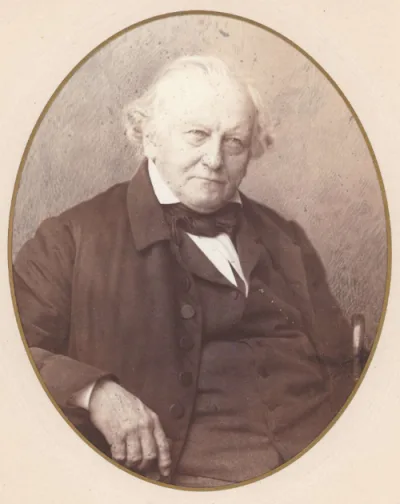
Panayiotis Tzamalikos
The Devil, or Satan, is a complex figure in Christian theology, evolving from an adversary to the personification of evil, with roots in Hebrew terms for accuser.
The figure of the Devil, also known as Satan, is a central concept in Christian tradition, often depicted as a malevolent entity opposing God and tempting humanity. Early theological interpretations, influenced by Neoplatonism, viewed the Devil as representing deficiency or an inferior realm opposed to the divine. Medieval thought, particularly influenced by Gregory the Great, integrated the Devil into the angelic hierarchy as a fallen angel, the leader of demons.
During the Reformation, the Devil was increasingly seen as an actively malevolent force with a conscious will against God's creation, though some interpretations reduced him to a metaphor for human sinfulness. While less prominent in modern scholarship, the figure has regained importance in contemporary Christianity. Certain historical Gnostic groups and theologians proposed the Devil's involvement in creation, a view not held by mainstream Christianity today. The Hebrew term 'śāṭān' originally meant 'accuser' or 'adversary,' applicable to both human and divine beings, a concept that evolved into the personified evil of Satan.
Origins of Satan in the Old Testament
The Hebrew term 'śāṭān' initially functioned as a common noun meaning 'accuser' or 'adversary,' applicable to both human and heavenly opponents. Derived from a verb signifying 'to obstruct' or 'oppose,' it frequently referred to human adversaries in the Hebrew Bible. However, certain passages also use 'śāṭān' to denote an angelic being acting as an adversary to humans, a concept that developed into the personified evil figure. Early Christian interpretations, particularly through the Greek Septuagint translation, began to treat 'ha-satan' (the Satan) as a proper name for a specific heavenly accuser. While some ancient Jewish texts depicted Satan as an agent of God, a prosecutor, or a tester of human virtue, they did not portray him as a rebel or fallen angel.
Biblical Figures Identified with the Devil
Over time, various biblical figures and narratives have been interpreted as references to the Devil. The serpent in the Garden of Eden, which tempted Adam and Eve, is traditionally identified with the Devil, drawing upon the Book of Revelation's description of the 'ancient serpent.' Similarly, the figure of Lucifer, derived from a passage in Isaiah concerning a morning star cast down for pride, became associated with a fallen angel through early Christian interpretation. These identifications, while not always explicit in the original texts, became significant in Christian theology and iconography.
Theological Development and Interpretations
Christian theological discourse has shaped the understanding of the Devil. Early scholars like Origen and Pseudo-Dionysius, influenced by Neoplatonism, saw the Devil as representing a lack or distance from the divine. Augustine of Hippo posited the Devil's realm as inferior but directly opposed to God. The medieval period solidified the image of the Devil as a high-ranking angel who fell from grace, leading demonic forces. Post-Reformation views increasingly emphasized the Devil's active opposition to God and creation, while some reformist perspectives reduced his role to a symbolic representation of human inclination towards sin. Contemporary Christianity has seen a resurgence of interest in the Devil's significance.
Books by Panayiotis Tzamalikos
3 free public domain books · Read online or download