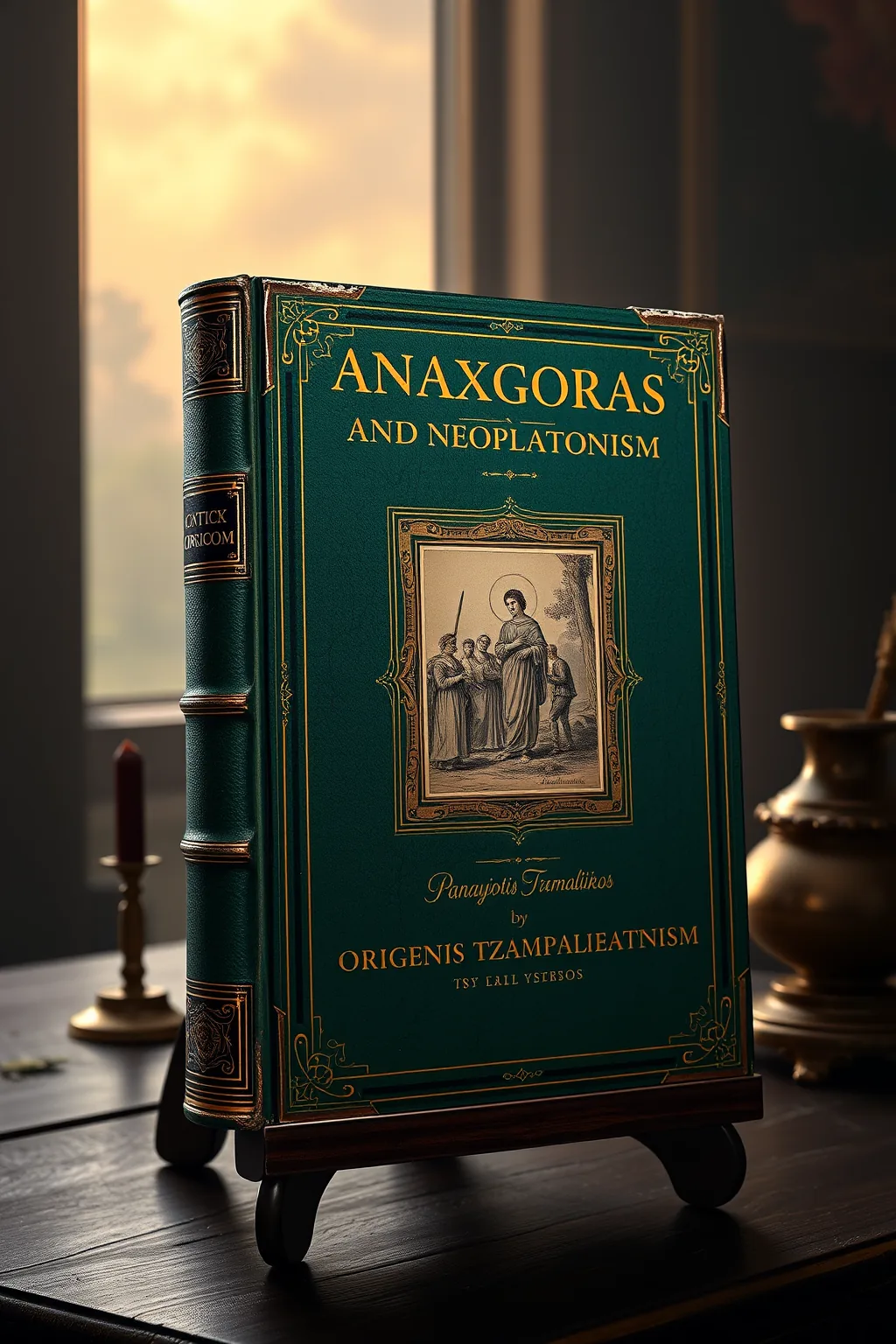
Anaxagoras, Origen, and Neoplatonism
 61
61

Anaxagoras, Origen, and Neoplatonism



Review by Aurelia Blackwood (Occult Philosophy Critic) — 'Anaxagoras, Origen, and Neoplatonism' by Panayiotis Tzamalikos is a masterful exposition of the esoteric underpinnings of Neoplatonic thought. Tzamalikos' deep scholarship shines through, revealing the hidden connections between these three pivotal figures. The book's strength lies in its ability to make complex philosophical concepts accessible to both scholars and spiritual seekers. The esoteric insights are particularly illuminating, offering a fresh perspective on ancient wisdom. This book is an invaluable resource for anyone interested in the mystical dimensions of philosophy.
📝 Description
61
Panayiotis Tzamalikos's 2013 study examines Anaxagoras, Origen, and Neoplatonism.
This book investigates the philosophical links between Anaxagoras, Origen, and the Neoplatonic tradition. Tzamalikos traces how concepts from Anaxagoras, particularly his ideas on mind (nous) and cosmic order, influenced later thinkers. The work then considers Origen's theological system, assessing its points of contact and divergence with Anaxagorean and Neoplatonic thought. It discusses how Origen's cosmology and metaphysics might have incorporated or responded to ideas found in these earlier traditions.
The study focuses on the transmission and transformation of specific philosophical doctrines. It looks at how notions of emanation, the divine intellect, and the structure of reality were conceived and articulated across these different intellectual currents. The author aims to illuminate the continuity and change in esoteric philosophical discourse from the Presocratics through early Christian thought and into the formalized Neoplatonism of figures like Plotinus.
This study sits within the broader field of esoteric philosophy, examining how certain intellectual lineages developed and sustained ideas that often operated outside mainstream philosophical or religious discourse. It connects the Presocratic speculations of Anaxagoras, the theological and philosophical synthesis of Origen, and the systematic metaphysics of Neoplatonism. These traditions, while distinct, share a concern with ultimate reality, the nature of intellect, and the structure of the cosmos, often employing allegorical or symbolic interpretations to convey complex doctrines.
💡 Why Read This Book?
Read 'Anaxagoras, Origen, and Neoplatonism' to uncover the esoteric roots of Neoplatonism and its profound influence on mystical thought. This book is ideal for seekers of hidden knowledge, scholars of ancient philosophy, and practitioners of the occult who wish to deepen their understanding of the hermetic traditions. It provides a unique lens through which to view the interconnectedness of ancient wisdom and modern spirituality.
⭐ Reader Reviews
Honest opinions from readers who have explored this book.
❓ Frequently Asked Questions
What is the main focus of 'Anaxagoras, Origen, and Neoplatonism'?
The book explores the esoteric connections between Anaxagoras, Origen, and Neoplatonism, revealing hidden knowledge and symbolism.
Who is the intended audience for this book?
The book is aimed at scholars, spiritual seekers, and practitioners of the occult who are interested in the mystical dimensions of philosophy.
What makes this book significant in the field of esoteric studies?
It offers deep insights into the esoteric underpinnings of Neoplatonic thought, providing a fresh perspective on ancient wisdom.
How does the book approach the topic of Neoplatonism?
The book weaves a narrative that combines intellectual rigor with spiritual enrichment, making complex philosophical concepts accessible.
What kind of atmosphere does the book create?
The atmosphere is one of quiet reverence for the esoteric, inviting readers to contemplate the mysteries of ancient philosophy.
🔮 Key Themes & Symbolism
The Mystical Unity of Being
This theme looks at the esoteric belief that all existence is interconnected, a concept central to Neoplatonic thought. Tzamalikos explores how Anaxagoras and Origen contributed to this mystical vision, revealing the hidden threads that bind the universe together. This theme invites readers to contemplate the profound unity that underlies all appearances.
Symbolism and Hidden Knowledge
The book examines the detailed symbolism found in the works of Anaxagoras, Origen, and Neoplatonic philosophers. Symbols are not mere decorations but keys to hidden knowledge, unlocking the mysteries of the divine and the cosmos. This theme is crucial for understanding the esoteric dimensions of ancient philosophy and its relevance to modern spirituality.
The Path to Enlightenment
This theme explores the spiritual journey outlined by Neoplatonic thought, guided by the insights of Anaxagoras and Origen. The path to enlightenment is one of self-discovery and divine communion, a journey that requires both intellectual rigor and spiritual devotion. This theme is particularly resonant for seekers of hidden knowledge and practitioners of the occult.
💬 Memorable Quotes
Direct passages from the work, attributed to the author.
“Symbols are the language of the soul, speaking to the deepest parts of our being.”
— Tzamalikos emphasizes the importance of symbolism in understanding the esoteric dimensions of philosophy.
“Hidden knowledge is the key to unlocking the mysteries of the universe.”
— The book encourages readers to seek out the esoteric insights that can transform their understanding of reality.
💡 Key Ideas
Editorial paraphrase of the work's core concepts — not direct quotes.
The divine is not distant but ever-present, waiting to be revealed.
This quote underscores the Neoplatonic belief in the immanence of the divine, a central theme in the book.
The path to enlightenment is a journey of self-discovery and divine communion.
This quote highlights the spiritual aspect of Neoplatonic thought, inviting readers to start their own mystical journey.
The interconnectedness of all things is the foundation of true wisdom.
This quote emphasizes the mystical unity of being, a core theme in Neoplatonic philosophy.
🌙 Esoteric Significance
Tradition
This book belongs to the Hermetic tradition, which emphasizes the pursuit of hidden knowledge and the unification of the self with the divine. It draws on the esoteric teachings of Neoplatonism, offering a deep dive into the mystical underpinnings of ancient philosophy.
Symbolism
Key symbols in the book include the divine unity, the path to enlightenment, and the interconnectedness of all things. These symbols are not merely decorative but are imbued with profound esoteric meanings, guiding readers on their spiritual journey.
Modern Relevance
The esoteric insights offered in this book are highly relevant to modern practitioners of the occult and spiritual seekers. The themes of hidden knowledge, symbolism, and the mystical unity of being resonate deeply with contemporary explorations of ancient wisdom.
👥 Who Should Read This Book
Beginners interested in the occult and mystical traditions will find this book an accessible introduction to the esoteric dimensions of philosophy. Scholars of ancient philosophy will appreciate the depth of research and the fresh perspectives offered. Spiritual seekers will be drawn to the book's exploration of the path to enlightenment and the interconnectedness of all things. Practitioners of the occult will find valuable insights into the Hermetic tradition and its relevance to modern spirituality.
📜 Historical Context
Written in an era when ancient wisdom was being rediscovered and reinterpreted, 'Anaxagoras, Origen, and Neoplatonism' is a proof of the enduring fascination with esoteric thought. The book's importance lies in its ability to bridge the gap between ancient philosophy and modern spirituality, revealing the timeless relevance of Neoplatonic ideas. Its influence can be seen in the works of modern scholars and practitioners who continue to explore the mystical dimensions of ancient wisdom.
📔 Journal Prompts
Reflect on the concept of the mystical unity of being. How does this idea resonate with your own spiritual journey?
Consider the role of symbolism in your life. What symbols hold deep meaning for you and why?
Explore the idea of the path to enlightenment. What steps can you take to deepen your spiritual practice?
Think about the concept of hidden knowledge. What mysteries are you drawn to and how can you uncover them?
Contemplate the interconnectedness of all things. How does this idea influence your understanding of the world?
🗂️ Glossary
Neoplatonism
A philosophical tradition that emphasizes the mystical and esoteric dimensions of Plato's teachings, focusing on the unity of being and the path to enlightenment.
Hermetic Tradition
An esoteric tradition that seeks to uncover hidden knowledge and achieve spiritual transformation through the pursuit of divine wisdom.
Esoteric Symbolism
The use of symbols to convey hidden meanings and spiritual truths, often found in mystical and occult traditions.
Divine Unity
The belief that all existence is interconnected and united in the divine, a central theme in Neoplatonic thought.
Spiritual Enlightenment
The process of achieving spiritual awakening and union with the divine, often through self-discovery and mystical experiences.
This book appears in 2 collections
🔮 Readers Also Liked
Browse all →









More by Panayiotis Tzamalikos
All books →

From the “Neoplatonism” Collection
View all →







More Free Alchemy & Hermeticism Books
View all →







![An English translation of the Hermetic Arcanum of Penes Nos Unda Tagi [pseud.] 1623](/img/thumb/an-english-translation-of-the-hermetic-arcanum-of-penes-nos-unda-tagi-pseud-1623-jean-d-espagnet.webp)
