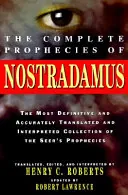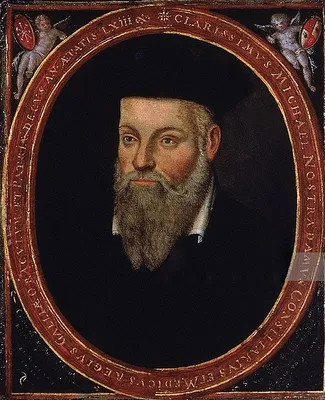
Michel de Nostredame, known as Nostradamus, was a 16th-century French astrologer and physician famous for his book of prophecies.
Michel de Nostredame, widely known as Nostradamus, was a French astrologer, physician, and apothecary who lived from 1503 to 1566. He is best recognized for his 1555 book, "Les Prophéties," a compilation of 942 poetic quatrains that purportedly foretold future events. His family had converted from Judaism to Catholicism before his birth. Nostradamus pursued studies at the University of Avignon but was forced to leave due to a plague outbreak. He later worked as an apothecary before enrolling at the University of Montpellier to pursue a doctorate in medicine, from which he was expelled for practicing a forbidden manual trade. He experienced personal tragedy when his first wife and two children died from the plague, before remarrying and having six more children.
Nostradamus gained patronage from wealthy individuals, including Catherine de' Medici, after the success of his almanacs. His "Les Prophéties" drew heavily on historical and literary sources and initially received varied responses. While many later supporters and popular media credit him with accurate predictions of major world events, academic scholars dismiss claims of genuine supernatural abilities. They attribute the perceived accuracy to vague wording, misinterpretations, and mistranslations, suggesting his prophecies are too ambiguous to prove prophetic powers.
Early Life and Medical Career
Born Michel de Nostredame in 1503 in Provence, France, his paternal family had converted from Judaism to Catholicism. He began his higher education at the University of Avignon but left due to a plague epidemic. After working as an apothecary, he attempted to earn a medical doctorate at the University of Montpellier. However, his expulsion from Montpellier stemmed from his practice as an apothecary, a profession deemed a manual trade and forbidden by university statutes. He also faced accusations of slandering physicians. Despite this, he continued his work, gaining fame for a plague-preventing 'rose pill.' His early life was marked by personal loss; his first wife and two children perished from the plague in 1534. He later remarried Anne Ponsarde, with whom he had six children, and settled in Salon-de-Provence.
Shift to Astrology and Prophecy
Around 1550, Nostradamus began a career shift, moving from medicine towards what is described as the 'occult.' He started publishing almanacs, Latinizing his name to Nostradamus. The success of these annual publications led him to write horoscopes and offer astrological advice to patrons, though he often relied on clients to provide birth charts. His most famous work, "Les Prophéties," published in 1555, comprises one thousand quatrains. To obscure his meaning and avoid religious opposition, he employed a complex style using a mix of languages, wordplay, and literary allusions. This book, published in installments, contained prophecies that were largely undated and received a mixed reception, with some viewing him as a charlatan and others, like Catherine de' Medici, as a valued advisor.
Later Life, Death, and Legacy
Nostradamus's later years were affected by severe gout, which developed into edema. He died in July 1566. In the centuries following the publication of "Les Prophéties," Nostradamus garnered a significant following who attributed to him accurate predictions of numerous global events. However, academic consensus disputes any genuine supernatural prophetic abilities. Scholars argue that any perceived accuracy arises from the deliberately vague nature of the quatrains, allowing for broad interpretation, as well as potential mistranslations and deliberate misreadings. These interpretations render the prophecies too ambiguous to validate claims of precognition.
Key Ideas
- Poetic quatrains allegedly predicting future events.
- Use of obscure language, mixed languages, and literary allusions to mask meaning.
- Ambiguity of prophecies allows for varied interpretations.