✍️ Author Biography
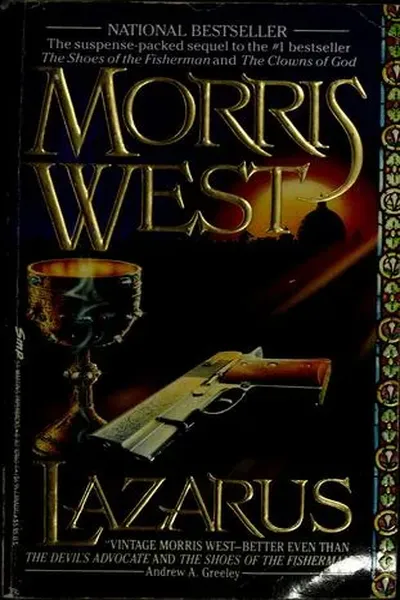
Morris West
📅 1916 – 1999
🌍 Australian
📚 4 free books
⭐ Known for: Pax Britannica trilogy (1968–1978)
Jan Morris was a Welsh historian and writer known for her travelogues and a history of the British Empire, who also wrote about her gender transition.
Born James Humphry Morris in 1926, Jan Morris was a Welsh historian, author, and travel writer. Initially publishing under her birth name, Morris became known for her extensive writings on the British Empire, particularly the Pax Britannica trilogy, and for evocative portraits of cities like Oxford, Venice, and Hong Kong. Her career also included a notable role as the sole journalist accompanying the 1953 British Mount Everest expedition, from which she sent coded news of the successful ascent.
Morris's life took a significant personal turn when she transitioned from male to female, undergoing gender-affirming surgery in 1972. This journey was documented in her influential 1974 memoir, Conundrum, one of the first autobiographical accounts of gender reassignment. Despite her Welsh identity, Morris was born and largely raised in England. She received numerous accolades throughout her career, including honorary doctorates and the Golden PEN Award for her lifetime contribution to literature. Morris passed away in 2020 at the age of 94.
Early Life and Education
Born in Clevedon, Somerset, on October 2, 1926, Jan Morris, originally James Humphry Morris, was the youngest of three children. Her father was an engineer affected by World War I, and her mother was an English church organist and concert pianist. Despite being raised primarily in England, Morris always felt a strong Welsh identity. She received her education at Christ Church Cathedral School and Lancing College before attending Christ Church, Oxford, where she earned a BA in 1951. Her early foray into journalism began at age sixteen with the Western Daily Press, and she continued writing for the university newspaper, Cherwell, during her Oxford studies.
Journalism and Expedition Reporting
Morris's initial aspiration to join the Royal Navy was thwarted by color blindness, leading her instead to serve in a cavalry regiment during the latter stages of World War II, including a posting in Trieste. Her journalistic career gained significant prominence when she served as the only reporter attached to the 1953 British Mount Everest expedition. She transmitted news of the historic first ascent by Edmund Hillary and Tenzing Norgay via a coded message, a scoop that coincided with Queen Elizabeth II's coronation. Morris also covered major international events, reporting on the Suez Crisis in Cyprus and the trial of Adolf Eichmann in Jerusalem, and later expressed opposition to the Falklands War.
Personal Transition and Later Life
In 1964, Morris began her transition to live as a woman, a process she documented extensively. To undergo gender-affirming surgery in 1972, she traveled to Morocco, as British doctors required her to divorce her wife, Elizabeth, which she was unwilling to do at the time. Although they later divorced, they remained together and eventually entered into a civil partnership in 2008. Her memoir, Conundrum (1974), detailed this personal journey and became a landmark publication for its candid discussion of gender reassignment. Morris continued to write and live in North Wales with her wife for over fifty years until her death in November 2020.
Literary Contributions and Recognition
Jan Morris achieved widespread recognition for her extensive body of work, which included the acclaimed Pax Britannica trilogy chronicling the British Empire and numerous city portraits. She also authored the novel Last Letters from Hav, which was shortlisted for the Booker Prize. Despite her success in travel writing, she expressed a preference for focusing on places and people rather than the act of traveling itself. Her memoir Conundrum was a significant personal and literary achievement. Morris was honored with multiple awards, including honorary doctorates, fellowship of the Royal Society of Literature, and the Golden PEN Award for her lifetime service to literature. The Times named her one of the greatest British writers of the post-war era.