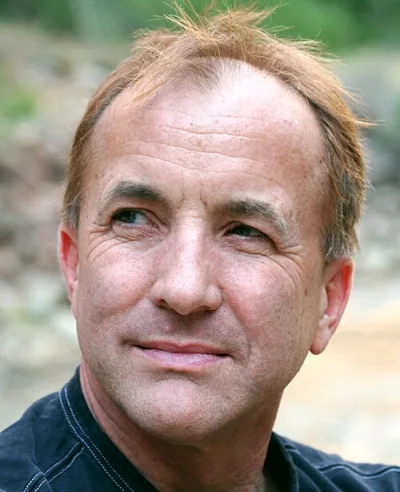
Michael Shermer is a science writer, historian, and founder of The Skeptics Society, known for investigating pseudoscientific claims.
Michael Shermer is an American science writer, historian of science, and the executive director of The Skeptics Society, an organization dedicated to examining pseudoscientific and supernatural claims. He is also the founding publisher of Skeptic magazine. Shermer has authored numerous books and is recognized for his public debates on pseudoscience and religion, where he champions scientific skepticism.
His personal journey involved a period of Christian fundamentalism in his youth, followed by a loss of faith during graduate school, influenced by a traumatic event involving his girlfriend. He now identifies as an agnostic and atheist, preferring the label "skeptic," and advocates for humanism. Shermer also holds an ordination from the Universal Life Church and has officiated weddings.
Shermer's career includes contributions to Scientific American magazine and television work. His background in experimental psychology and history of science informs his work in critically evaluating extraordinary claims.
Early Life and Shifting Beliefs
Born in Los Angeles in 1954, Michael Shermer was raised in a non-religious household in Southern California, though he experienced a period of Christian fundamentalism as a teenager. He actively evangelized for seven years before attending Pepperdine University to study theology, later switching to psychology. During his graduate studies at California State University, Fullerton, discussions with professors and exposure to diverse scientific and social science perspectives led him to question his religious convictions. A pivotal moment in his loss of faith was a traumatic accident that left his then-girlfriend paralyzed, prompting him to question the existence of divine intervention.
Career in Cycling and the Crystallization of Skepticism
After earning his master's degree in psychology, Shermer transitioned into writing about cycling and became a competitive long-distance cyclist, participating in events like the Race Across America. During this period, he also collaborated with companies on developing cycling equipment and experienced a medical condition named "Shermer's Neck." His time as an athlete, combined with attempts to improve his performance through various alternative and traditional methods, solidified his embrace of scientific skepticism. He realized that many practices he had tried, from acupuncture to chiropractic, failed to yield the promised results, leading him to abandon unsubstantiated beliefs in favor of empirical evidence.
Academic Pursuits and the Skeptics Society
Shermer pursued a PhD in the history of science from Claremont Graduate University, with his dissertation focusing on Alfred Russel Wallace. He went on to teach at various institutions, including Occidental College and Chapman University, where he developed a course titled Skepticism 101. In 1991, he co-founded The Skeptics Society with Pat Linse. This non-profit organization aims to promote scientific skepticism, investigate pseudoscientific claims, and debunk irrational beliefs. The society publishes the magazine Skeptic, organizes lectures, and has grown to a significant membership base.
Investigating Belief and Pseudoscience
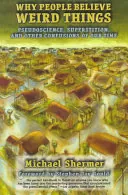
As an author, Michael Shermer has explored the reasons behind the widespread acceptance of beliefs in phenomena such as UFOs, Bigfoot, and paranormal events. In his book "Why People Believe Weird Things," he introduced the term "patternicity" to describe the human tendency to perceive meaningful patterns in random data. Shermer distinguishes between Type 1 errors (believing a falsehood) and Type 2 errors (rejecting a truth), suggesting that many who believe in pseudoscientific claims are intelligent but misinformed. His work also delves into the psychology of religious belief, examining the search for God in a scientific age.
Key Ideas
- Patternicity: The tendency to find meaningful patterns in random noise or unrelated events.
- Distinction between Type 1 errors (believing a falsehood) and Type 2 errors (rejecting a truth) in belief formation.
Books by
5 free public domain books · Read online or download