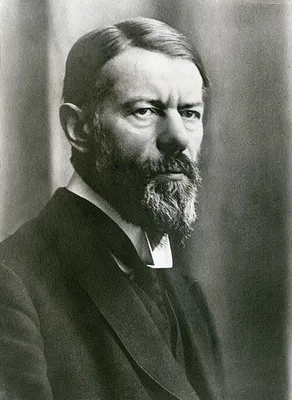
Max Weber
Max Weber was a foundational sociologist whose work explored rationalization, capitalism, and social authority.
Max Weber (1864-1920) was a German sociologist, historian, jurist, and political economist who significantly shaped sociology and the social sciences. Born in Erfurt, he pursued legal and historical studies across several German universities. After earning his doctorate and habilitation, he began an academic career, marrying his cousin Marianne Schnitger. A period of illness followed his father's death, during which he ceased teaching and traveled. Upon recovery, he produced influential works like "The Protestant Ethic and the Spirit of Capitalism." Weber's intellectual contributions centered on understanding rationalization and disenchantment, linking these processes to the rise of capitalism and modernity. He also examined the economic ethics of various world religions and categorized forms of social authority. His later life involved political engagement, including co-founding the German Democratic Party and advising on the Weimar Constitution. Weber died in 1920, leaving unfinished his major work, "Economy and Society."
Intellectual Contributions and Sociological Framework
Weber's primary intellectual focus was on the societal processes of rationalization and disenchantment, which he theorized were intertwined with the development of capitalism and modernity. His seminal work, "The Protestant Ethic and the Spirit of Capitalism," proposed that the values and practices associated with Protestantism, particularly Calvinism, played a crucial role in fostering the capitalist spirit. He further explored this theme in "The Economic Ethics of the World Religions," analyzing the religious traditions of China, India, and ancient Judaism. In political sociology, Weber defined the state by its exclusive right to use violence and classified authority into three ideal types: charismatic, traditional, and rational-legal. He was also a proponent of methodological antipositivism, advocating for the study of social action through interpretive methods that sought to understand subjective meaning, rather than relying solely on empirical observation.
Early Life, Education, and Academic Career
Born in Erfurt in 1864, Maximilian Carl Emil Weber grew up in an intellectually stimulating environment, with his father being a politician and his home often hosting scholars. Weber's early education included private schooling and gymnasium, where he demonstrated an early aptitude for history, writing essays on historical topics. He pursued law at Heidelberg University, later studying in Berlin and Göttingen. His university years involved military service and immersion in academic life, including association with student fraternities. He passed his legal training examination in 1886 and completed his doctoral dissertation on the history of commercial partnerships in 1889. His habilitation, focusing on Roman agrarian history and its legal significance, was completed in 1891, after which he began lecturing at the University of Berlin.
Later Life, Political Engagement, and Legacy
Weber married his cousin Marianne Schnitger in 1893, gaining financial independence. He held professorships in economics at Freiburg and Heidelberg universities. His career was interrupted by a significant mental breakdown in 1897 following his father's death, leading him to cease teaching and travel. He recovered and resumed his academic work, producing key writings. During World War I, Weber initially supported Germany but later became critical and advocated for democratization. Post-war, he co-founded the German Democratic Party and advised on the Weimar Constitution. He resumed teaching in Vienna and Munich before his death from pneumonia in 1920 at age 56, possibly linked to the Spanish flu pandemic. His posthumously published "Economy and Society" remains a foundational text. Weber is recognized as a principal founder of sociology, alongside Marx and Durkheim, with his ideas continuing to influence social theory and research globally.
Key Ideas
- Rationalization and disenchantment as key processes in modernity
- The Protestant work ethic's influence on capitalism
- Three types of social authority: charismatic, traditional, and rational-legal
- The state's monopoly on violence
- Methodological antipositivism and the importance of interpretive social science
Books by Max Weber
4 free public domain books · Read online or download