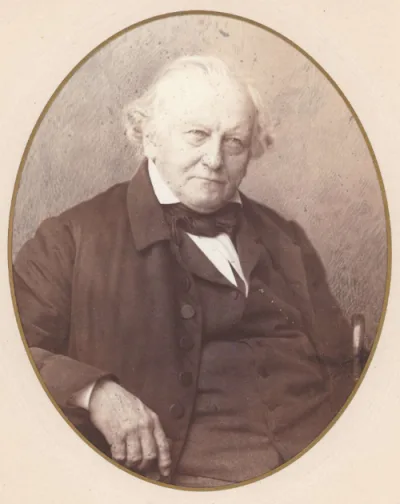
✍️ Author Biography
Maria Muccillo
📅 1497 – 1548
🌍 Italian
📚 2 free books
⭐ Known for: De perenni philosophia (1540)
Agostino Steuco, an Italian humanist, developed the concept of perennial philosophy, seeking harmony between ancient wisdom and Christianity.
Agostino Steuco (c. 1497 – 1548) was an Italian humanist, scholar of the Old Testament, and polemicist during the Counter Reformation. Born in Gubbio, he entered the Order of the Augustinian Canons and pursued studies in biblical languages and classical philosophy. His academic career included managing the library of Sant' Antonio di Castello in Venice, which housed works formerly belonging to Pico della Mirandola. Steuco engaged in theological debates, writing against early Protestants and defending Church traditions. He also meticulously corrected the Vulgate translation of the Old Testament using Hebrew and Greek manuscripts. His interest in classical antiquity and its philosophical ideas led him to develop the concept of "perennial philosophy," proposing that ancient wisdom was fundamentally aligned with Christian teachings. This perspective was articulated in his significant work, "De perenni philosophia." Steuco's efforts aimed to reconcile fragmented Christian beliefs and integrate humanist ideals within the context of the Counter Reformation.
Perennial Philosophy and Humanist Synthesis
Agostino Steuco is notably recognized for articulating the concept of "perennial philosophy," a term he coined. In his 1540 work, "De perenni philosophia," he argued for a fundamental congruence between the wisdom found in classical antiquity—among sages, poets, and philosophers—and Christian doctrine. This idea, present in Renaissance thought, was first systematically explored in a dedicated book by Steuco. He posited that Roman Catholicism, with the Gospels at its core, represented the true essence of pagan beliefs. His approach involved interpreting ancient texts to demonstrate their compatibility with Christian theology, even admonishing authors whose passages seemed resistant to his framework. This philosophical endeavor carried a polemical undertone, as Steuco used his arguments to support Catholic theological positions challenged by reformers. His work is seen as an attempt to unify the Christian world through historical erudition, bridging humanist ideals with Catholic reform before the Counter Reformation's stricter disciplinary and dogmatic stance.
Biblical Scholarship and Counter-Reformation Role
Steuco's scholarly pursuits included significant work in Old Testament studies. He meticulously examined Hebrew and Greek manuscripts, notably those from the Grimani Library, to revise Jerome's Vulgate translation. His annotations on the Pentateuch, "Veteris testamenti ad Hebraicam veritatem recognitio," focused on adhering to the literal and historical meaning of the biblical text. This exegetical work, alongside his philosophical writings, drew the attention of Pope Paul III. In recognition of his expertise, Steuco was appointed bishop of Chisamo in Crete and became the librarian of the Vatican's manuscript collection. Although he never visited his Cretan see, he actively served as Vatican Librarian until his death in 1548. During his time in Rome, he also produced annotations on the Psalms and Job, continuing his reliance on Hebrew sources for textual correction and interpretation.
Interest in Rome and Council of Trent
As a humanist deeply interested in Rome, Steuco engaged with the city's classical heritage and urban development projects under Pope Paul III. He authored orations, potentially delivered at the papal court, advocating for the restoration of the Aqua Virgo aqueduct to improve Rome's water supply and contribute to its revitalization. His commitment to upholding papal authority was recognized when Pope Paul III sent him to the Council of Trent in 1547. Steuco was expected to defend papal prerogatives during the council's proceedings. He died in Venice in 1548 while on a break from the council, and his remains were eventually interred in his birthplace, Gubbio.
Key Ideas
- Perennial philosophy: the idea that a universal, eternal wisdom underlies all religious and philosophical traditions, particularly harmonizing ancient pagan thought with Christianity.
- Humanist integration with Catholic Reform: an attempt to reconcile classical learning and humanist ideals with the goals of religious reform within the Catholic Church.
Notable Quotes
“Steuco proposes his “perennial philosophy,” deeply permeated by platonism, in 1540, on the eve of the Council of Trent: at a moment when, after the Protestant Reformation, the chance of restoring the unity of the Christian world would seem to be exhausted, and the very ideal – dear to many exponents of the so-called “Catholic Reform” – of a close interpenetration of the Humanist and the Catholic spirit is beginning to decline. In this historical/religious context, Steuco’s work comes to assume the significance of a desperate last attempt, effected by the means of historical erudition, of reuniting and reconciling the fragmented Christian world ... [It] represents perhaps one of the last attempts to utilize the Humanist ideals in the interest of Catholic Reform, before the latter “will yield to the disciplinary and dogmatic force of the Counter-Reformation, which will preserve from Humanism only the splendid but henceforth empty outer form.””