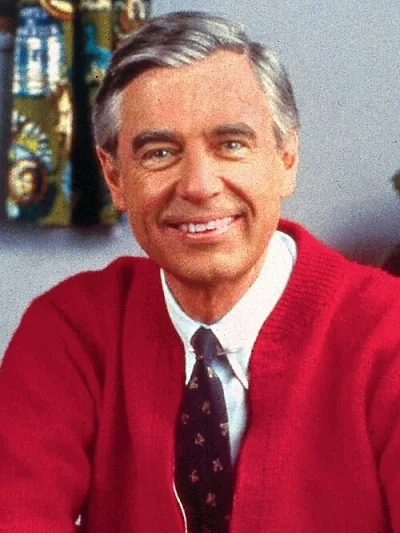
Fred Rogers, known as Mister Rogers, was a Presbyterian minister and television host who created Mister Rogers' Neighborhood, focusing on children's emotional development.
Fred McFeely Rogers, professionally known as Mister Rogers, was an American television personality, minister, and author. He is best remembered as the creator, host, and showrunner of the beloved children's series "Mister Rogers' Neighborhood," which aired from 1968 to 2001. Born in Latrobe, Pennsylvania, Rogers pursued a degree in music from Rollins College before beginning his television career. He later earned a divinity degree from Pittsburgh Theological Seminary and was ordained as a Presbyterian minister, dedicating his ministry to children through television.
Rogers' career in children's programming began in Pittsburgh at WQED, where he helped develop "The Children's Corner." He later worked with the Canadian Broadcasting Corporation to create "Misterogers," which served as a precursor to his most famous work. "Mister Rogers' Neighborhood" was critically acclaimed for its gentle approach to complex childhood issues such as divorce, death, and sibling rivalry, fostering emotional and physical well-being. He collaborated extensively with child psychologist Margaret McFarland, whose insights deeply influenced his approach to child development. Rogers received numerous accolades for his contributions, including the Presidential Medal of Freedom and a Lifetime Achievement Emmy.
Early Life and Influences
Fred Rogers was born in Latrobe, Pennsylvania, into a family with a background in business and community service. His father led a prominent brick company, while his mother was involved in hospital volunteer work and knitted for soldiers. Rogers' maternal grandfather, Fred Brooks McFeely, was an entrepreneur. Rogers experienced a solitary childhood, often homebound due to asthma, which led him to develop his imagination through puppets and creating his own worlds. He also began playing the piano at a young age. Despite initial shyness and being overweight, he found confidence in high school, becoming student council president and yearbook editor. His early experiences with television in 1951, which he initially disliked, inspired him to use the medium to nurture viewers, a conviction that guided his subsequent career.
Ministerial Work and Television Philosophy
After attending Dartmouth and graduating from Rollins College with a music degree, Fred Rogers pursued theological studies at Pittsburgh Theological Seminary, earning a divinity degree in 1962. He was ordained as a Presbyterian minister in 1963. Rather than serving a traditional church, Rogers directed his ministerial calling toward children and their families through the medium of television. He began his television career at NBC before moving to Pittsburgh's WQED, where he developed children's programs. His work on "The Children's Corner" and later "Misterogers" in Canada laid the groundwork for "Mister Rogers' Neighborhood." A pivotal collaboration was with child psychologist Margaret McFarland, who served as his key advisor for three decades, significantly shaping his understanding and communication of child development principles.
Mister Rogers' Neighborhood and Legacy
Launched nationally in 1968, "Mister Rogers' Neighborhood" became a landmark children's program, running for over 30 years. Filmed at WQED in Pittsburgh and broadcast by PBS, the show was celebrated for its deliberate pacing and its host's gentle, empathetic demeanor. Rogers used familiar elements like a trolley, sneakers, and a castle, alongside puppets and imaginative scenarios, to explore topics crucial to children's emotional and social development, including feelings, loss, and conflict. The program's format remained consistent throughout its run, beginning with Rogers changing into his iconic cardigan and sneakers. His work provided comfort and a sense of understanding to generations of children. Rogers' impact extended beyond his show, influencing numerous children's television creators and offering solace during challenging times, solidifying his legacy as a significant figure in children's media and education.
Key Ideas
- Using television as a nurturing medium for children.
- Addressing children's emotional and social concerns with empathy.
- The importance of imagination and self-created worlds for child development.
- Collaboration with child development experts to inform programming.
Notable Quotes
“I went into television because I hated it so, and I thought there's some way of using this fabulous instrument to nurture those who would watch and listen”
“It was tough for me at the beginning... and then I made a couple friends who found out that the core of me was okay.”
Books by
4 free public domain books · Read online or download