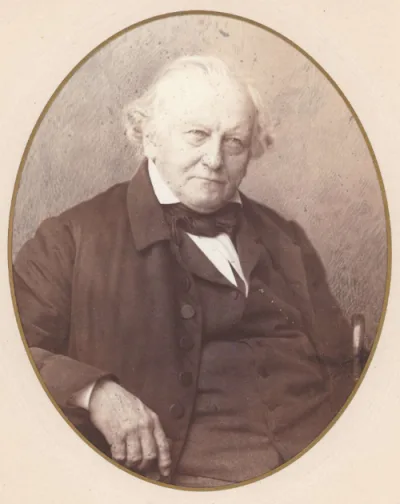
✍️ Author Biography
Lucy Winifred Faraday
📅 1626 – 1698
🌍 English
📚 2 free books
Newington Green Unitarian Church, founded in 1708, has a rich history of progressive thought and notable congregants.
Established in 1708, Newington Green Unitarian Church stands as one of England's oldest Unitarian places of worship, with a significant legacy of progressive religious and political engagement. The church's roots trace back to English Dissenters who gathered in the area for decades prior. It is recognized as London's oldest Nonconformist place of worship still in active use.
The church's history is intertwined with influential figures. Dr. Richard Price, a noted minister, was a radical political thinker involved in the Revolution Controversy concerning the French Revolution, and also made contributions to finance and statistics. Mary Wollstonecraft, a prominent member of the congregation, drew inspiration from Price's teachings for her own influential writings on the French republic and women's rights. The church building itself, facing Newington Green, has undergone alterations and extensions since its original construction and is a listed building.
Founding and Progressive Roots
Newington Green Unitarian Church was established in 1708 by English Dissenters, building on a community that had been meeting in the area for at least fifty years. This congregation emerged in a period following the Restoration of Charles II, when legislation like the Clarendon Code imposed restrictions on those not affiliated with the Church of England. The Act of Toleration in 1689 offered some freedom of worship to Nonconformists, allowing them to establish their own meeting places and leaders, though social and political restrictions persisted. The church became part of the General Assembly of Unitarian and Free Christian Churches and has maintained a consistent association with progressive political and religious movements for over three centuries.
Intellectual and Social Hub
The area around Newington Green became a focal point for "dissident intellectuals, pedagogues with reforming ideas and Dissenters," and the "well-to-do edge of radical Protestantism." This environment fostered educational establishments, known as dissenting academies, which emphasized rigorous intellectual and moral standards. Unitarianism, or Rational Dissent, with its emphasis on critical inquiry and challenging the status quo, naturally aligned with this intellectual milieu. While not all attendees were Unitarian, the chapel served as a gathering point for various free-thinkers, including notable figures like Quaker philanthropist John Coakley Lettsome and Anglicans Vicesimus Knox and George Gaskin.
Notable Figures and Influence
The church has been associated with many significant individuals. Dr. Richard Price, a minister at the church, was a prominent political radical remembered for his contributions to the debate surrounding the French Revolution, as well as his work in finance and statistics. Mary Wollstonecraft, a key figure in the congregation, found inspiration in Price's sermons for her arguments advocating for the French republic and championing women's rights. The church building itself has been described by some as "the birthplace of feminism" due to its association with Wollstonecraft.
Architectural and Community Context
The original 1708 building, financed by Edward Harrison, was a modest brick structure. It underwent significant expansion and renovation in the mid-19th century, including the addition of an internal gallery and updates to the roof and apse, resulting in a "stuccoed frontage." The church is situated within the London Borough of Hackney, adjacent to Newington Green. The surrounding area also hosted other religious institutions, such as the high church St Matthias, a synagogue established by Russian Jewish immigrants, and the headquarters of the China Inland Mission. Newington Green's history is also linked to the nearby village of Stoke Newington, which had its own Nonconformist history and was a center for social reforms.
Key Ideas
- Rational Dissent: An intellectual approach to Dissent emphasizing critical inquiry and challenging established norms.
- Women's Rights: Advocating for the rights and equality of women, inspired by progressive religious thought.
- Progressive Politics: Engagement with and support for radical political causes and movements.
Notable Quotes
“the birthplace of feminism”