Louis Jacolliot
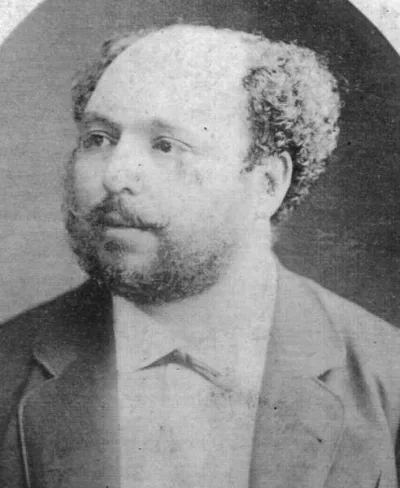
Louis Jacolliot was a French author, barrister, and judge known for his writings on Eastern religions and occultism.
Louis Jacolliot, born in 1837, was a French barrister, colonial judge, author, and lecturer who spent time in Tahiti and India between 1865 and 1869. During this period, he explored Eastern philosophies and religions, which formed the basis of many of his published works.
Jacolliot's writings often sought connections between Western occult traditions and ancient Indian wisdom, though some of his claims, such as the existence of the Sanskrit text Agrouchada-Parikchai, have been identified as fabrications. He also proposed theories about lost continents, which influenced figures like Helena Blavatsky. His comparative analysis of the life of Krishna and Jesus Christ, suggesting the Gospel accounts were based on Indian mythology, was controversial and met with linguistic criticism.
Beyond his comparative religious and occult studies, Jacolliot was a prolific writer on various subjects, including travel, history, and social commentary. He faced legal challenges, including a defamation lawsuit. He died in 1890, leaving behind a substantial body of work that contributed to the popularization of certain esoteric concepts.
Exploration of Indian Occultism and Mythology
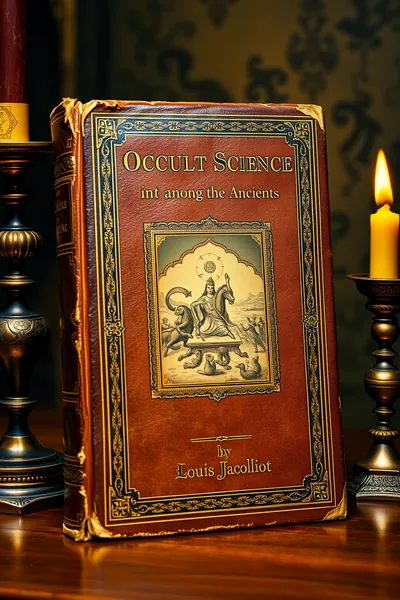
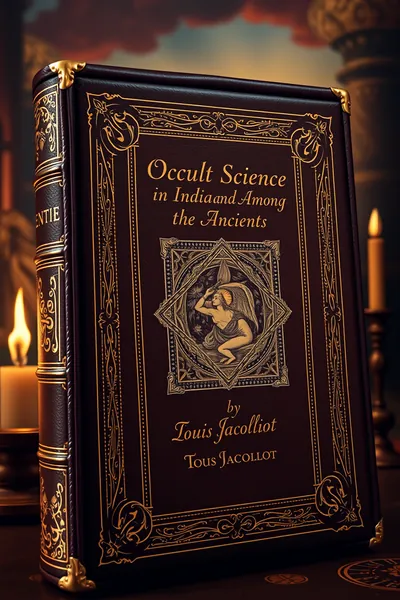
During his time in India, Jacolliot immersed himself in Sanskrit myths and traditions, aiming to uncover the "Indian roots of western occultism." His work "Occult science in India" (originally "Le spiritisme dans le monde") explored these themes, referencing a purported Sanskrit text called Agrouchada-Parikchai. However, this text is understood to be Jacolliot's own invention, a blend of elements from Upanishads, Dharmashastras, and Freemasonry. He also popularized Hindu myths in works like "Histoire des Vierges," claiming ancient Indian writings spoke of a sunken continent named "Rutas," which he later associated with the Pacific and the Atlantis myth.
Theories on Lost Continents and Comparative Religion
Jacolliot was a proponent of the idea of lost continents, notably a sunken land in the Pacific, which he linked to the Atlantis legend. Helena Blavatsky cited his theories in "Isis Unveiled" to support her own ideas about Lemuria. In "La Bible dans l'Inde," he drew parallels between the life of Krishna and Jesus Christ, suggesting the Gospel narratives were derived from Indian mythology. He proposed that "Christna" was the original name, and that disciples gave him the name "Iezeus," meaning "pure essence." However, Sanskrit scholars, like Max Müller, disputed the etymology of "Iezeus," deeming it Jacolliot's invention.
Creation of Esoteric Concepts
Jacolliot is credited with popularizing the concept of Agartha in his 1873 book "Les fils de Dieu" (The Sons of God). He described Agartha as an ancient, powerful Indian city. This idea gained traction within occult circles and evolved through the writings of later occultists, who often depicted Agartha as an existing underground realm, a departure from Jacolliot's original conception. His exploration of Indian traditions also included translations and discussions of texts like the Manu Smriti and the Tirukkural.
Key Ideas
- Searching for the Indian origins of Western occult traditions.
- Theories about lost continents in the Pacific and Indian Oceans.
- Comparative analysis of Eastern and Western religious narratives, particularly Krishna and Christ.
- Popularization of the concept of Agartha as an ancient Indian city.
Books by Louis Jacolliot
5 free public domain books · Read online or download