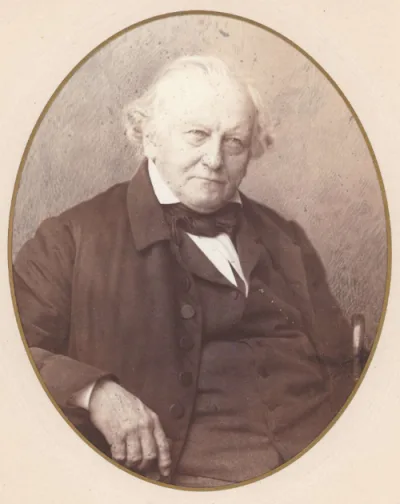
John Smith Harrison
M. John Harrison is an acclaimed English author known for his influential contributions to modern fantasy and science fiction, often subverting genre conventions.
M. John Harrison, born in 1945, is an English author and literary critic recognized for his significant impact on modern fantasy and science fiction. His literary output includes the acclaimed Viriconium sequence, the novel Climbers, and the Kefahuchi Tract trilogy. Harrison is frequently lauded for his distinctive prose style and his tendency to challenge established genre norms, earning him a reputation as a "genre contrarian." Critics have praised his work for its unique voice and imaginative qualities. Early in his career, Harrison was involved with the New Wave science fiction movement, contributing to and editing for magazines like New Worlds, where he expressed critical views on the prevailing genre fiction of the era. His formative years were marked by a diverse range of influences, from early science fiction and pulp authors to absurdist playwrights and Beat poets, contributing to his eclectic approach to writing.
Harrison's career began with short story publications in the mid-1960s, leading to his move to London and involvement with influential literary circles. His early novels, such as "The Committed Men" and "The Pastel City," are noted for their post-apocalyptic settings and stylistic debts to contemporaries like J. G. Ballard and Michael Moorcock. He developed the Viriconium sequence, a series of interconnected stories and novels set in a melancholic, decaying urban landscape, which became a cornerstone of his work. Throughout his career, Harrison has continued to explore themes of alienation, the nature of reality, and the human condition, often within speculative fiction frameworks that defy easy categorization.
Early Influences and Career Beginnings
Born in 1945, M. John Harrison's early life was shaped by a family involved in engineering and a significant loss in his teenage years, leading to feelings of alienation and boredom. His education at Dunsmore School was interrupted, but an English teacher introduced him to George Bernard Shaw, sparking an interest in polemical writing. After leaving school in 1963, he held various jobs, including groom and clerk, while pursuing hobbies like playing electric guitar and writing pastiches. His literary career commenced in 1966 with the publication of his first short story in "Science Fantasy" magazine, an achievement that prompted his relocation to London. There, he connected with Michael Moorcock, the editor of "New Worlds" magazine, and began contributing reviews and fiction, eventually becoming the books editor by 1968. Harrison was notably critical of what he saw as the complacency within the science fiction genre at the time. His early reading tastes were eclectic, encompassing authors like Alfred Bester, Samuel Beckett, J. G. Ballard, and Jack Kerouac, reflecting a 'pick 'n' mix' approach that would characterize his writing.
The New Wave and Viriconium
From 1968 to 1975, Harrison served as the literary editor of the "New Wave" science fiction magazine "New Worlds," where he was a regular critic and an influential figure in the movement, alongside writers like Norman Spinrad and Thomas M. Disch. He often employed the pseudonym "Joyce Churchill" for his reviews, frequently offering critiques of works published under the science fiction banner. His early fictional output included contributions to Michael Moorcock's Jerry Cornelius stories and numerous short stories published in anthologies and magazines such as "New Writings in SF" and "The Magazine of Fantasy & Science Fiction." His first novel, "The Committed Men" (1971), depicted a post-apocalyptic England and bore stylistic influences from Moorcock and J. G. Ballard. In the same year, he launched the Viriconium sequence with "The Pastel City," a series that would continue until 1984 and explore a decaying, dreamlike urban landscape. His 1974 novel, "The Centauri Device," was a space opera that Harrison himself described as a satirical critique of science fiction's core tenets, including reader identification, knowability of the universe, and anthropocentric structuring.
Later Career and Stylistic Evolution
Relocating to Manchester, Harrison became a contributor to the "New Manchester Review" in the late 1970s. His second short story collection, "The Ice Monkey and Other Stories" (1983), was lauded by Ramsey Campbell, who hailed Harrison as "the finest British writer now writing horror fiction and by far the most original." This collection contained stories exploring the human condition with pathos, humor, and black humor. During this period, he continued to expand the Viriconium sequence with novels like "A Storm of Wings" (1980) and "In Viriconium" (1982), the latter being nominated for the Guardian Fiction Prize. "In Viriconium" presented a moody portrayal of artistic subcultures within a city afflicted by a mysterious plague. Later works, such as the Kefahuchi Tract trilogy comprising "Light" (2002), "Nova Swing" (2006), and "Empty Space" (2012), further cemented his reputation. He is widely regarded as a major stylist in modern fantasy and science fiction, celebrated for his sophisticated prose and his ability to transcend genre boundaries, with critics noting his work as "singularly stylish" and "witty and truly imaginative."
Key Ideas
- Subversion of science fiction genre conventions
- Exploration of alienation and the human condition
- Stylistic innovation in speculative fiction
- Critique of complacency in genre fiction
Notable Quotes
“I liked anything bizarre, from being about four years old. I started on Dan Dare and worked up to the Absurdists. At 15 you could catch me with a pile of books that contained an Alfred Bester, a Samuel Beckett, a Charles Williams, the two or three available J. G. Ballards, On the Road by Jack Kerouac, some Keats, some Allen Ginsberg, maybe a Thorne Smith. I've always been pick 'n' mix: now it's a philosophy.”
“I never liked that book much but at least it took the piss out of sf’s three main tenets: (1) The reader-identification character always drives the action; (2) The universe is knowable; (3) the universe is anthropocentrically structured & its riches are an appropriate prize for the colonialist people like us. TCD tried to out space opera as a kind of counterfeit pulp which had carefully cleaned itself of Saturday night appetite, vacuuming out all the concerns of real pulp fiction to keep it under the radar of the Mothers of America or whatever they called themselves. Pulp’s lust for life was replaced, if you were lucky, by a jaunty shanty & a comedy brawl. Otherwise, it was lebensraum & a cadetship in the Space Police (these days it’s primarily low-bourgeois freedom motifs & nice friendly sexual release).”
Books by John Smith Harrison
3 free public domain books · Read online or download