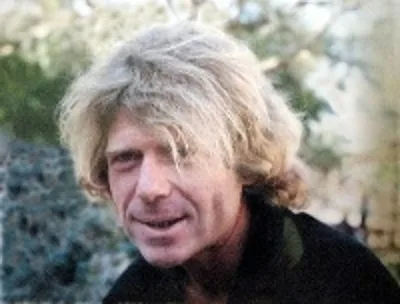
James Robison is an American author known for his short fiction, novels, and screenplays, recognized for his precise prose and psychological depth.
James Robison, born in 1946, is an American writer whose work spans novels, short stories, poetry, and screenplays. He gained recognition early in his career with publications in prominent journals like The New Yorker, beginning in 1979. His short fiction was first collected in "Rumor and Other Stories" (1985), followed by his novel "The Illustrator" (1988). Robison's writing has been praised for its precision, psychological insight, and ability to convey profound truths with delicate language. He has received prestigious awards, including the Whiting Award and multiple Pushcart Prizes, for his contributions to literature.
Robison's academic and teaching career has been extensive, with an MFA from Brown University where he studied under notable writers. He has held teaching positions at numerous universities across the United States, including the University of Houston and Loyola University Maryland. His creative process involves a deep self-examination and a focus on implication and precise language, as evidenced in his discussions on "flash fiction" and the nature of artistic content. Since 2010, his work has seen a resurgence, with new pieces appearing in various literary magazines.
Literary Style and Themes
James Robison's writing is characterized by a minimalist aesthetic, though he himself often eschews the label. Critics have lauded his "astounding ear," narrative power, and ability to deliver "shocks and psychological truths" with remarkable precision. His prose is described as "radiant, energetic, and above all, touching," capable of eliciting profound emotional responses through the careful selection of words. His work often explores the subtle nuances of human experience, suggesting meaning through implication rather than explicit description. This approach is evident in his reflections on art, where he likens its true content to "precisely shaped nothingness" that is defined by what it refuses to describe. He emphasizes the importance of "lightning strike stuff" in writing, advocating for impactful, concise pieces that avoid tedium.
Creative Process and Philosophy
Robison's approach to writing is deeply rooted in self-awareness and rigorous introspection. He believes that before one can be a writer, a "harrowing, fearless, ruthless self audit" is essential, involving a "psychological, emotional, moral inventory." This process of confronting one's true self, without delusion, is the foundation from which authentic sentences are constructed. He also views writing as an act of discovery, often sparked by the juxtaposition of disparate concepts, stating that "three large thoughts, intuitions or detections about three varied things" can launch a story. He actively engages with online writing communities like Fictionaut, viewing them as essential "test tracks" and supportive environments for refining works in progress.
Key Ideas
- Art's true content is defined by what it refuses to describe explicitly, with meaning limned by implication.
- Effective writing requires a fearless self-audit and an honest confrontation with one's own nature.
- Storytelling can be ignited by the synthesis of three distinct, large thoughts or intuitions.
Notable Quotes
“Its true content is what it refuses to describe explicitly, but the shape of its meaning may be precisely limned by implication.”
“For years, decades, I tried to teach the students to do lightning strike stuff. Bang. Blinding light. Whiff of burnt earth. Then go away and do not worry about anything because you have not done the great damage of boring anybody.”
“Fictionaut is a test track and display room for works in process and as a writer, your readers there make up a community of trusted and truthful equals, eerily reliable so far. Writing into a void is miserable, like telling jokes to a wall. Fictionaut provides a round-the-clock, faithfully attentive audience. It's a post post graduate-level workshop.”
“A story must have three ingredients, like, oral surgery, Puccini’s Turandot, and divorce. Or hurricane science, a niece, and physics. If I have three large thoughts, intuitions or detections about three varied things, I’ll launch a story.”
“Before you can be a writer you must make it new and the only way to do that is to run a harrowing, fearless, ruthless self audit. A psychological, emotional, moral inventory. You must know who you are, without delusions or self-deception, and what you find is apt to scare the spit out of you. But that is the truth you must accept and the truth from which you will construct every sentence.”
Books by
2 free public domain books · Read online or download