Ingersoll, Robert Green
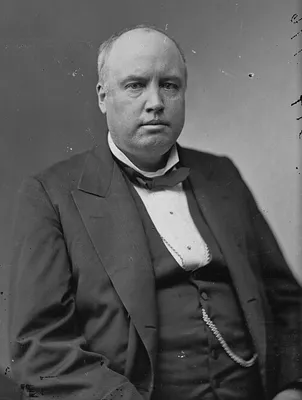
Robert Green Ingersoll was a prominent lawyer, orator, and writer advocating for agnosticism and free thought during the Golden Age of Free Thought.
Robert Green Ingersoll, known as "the Great Agnostic," was a prominent American lawyer, writer, and orator active during the Golden Age of Free Thought. Born in 1833, his father was a Congregationalist preacher whose frequent relocations and struggles with church authorities, particularly after a trial in Ohio when Robert was nine, deeply influenced the younger Ingersoll's views. This experience fostered in him an opposition to Calvinism and later to Christianity in general. He pursued a legal career, practicing in Illinois and serving in various clerk positions before establishing a law practice with his brother. Ingersoll also served in the Union Army during the Civil War, commanding a cavalry regiment before being captured and paroled. Though he never held elected office beyond Illinois Attorney General, he was a significant figure in Republican politics and a celebrated orator.
Ingersoll was a vocal advocate for agnosticism and free thought, using his considerable oratorical skills to challenge religious dogma, particularly the concept of Hell. He also championed social causes, opposing the Chinese Exclusion Act, supporting women's rights, and speaking out against racial discrimination and capital punishment. His lectures and writings reached a wide audience, reintroducing the ideas of thinkers like Thomas Paine to a new generation and contributing to the revival of Paine's reputation. He died in 1899, and his speeches were later published in the Dresden Editions, preserving his legacy. His ashes are interred in Arlington National Cemetery.
Early Life and Religious Skepticism
Born in Dresden, New York, Robert Green Ingersoll's early life was shaped by his father, John Ingersoll, a Congregationalist minister whose progressive views often led to conflict with his congregations and frequent moves. A significant event was a church trial in Ohio when Robert was nine, where his father faced accusations of unministerial conduct. Although the elder Ingersoll was ultimately permitted to continue his ministry, the perceived injustice and bigotry directed at him profoundly impacted young Robert, turning him against Calvinism and, subsequently, various forms of Christianity. Ingersoll also worked as a schoolteacher in Illinois before embarking on his legal career.
Legal Career and Political Involvement
Ingersoll was admitted to the bar in Illinois in 1854 and practiced law with his brother, Ebon Clarke Ingersoll. Their family was noted for being intellectual but also faced social friction due to their abolitionist and deist leanings. He held positions as a deputy clerk and studied law under various judges. During his legal career, Ingersoll was involved in significant cases, including the Star Route trials, where his clients were acquitted. He also defended a man charged with blasphemy, and though he didn't secure an acquittal, his strong defense is credited with discrediting blasphemy laws. He briefly represented the con artist James Reavis, validating his land grant claim.
Military Service and Public Advocacy
During the American Civil War, Ingersoll raised and commanded the 11th Regiment Illinois Volunteer Cavalry. His regiment saw action at the Battle of Shiloh. He was captured by Confederate forces in December 1862 and subsequently paroled, which prevented him from continuing active duty, leading to his resignation in 1863. After the war, Ingersoll became a prominent figure in the Republican Party, though he never held elected office beyond his term as Illinois Attorney General. He was known for his powerful oratory, including a notable speech nominating James G. Blaine for president. His outspoken agnosticism, however, limited his political ambitions.
Oratory, Free Thought, and Social Stances
Ingersoll gained widespread recognition as "the Great Agnostic" for his lectures and writings promoting free thought and agnosticism. He used his platform to critique religious doctrines, famously attacking the concept of Hell. Ingersoll was also a social reformer, advocating against the Chinese Exclusion Act and in favor of more lenient policies for Chinese workers. He supported women's rights, opposed racial discrimination, and argued against capital punishment. His intellectual influence extended to popularizing the ideas of Thomas Paine, reintroducing his works to a broad audience.
Key Ideas
- Advocacy for agnosticism and free thought
- Critique of religious dogma and institutions
- Support for social reform movements including women's rights and anti-discrimination
Notable Quotes
“All the meanness, all the revenge, all the selfishness, all the cruelty, all the hatred, all the infamy of which the heart of man is capable, grew, blossomed, and bore fruit in this one word – Hell.”
Books by Ingersoll, Robert Green
0 free public domain books · Read online or download