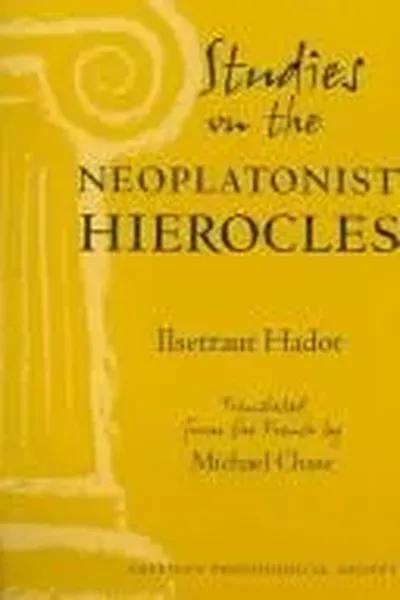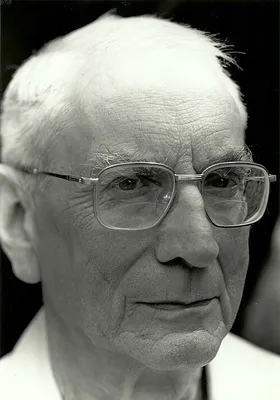
Ilsetraut Hadot
Pierre Hadot was a French philosopher and historian who redefined the understanding of ancient philosophy as a way of life.
Pierre Hadot (1922-2010) was a French philosopher and historian renowned for his work on ancient philosophy, particularly Neoplatonism, Epicureanism, and Stoicism. Initially ordained, he left the priesthood in 1950 and pursued academic studies at the Sorbonne and École Pratique des Hautes Études (EPHE), where he held significant academic positions. His career included professorships at EPHE and the Collège de France, focusing on Hellenistic and Roman thought. Hadot's scholarship involved extensive work on classical texts, including translations and commentaries on figures like Plotinus, Porphyry, and Marcus Aurelius.
His most significant contribution was the reinterpretation of ancient philosophy not merely as a theoretical discipline but as a transformative practice or 'way of life.' He highlighted the concept of 'spiritual exercises' – practices aimed at personal transformation and aligning oneself with nature and community. Hadot argued that this therapeutic and existential dimension of philosophy has been largely overlooked in modern academic approaches. He also introduced Ludwig Wittgenstein's ideas to France, emphasizing the inseparable link between philosophical form and content.
Philosophy as a Way of Life and Spiritual Exercises
Pierre Hadot fundamentally reconceptualized the study of ancient philosophy, emphasizing its role as a lived practice rather than solely a theoretical pursuit. He identified and extensively analyzed the concept of 'spiritual exercises' within Greco-Roman antiquity. These exercises, he explained, were deliberate practices designed to induce profound personal change and transformation in the practitioner. Examples include Stoic aphorisms, like "What troubles people is not things, but their judgments about things," which were to be internalized and applied during difficult moments. Similarly, Marcus Aurelius's reflections on transforming obstacles into opportunities for action exemplify these practices. Hadot argued that such exercises enabled individuals to live in greater accordance with nature and to serve their communities, underscoring the Socratic emphasis on vital human connection and personal growth through philosophical engagement.
Academic Career and Influence
Hadot's distinguished academic career spanned several prestigious institutions in France. After his ordination and subsequent departure from the priesthood, he studied at the Sorbonne and graduated from the École Pratique des Hautes Études (EPHE). He later became a Director of Studies at EPHE, holding chairs in Latin Patristics and later 'Theologies and Mysticisms of Hellenistic Greece and the End of Antiquity.' In 1983, he was appointed professor at the Collège de France, where he led the chair of the History of Hellenistic and Roman Thought until his retirement in 1991. Throughout his career, Hadot published significant commentaries and translations of key ancient philosophers, including Porphyry, Plotinus, and Marcus Aurelius. His work also influenced later thinkers, notably Michel Foucault, and he played a crucial role in introducing Ludwig Wittgenstein's philosophy to France, highlighting the inseparable connection between philosophical language and its practical application.
Critique of Modern Philosophy
A central theme in Hadot's work was his critique of contemporary philosophical education, which he believed had largely strayed from the original, therapeutic purpose of philosophy. He argued that modern academia often treats philosophy as an abstract academic discipline, detached from the practical, life-transforming potential it held in antiquity. Hadot contended that the true spirit of philosophy lies in its ability to foster personal progress and self-transformation, best achieved through direct engagement and dialogue rather than solely through written texts and lectures. He pointed to figures like Henry David Thoreau, whose life exemplified living philosophy as described in his book *Walden*, as a model of the 'true philosopher' in contrast to modern academic professors who may lack this lived commitment.
Key Ideas
- Philosophy as a spiritual or practical exercise for personal transformation.
- The distinction between ancient philosophy as a way of life and modern academic philosophy.
- The importance of 'spiritual exercises' in ancient philosophical traditions.
- The inseparable link between the form and content of philosophical expression, particularly in Wittgenstein.
Notable Quotes
“In the last analysis, we can scarcely talk about what is most important.”
“What troubles people is not things, but their judgments about things”
“my thought can "turn upside down" everything that presents an obstacle to my action, and transform the obstacle into an object toward which my impulse to act ought preferably to tend.”
“That which impeded action thus becomes profitable to action, and that which blocked the road allows me to advance along the road”
“There Are Nowadays Professors of Philosophy, but not Philosophers”
Books by Ilsetraut Hadot
3 free public domain books · Read online or download