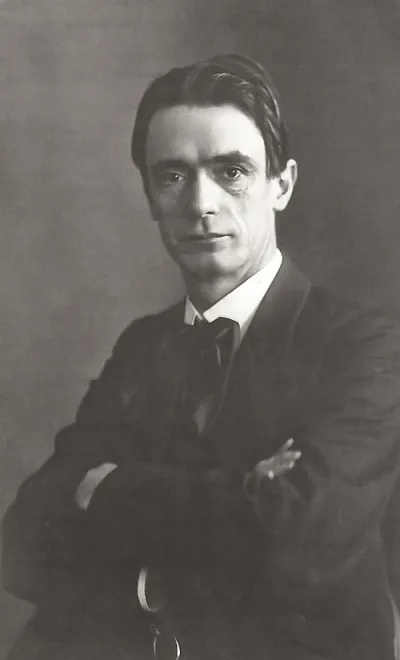
Huston Smith
Huston Smith was a scholar of world religions whose work bridged academic study with personal mystical experience.
Huston Smith, born in China to American missionary parents, dedicated his life to the scholarly exploration and understanding of global religious traditions. He earned a PhD in religious studies from the University of Chicago and held academic positions at several prominent universities, including MIT and Syracuse University. His seminal work, 'The World's Religions,' originally titled 'The Religions of Man,' achieved widespread recognition and significant sales.
Smith's intellectual journey was deeply intertwined with personal spiritual exploration. He engaged with various mystical traditions, including Vedanta, Zen Buddhism, and Sufism, and was influenced by figures like Aldous Huxley and Gerald Heard. His academic career included involvement with the Harvard Psilocybin Project and significant research into overtone singing in Tibetan Buddhist chanting. Smith also played a role in advocating for Native American religious freedom, contributing to legislative protections for their practices. He passed away in 2016, leaving behind a substantial body of work and a legacy of interfaith dialogue.
Academic and Mystical Pursuits
Huston Smith's academic career was marked by a deep and personal engagement with religious phenomena. After completing his PhD at the University of Chicago, he taught at institutions like Washington University, MIT, and Syracuse University. During his time at MIT, Smith participated in early psychedelic research with figures like Timothy Leary and Richard Alpert, exploring what he termed 'empirical metaphysics.' He also had profound experiences with Eastern traditions, including a significant stay at a Tibetan Buddhist monastery where he documented overtone chanting, an experience he considered the singular empirical discovery of his career. His studies extended to Vedanta under Swami Satprakashananda and Zen Buddhism under Goto Zuigan, alongside a decade-long immersion in Islamic Sufism. This blend of rigorous academic inquiry and direct mystical experience informed his unique perspective on comparative religion.
Influence of Mysticism and Psychedelics
Smith's spiritual path diverged from conventional Christianity early on, influenced by mystics like Aldous Huxley and Gerald Heard. His encounters with Heard and Huxley led him to explore meditation and the Vedanta Society. His association with figures from the Harvard Psilocybin Project, including Leary and Ram Dass, involved experimentation with psychedelics aimed at enhancing spiritual awareness. Smith later reflected on these experiences in his book 'Cleansing the Doors of Perception.' Despite his academic credentials, his exploration of altered states and unconventional spiritual paths sometimes led to mistrust from colleagues, as seen in the restrictions placed upon him at MIT. This period highlights his commitment to empirical investigation of spiritual states, a theme that permeated his later writings and public lectures.
Advocacy and Public Engagement
Beyond his academic and personal spiritual pursuits, Huston Smith was a significant public figure who championed religious understanding and tolerance. He hosted influential television series, such as 'The Religions of Man' and 'Search for America,' which introduced diverse religious traditions to a broad audience. His work earned him recognition, including a PBS special by Bill Moyers. Notably, Smith became an advocate for Native American religious freedom, contributing to the passage of the American Indian Religious Freedom Act amendment after the Supreme Court ruled against the use of peyote as a religious sacrament. He described his own faith as a form of Christianity with a Vedantic understanding, crediting his missionary parents for instilling in him a resilient form of Christianity.
Key Ideas
- The common underlying truths in world religions.
- The importance of empirical investigation in understanding spiritual experience.
- The relationship between institutional religion and individual spirituality.
- The goal of spiritual life is altered traits, not just altered states.
Notable Quotes
“Institutions are not pretty. Show me a pretty government. Healing is wonderful, but the American Medical Association? Learning is wonderful, but universities? The same is true for religion... religion is institutionalized spirituality.”
“The goal of spiritual life is not altered states, but altered traits.”
Books by Huston Smith
3 free public domain books · Read online or download