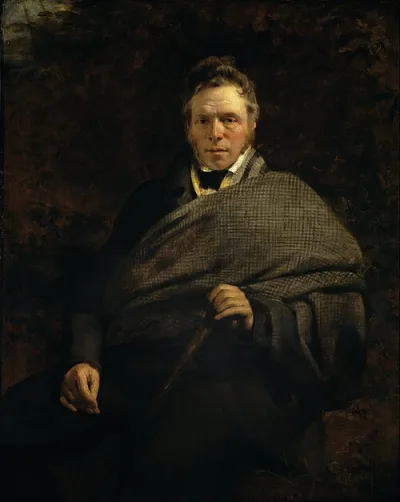
Hogg, James
James Hogg was a Scottish shepherd and writer known for his novels, poetry, and songs, often published under the 'Ettrick Shepherd' persona.
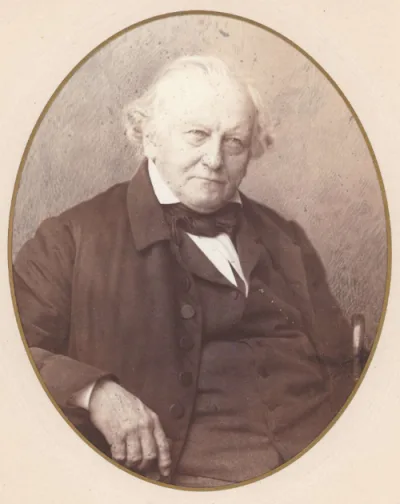
James Hogg (1770–1835) was a Scottish poet, novelist, and essayist who wrote in both Scots and English. Largely self-educated, he began his working life as a shepherd and farmhand. Hogg developed friendships with prominent literary figures of his time, including Sir Walter Scott, for whom he later penned an unauthorized biography. He became widely recognized by the moniker "Ettrick Shepherd," a name he used for some of his published works and as a character in the popular "Noctes Ambrosianae" series in Blackwood's Magazine.
Hogg's early life was shaped by his mother's collection of Scottish ballads and his own self-education through reading. He learned to play the fiddle and absorbed stories from the Bible and his family. His literary career began in earnest when he moved to Edinburgh in 1810. He published "The Queen's Wake" in 1813, which brought him success, and later collections such as "Jacobite Relics" (1819). His novel "The Private Memoirs and Confessions of a Justified Sinner" is his most celebrated work today.
Early Life and Education
Born near Ettrick, Scotland, in 1770, James Hogg's early life was marked by his father's financial struggles as a farmer and sheep dealer. Hogg received only a brief formal education, stopping attendance at a parish school due to his father's bankruptcy. He spent his childhood working on farms and as a shepherd's assistant. His initial exposure to literature and storytelling came from the Bible and stories shared by his mother and uncle. He taught himself to read and play the fiddle. His employer's wife provided him with newspapers and theological works, fostering his self-education while he worked as a shepherd. He later had access to books through his employer James Laidlaw's library and a local lending library, which significantly contributed to his intellectual development.
Literary Career and Recognition
Hogg's professional writing career began when he was enlisted to collect ballads for Walter Scott's "Minstrelsy of the Scottish Border." He met Scott in 1802 and started contributing to the Edinburgh Magazine. After several unsuccessful attempts to establish himself as a farmer, Hogg moved to Edinburgh in 1810 to pursue literature. His long poem "The Queen's Wake" (1813) achieved considerable success, establishing his literary reputation. He continued to publish poetry, songs, and collections of tales, often drawing on Scottish folklore. His association with Blackwood's Magazine, particularly through the "Noctes Ambrosianae" series where he was portrayed as the "Ettrick Shepherd," brought him widespread fame, though the persona sometimes overshadowed his own identity.
Notable Works and Themes
James Hogg is best known for his novel "The Private Memoirs and Confessions of a Justified Sinner," a complex work exploring religious delusion and psychological darkness. His other significant writings include the long poem "The Queen's Wake" (1813), which features a collection of verse tales, with "Kilmeny" being particularly well-known. He also compiled "Jacobite Relics" (1819), a collection of songs reflecting historical and patriotic themes. His novels "The Three Perils of Man" (1822) and "The Three Perils of Woman" (1823) also contributed to his literary output. Hogg's work often incorporated elements of Scottish folklore and explored themes of faith, delusion, and the human psyche.
Books by Hogg, James
3 free public domain books · Read online or download