F. Crawford Burkitt
Aphrahat, a Persian sage, authored twenty-three Syriac Christian homilies known as the Demonstrations in the 4th century.
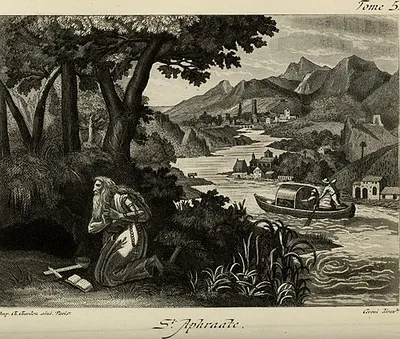
Aphrahat, known as the "Persian Sage," was a Syriac Christian author of Iranian origin from the Sasanian Empire. He lived around 280–345 AD and composed twenty-three expositions on Christian doctrine and practice, collectively titled "The Demonstrations." These works, written later in his life, offer insights into the concerns of the early church outside the Roman Empire's eastern borders. Aphrahat was an ascetic and celibate, possibly a member of an early monastic community, and may have served as a bishop. His writings reflect pastoral care for his flock amidst political tensions between Rome and Persia, particularly during the persecutions initiated by Shapur II.
His name, Aphrahat, is the Syriac form of the Persian name Frahāt. While some traditions suggest he was a convert from Zoroastrianism or had Jewish ancestry, these are considered later speculations. His works are structured alphabetically for the first twenty-two, with each beginning with a successive letter of the Syriac alphabet. The Demonstrations were written in three distinct periods, addressing topics from Christian life and church order to more apocalyptic themes and refutations of a movement within the Persian church to adopt Jewish practices. Aphrahat's biblical interpretation is noted for its similarity to Babylonian rabbinic academies, and he frequently quotes from the Diatessaron.
The Demonstrations
Aphrahat's significant contribution to Christian literature is his collection of twenty-three works known as "The Demonstrations" (Syriac: taḥwîṯâ). These are pastoral homilies or expositions intended to provide a comprehensive and ordered presentation of the Christian faith from the perspective of the Syriac-speaking church before the Arian controversy. The first twenty-two demonstrations are arranged alphabetically according to the Syriac alphabet, with each text beginning with a successive letter. The composition of these works occurred in three phases: the first ten were written around 337 AD, focusing on Christian life and church structure before the persecutions began. Demonstrations eleven through twenty-two were composed in 344 AD, during the height of the persecutions, and include discussions on Christian life, church order, and apocalyptic themes. Notably, four of these texts address Judaism, reflecting a contemporary concern within the Persian church regarding the adoption of Jewish practices. The twenty-third demonstration, written slightly later, explores the symbolism of the grape and the fulfillment of Messianic prophecy.
Life and Context
Born around 280 AD near the Roman Syrian and Neo-Persian Iranian border, Aphrahat lived under the rule of Sasanian Emperor Shapur II. His Persian name, Frahāt, suggests a possible Persian heritage, and some speculation points to Zoroastrian or Jewish ancestry, though this is not definitively established. He is identified as "the Persian Sage" and was a prominent figure in the Christian Church of the Persian Empire during the first half of the fourth century. Aphrahat's writings reveal his deep pastoral concern for his community, particularly during periods of persecution arising from political tensions between the Roman and Persian empires. The internal evidence of his works indicates he lived long enough to witness the early stages of Shapur II's persecution of Christians in the 340s, which may have been influenced by Constantine the Great's establishment of Christianity in the Roman Empire.
Theological and Interpretive Style
Aphrahat's approach in "The Demonstrations" is characterized by its biblical grounding and practical application of Christian doctrine. He avoids speculative philosophy, focusing instead on explaining core tenets of faith and practice. His method of biblical interpretation shows a striking resemblance to the Babylonian rabbinic academies of his era. All his gospel quotations appear to be drawn from the Diatessaron, a harmony of the Gospels prevalent in the Syriac-speaking church. The structure of his work, beginning with faith and building upon it, demonstrates a systematic yet accessible presentation of Christian theology. His writings offer valuable insights into the theological concerns and pastoral needs of Christians living within the Sasanian Empire during a turbulent period.
Key Ideas
- Pastoral exposition of Christian doctrine and practice
- Alphabetically structured homilies (Syriac alphabet)
- Biblical interpretation influenced by rabbinic methods
- Focus on Christian life, church order, and apologetics
- Addressing internal church challenges, such as syncretism with Judaism
- Reflections on Christian existence amidst political persecution
Books by F. Crawford Burkitt
3 free public domain books · Read online or download