Eleanor C. Gregory
Eleanor of Aquitaine was a powerful medieval queen, duchess, and regent, influencing European politics through her marriages and inheritance.
Eleanor of Aquitaine, born around 1124, was the Duchess of Aquitaine and a significant figure in medieval European history. Inheriting vast territories in southwestern France, she became one of the wealthiest and most influential individuals of her time. Her life was marked by two prominent royal marriages: first to Louis VII of France, making her queen consort, and later to Henry II of England, who also became king. She ruled jointly with her husbands and two of her sons, Richard I and John, demonstrating considerable political agency. Despite facing imprisonment by Henry II, she played a crucial role as regent for Richard I and ensured John's succession. Eleanor's life spanned a period of significant political upheaval, and she died in 1204, leaving a legacy as a powerful ruler.
Inheritance and First Marriage
Upon her father Duke William X's death in 1137, Eleanor, then thirteen, inherited the vast Duchy of Aquitaine, making her a highly sought-after heiress in Europe. Recognizing the strategic importance of Aquitaine, King Louis VI of France arranged her immediate marriage to his son, Louis, who subsequently became King Louis VII. Eleanor and Louis were wed in July 1137, and shortly after, she became queen consort of France. The marriage aimed to unite Aquitaine with the French crown, though the duchy was to remain largely independent until their eldest son inherited both titles. Their early years saw them invested as count and countess of Poitou, with Eleanor bearing two daughters, Marie and Alix.
Second Marriage and English Queenship
After fifteen years of marriage to Louis VII, and lacking a male heir, Eleanor's marriage was annulled in 1152 on grounds of consanguinity. In the same year, she married Henry, Duke of Normandy, who in 1154 ascended the English throne as King Henry II. This union made Eleanor queen of England. Together, they had eight children, including five sons and three daughters. However, their relationship deteriorated, leading Henry II to imprison Eleanor for her alleged support of a revolt by their sons. She remained imprisoned until Henry II's death in 1189.
Regency and Later Life
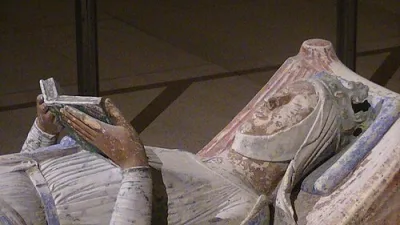
Upon her release in 1189, following the death of Henry II and the ascension of her son Richard I, Eleanor took on a significant role as queen dowager. She acted as regent for England during Richard's extensive absences, demonstrating her political acumen and authority. After Richard's death in 1199, she actively supported her younger son John's claim to the throne, ensuring his succession amidst ongoing conflicts between French and English interests. Eleanor continued to navigate the complex political landscape until her death in 1204, ultimately being buried at Fontevraud Abbey in France.
Historical Sources and Legacy
Accounts of Eleanor's life are challenging due to a scarcity of contemporary primary sources. Much of what is known comes from chronicles written by clerics associated with royal courts, often portraying women in power negatively. Records from Aquitaine are sparse, and she appears to have been marginalized in French court documents. While some English and Welsh secular sources exist, their neutrality varies, with some being satirical or critical of her second husband. Early modern interpretations have oscillated between depicting her as a feminist icon and associating her with a 'Black Legend.' More recent scholarship aims to provide a balanced perspective, acknowledging the difficulty in reconstructing her life accurately due to the limited and often biased nature of surviving historical documentation.
Books by Eleanor C. Gregory
0 free public domain books · Read online or download