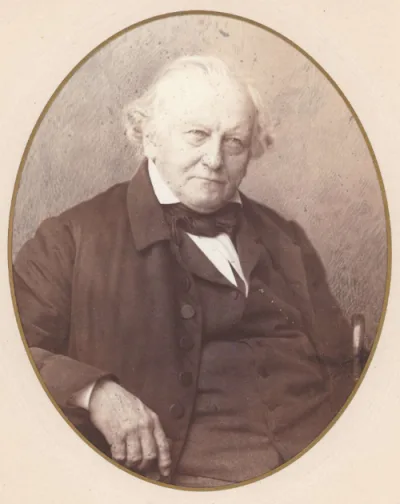
E. J. Langford Garstin
Hermeticism is an ancient tradition rooted in teachings attributed to Hermes Trismegistus, influencing mysticism, alchemy, and esoteric thought.
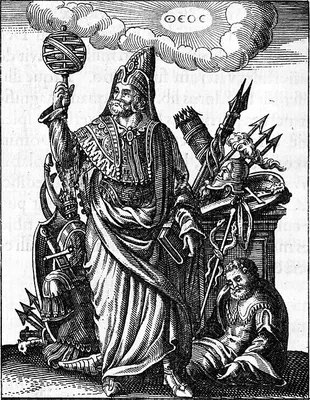
Hermeticism is a philosophical and religious tradition originating from teachings attributed to Hermes Trismegistus, a figure blending Greek and Egyptian deities. This system encompasses diverse esoteric knowledge, including alchemy, astrology, and theurgy, and has profoundly impacted various mystical and occult traditions throughout history. The writings associated with Hermes Trismegistus, collectively known as the Hermetica, span many centuries and vary greatly in content. A specific form, often called Hermetism, focuses on religio-philosophical treatises like the Corpus Hermeticum and Asclepius, dating from the first few centuries CE.
The broader concept of Hermeticism encompasses various philosophies drawing from these writings or related subjects, with alchemy frequently referred to as the "Hermetic art." During the Renaissance, this tradition saw a revival, influenced by translations of key texts and new philosophical approaches. Hermeticism has historically been linked to the idea of a primeval divine wisdom, evolving into concepts like 'prisca theologia' and the 'perennial philosophy,' suggesting a unified truth found across different ancient systems. This evolution led to 'Hermetic' becoming associated with ancient Egyptian divine knowledge, particularly in alchemy and magic, a view popularized by later occultists.
Origins and Early Development
Hermeticism emerged in Hellenistic Egypt, a period of significant cultural and religious fusion. The central figure, Hermes Trismegistus, symbolized this syncretism, combining aspects of the Greek god Hermes and the Egyptian god Thoth. He was considered a divine sage credited with numerous texts known as the Hermetica, which explored theology, cosmology, and spiritual practices. Hermeticism developed alongside other contemporary movements like early Christianity, Gnosticism, and Neoplatonism, characterized by a balance between pure reason and faith. Early recognition of Hermes Trismegistus appears in Plutarch's writings from the first century CE, and influential figures like Tertullian, Iamblichus, and Porphyry were familiar with Hermetic literature.
Core Texts and Concepts
The foundational literature of Hermeticism is the Hermetica, a collection of texts attributed to Hermes Trismegistus, composed roughly between 200 BCE and 300 CE. These are typically divided into philosophical/theological and technical categories. The most prominent philosophical text is the Corpus Hermeticum, a collection of seventeen dialogues where Hermes Trismegistus imparts esoteric wisdom. Another key text is the Asclepius. The Emerald Tablet, a concise alchemical work, is central to Western alchemy, encapsulating the principle of "as above, so below." Technical Hermetica includes works on astrology, alchemy, and theurgy, which were seen as methods for understanding and influencing divine forces, significantly shaping the Western esoteric tradition.
Influence and Interpretation
Hermeticism significantly influenced early Christian thought, particularly Christian mysticism, and had a pronounced impact on Gnostic traditions due to shared emphasis on esoteric knowledge for salvation. During the Renaissance, the rediscovery and translation of Hermetic texts led to a revival of interest. Scholars like Marsilio Ficino and Lodovico Lazzarelli were instrumental in this revival. Renaissance thinkers viewed Hermeticism as a source of ancient wisdom compatible with Christian teachings and classical philosophy, resonating with the era's focus on human potential. The esoteric nature of the Hermetica allowed for diverse interpretations across different eras and cultures, ensuring its enduring influence.
Key Ideas
- Syncretism of Greek and Egyptian religious elements
- Esoteric knowledge encompassing alchemy, astrology, and theurgy
- Concept of 'prisca theologia' (ancient theology)
- The principle of 'as above, so below'
- The divine nature of humanity and spiritual ascent
- God as 'the All' (to pan)
Books by E. J. Langford Garstin
0 free public domain books · Read online or download