Daniel Schwemer
Humbaba, a Mesopotamian mythological figure, was a guardian of the cedar forest, defeated by Gilgamesh and Enkidu.
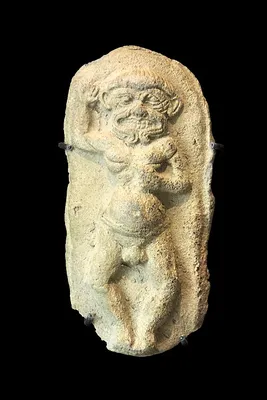
Humbaba, originally known as Huwawa in Sumerian, was a significant figure in Mesopotamian mythology, primarily recognized as the guardian of the cedar forest. His origins and the meaning of his name remain obscure. He is most famously depicted in narratives concerning the hero Gilgamesh, appearing in various Sumerian and Akkadian texts, including those used for scribal education and adaptations in Hurrian and Hittite cultures. Humbaba is typically portrayed as an ogre or giant, an anthropomorphic being with supernatural powers, notably seven "auras" or "terrors" that rendered him formidable. His defeat at the hands of Gilgamesh and Enkidu, often involving trickery to remove his protective auras, led to his death and provoked divine anger. While his name's etymology is uncertain, some theories suggest it may be onomatopoeic or related to a linguistic substrate. Depictions of Humbaba have been found, including combat scenes and apotropaic clay heads, and his iconography may have influenced later representations of Gorgons in Greek mythology.
Mythological Role and Portrayal
Humbaba is primarily known as the fearsome guardian of the cedar forest, a role that pits him against the hero Gilgamesh and his companion Enkidu. He is consistently depicted as an anthropomorphic figure, often described as an ogre or giant, possessing supernatural abilities. A key element of his power lies in his seven "auras" or "terrors" (ni2 or me2-lam), a unique attribute that granted him immense protection, with only one such aura being common for deities. The narratives suggest that Humbaba was not necessarily a god, despite sometimes being referred to with a divine determinative. His nature is often interpreted through his interactions, where he is sometimes portrayed as lonely and susceptible to trickery, particularly in earlier Sumerian accounts where his defeat involves being bribed and persuaded to relinquish his auras.
Linguistic and Etymological Considerations
The name Humbaba exhibits a complex history of variations across different Mesopotamian periods and regions. While the modern spelling reflects Neo-Assyrian and Neo-Babylonian forms, the oldest attested name is Ḫuwawa. Variants like Ḫuwawa, Ḫubaba, and Ḫubibi appear in texts from various locations, suggesting different pronunciations and scribal conventions, possibly reflecting a pronunciation like /Ḫuppipi/ in certain areas. The origin and meaning of his name are unknown, with no clear linguistic affiliation. Some scholars propose that names of this structure might originate from a linguistic substrate. An alternative theory by Frans Wiggermann suggests Humbaba's name could be onomatopoeic, possibly representing the sounds made by an apotropaic grinning face used to ward off evil, with the myths serving to explain this custom.
Influence and Later Derivatives
The figure of Humbaba appears to have had a lasting impact beyond Mesopotamian borders. His iconography has been suggested as a potential influence on the depiction of Gorgons in ancient Greece, particularly in scenes involving Perseus and Medusa. Furthermore, a derivative of Humbaba seems to exist in later traditions, notably in Jewish and Manichaean versions of the Book of Giants, where a figure named Ḥôbabiš appears. While the name is acknowledged as originating from Humbaba, the context of these later myths shows no resemblance to the original Mesopotamian narratives. Traces of Ḥôbabiš have also been identified in Islamic traditions, though proposed connections to figures like Lucian's Kombabos or the biblical Hobab are generally considered implausible.
Key Ideas
- Guardian of the Cedar Forest
- Seven Auras/Terrors
- Adversary of Gilgamesh
- Potential influence on Greek Gorgons
- Derivative figures in later religious texts
Notable Quotes
“O Enkidu, you use wicked words to him about me, a hired man is hired for rations, behind another such man he follows. Why use wicked words to him?”
Books by Daniel Schwemer
3 free public domain books · Read online or download