✍️ Author Biography
Charles Williams
📅 1886 – 1945
🌍 British
📚 8 free books
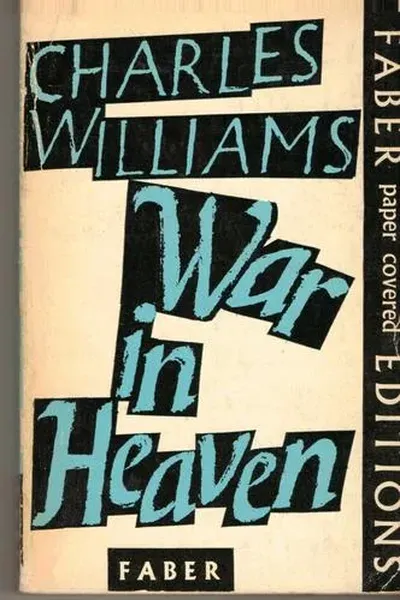
⭐ Known for: War in Heaven (1930)
Charles Williams was an English poet and novelist known for his theological fiction exploring spiritual and supernatural themes.
Charles Williams (1886-1945) was an English writer, poet, playwright, theologian, and critic whose career was largely spent in London, moving to Oxford later in life to work with the university press. Though he authored works across various genres including poetry, literary criticism, and theology, he is primarily remembered for his novels. His fiction often delves into the intersection of the physical and spiritual realms, exploring how power, even spiritual power, can be both corrupting and sanctifying. Williams's fantasies are distinct in their contemporary settings, influencing later writers in the genre. He was a significant figure in the literary world, admired by contemporaries like T. S. Eliot and W. H. Auden, and a member of the Inklings literary group. His theological concepts, particularly 'co-inherence,' profoundly shaped his understanding of relationships and divine participation.
Literary and Theological Contributions
While chiefly recognized for his novels, Charles Williams was a prolific writer across multiple genres, including poetry, drama, literary criticism, and theology. His novels, often described as 'supernatural thrillers,' are noted for their exploration of the spiritual within contemporary settings, a departure from some of his fantasy contemporaries. A key theological concept he developed is 'co-inherence,' which he applied to the relationships within the Trinity, the connection between Christ and believers, and the interconnectedness of all creation. Williams envisioned this as a mutual indwelling and interdependence, extending to social, economic, and ecological spheres. He proposed an order dedicated to practicing co-inherence through substitution, exchange, and mutual bearing of burdens.
Career and Influences
Williams began his professional life in a bookroom and later joined the Oxford University Press, where he worked for decades, eventually becoming an editor. His editorial work included overseeing the first major English edition of Søren Kierkegaard's writings. He was part of the literary events at the 1924 Summer Olympics. His own literary output garnered significant attention, with notable novels like 'War in Heaven,' 'Descent into Hell,' and 'All Hallows' Eve.' His work deeply impressed fellow writers such as T. S. Eliot, W. H. Auden, and C. S. Lewis, with whom he formed a close friendship after a serendipitous exchange of congratulatory letters. Lewis's novel 'That Hideous Strength' is considered partially inspired by Williams.
Personal Life and Associations
Born and raised in London, Williams spent most of his life there before moving to Oxford in 1939. He was married to Florence Conway, with whom he had a son, Michael. Williams was a devout member of the Church of England. During World War II, the relocation of Oxford University Press offices to Oxford brought him into closer contact with literary figures like C. S. Lewis and J. R. R. Tolkien, with whom he participated in the Inklings society. He also had a period of involvement with the Salvator Mundi Temple of the Fellowship of the Rosy Cross and was acquainted with Evelyn Underhill.
Key Ideas
- Co-inherence: The concept of mutual indwelling and interdependence within creation, particularly as exemplified in Christ and the Body of Christ.
- Theology of Romantic Love: Viewing falling in love as a mystical vision of the beloved as seen through God's eyes.
- Supernatural Thrillers: Novels that explore spiritual realities intersecting with the contemporary world.
Notable Quotes