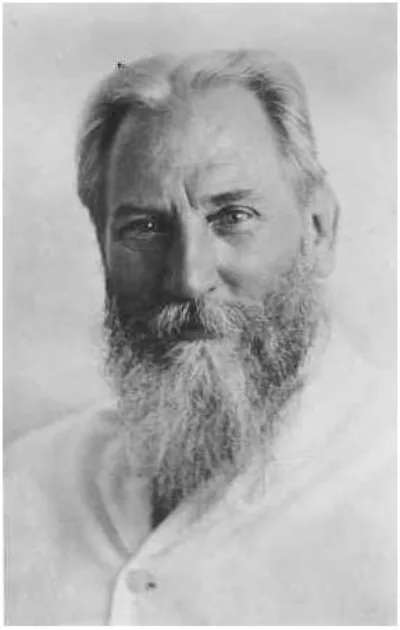
Charles Webster Leadbeater
Charles Webster Leadbeater was a prolific author and influential figure in the Theosophical Society, exploring occult subjects and spiritual development.
Charles Webster Leadbeater (1854–1934) was a prominent member of the Theosophical Society, known for his extensive writings on occult and esoteric subjects. Originally an Anglican priest, his interest in spiritualism led him to join the Theosophical Society, where he became a close associate of Annie Besant and held a high-ranking position until his death. He co-initiated the Liberal Catholic Church and was a member of Co-Freemasonry.
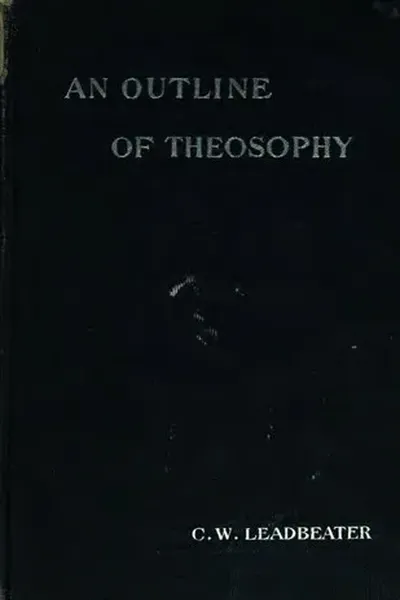
Leadbeater's career with the Theosophical Society spanned many decades, during which he authored over 60 books and pamphlets. His work delved into topics such as clairvoyance, the nature of the astral and devachanic planes, reincarnation, Karma, thought forms, and esoteric Christianity. He also became a notable speaker for the Society. Despite his significant contributions, his career faced controversy, leading to his resignation from the Theosophical Society in 1906 following revelations about advice he gave to young men concerning sexual matters.
Early Life and Spiritual Awakening
Born in Stockport in 1854, Charles Webster Leadbeater experienced personal loss early in life with the death of his father and financial setbacks. He pursued self-education, studying subjects like astronomy, French, Latin, and Greek. Influenced by his uncle, an Anglican cleric, Leadbeater was ordained as a priest in 1879. During his time as a curate, he developed a keen interest in spiritualism after reading about the medium Daniel Dunglas Home. This burgeoning interest in the occult eventually led him away from the Church of England.
Theosophical Society and Esoteric Teachings
Leadbeater's engagement with Theosophy began with A. P. Sinnett's 'Occult World,' leading him to join the Theosophical Society in 1883. He met Helena Petrovna Blavatsky the following year, becoming her pupil and adopting vegetarianism. He traveled to India in 1884, where he claimed to receive training from the 'Masters' of Theosophy. He later served as headmaster of the English Buddhist Academy in Ceylon (now Sri Lanka), which evolved into Ananda College. Upon returning to England, he became closely associated with Annie Besant, who led the Theosophical Society after Blavatsky's death. Leadbeater's writings explored detailed investigations of the Astral Plane, the soul's journey after death, reincarnation, and the development of psychic abilities.
Clairvoyance and Methods of Development
A significant focus of Leadbeater's work was the exploration and development of clairvoyance. His book 'Clairvoyance' (1899) presented a study of seeing beyond ordinary perception, appealing to those already familiar with theosophical concepts. He described clairvoyance as an extension of common senses and detailed various phenomena. Leadbeater also outlined methods for developing such abilities, emphasizing the importance of controlling thoughts and concentrating the mind towards spiritual ideals. He suggested daily periods of quiet contemplation to achieve mental discipline, which he believed could lead to the opening of new perceptual realms. His own clairvoyant abilities were reportedly awakened through a specific course of meditation practice, guided by Master Kuthumi.
Later Career and Controversy
Throughout his long association with the Theosophical Society, Leadbeater authored over 60 books and pamphlets, many of which remained influential for decades. He was a respected speaker and engaged with topics ranging from the nature of God and immortality to Karma and the development of thought forms. His work also extended to co-initiating the Liberal Catholic Church. However, his career faced a significant challenge in 1906 when it was revealed that he had advised young men under his care to practice masturbation as a means to manage sexual thoughts. This led to proceedings against him within the Society, prompting his resignation, though Annie Besant later defended his actions.
Key Ideas
- Development of clairvoyant abilities through meditation and mental control.
- Detailed exploration of the Astral and Devachanic planes as realms of consciousness after death.
- The nature of thought forms and their influence.
- Reincarnation and Karma as fundamental spiritual laws.
- Esoteric interpretations of Christianity.
Notable Quotes
“For the first time among occultists, a detailed investigation had been made of the Astral Plane as a whole, in a manner similar to that in which a botanist in an Amazonian jungle would set to work in order to classify its trees, plants and shrubs, and so write a botanical history of the jungle. For this reason the little book, The Astral Plane, was definitely a landmark, and the Master as Keeper of the Records desired to place its manuscript in the great Museum.”
“Let a man choose a certain time every day—a time when he can rely upon being quiet and undisturbed, though preferably in the daytime rather than at night—and set himself at that time to keep his mind for a few minutes entirely free from all earthly thoughts of any kind whatever and, when that is achieved, to direct the whole force of his being towards the highest spiritual ideal that he happens to know. He will find that to gain such perfect control of thought is enormously more difficult than he supposes, but when he attains it, it cannot but be in every way most beneficial to him, and as he grows more and more able to elevate and concentrate his thought, he may gradually find that new worlds are opening before his sight.”
“The so-called trial of Mr Leadbeater was a travesty of justice. He came before Judges, one of”
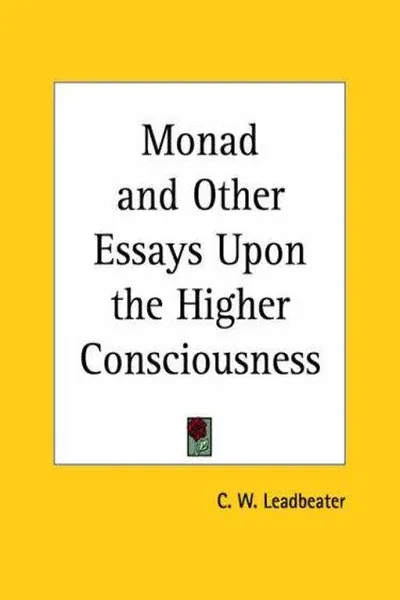
Books by Charles Webster Leadbeater
45 free public domain books · Read online or download