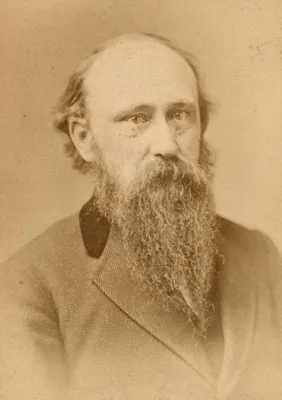
Carpenter, Stephen H. (Stephen Haskins)
Stephen Haskins Carpenter was an academic, philosopher, and linguist focused on Anglo-Saxon language and the philosophy of evolution.
Stephen Haskins Carpenter (1831-1878) was an American academic, philosopher, and linguist. Born in Little Falls, New York, he pursued higher education at several institutions, earning degrees from the University of Rochester. Carpenter dedicated much of his academic career to the University of Wisconsin-Madison, where he held various professorial roles, including teaching ancient languages, logic, rhetoric, and English literature. His scholarly work concentrated on the English language, particularly Old English and its literature, including the writings of Geoffrey Chaucer. Carpenter's detailed studies of Anglo-Saxon grammar are noted for contributing to early language preservation efforts for endangered and extinct languages. Beyond linguistics, Carpenter engaged with speculative philosophy, particularly concerning evolution. He was associated with the Wisconsin Academy of Sciences, Arts, and Letters, where he was described as an "evolutionist but not Darwinian." His philosophical inquiries are reflected in works like "The Philosophy of Evolution." Carpenter also played a role in the formation of the Wisconsin Historical Society. He passed away in 1878 due to diphtheria, leaving a legacy recognized by his contemporaries as a significant loss to academia.
Academic and Linguistic Contributions
Stephen Haskins Carpenter was a distinguished academic whose primary scholarly focus was the English language, with a particular emphasis on its early forms and literature. He specialized in Old English and the study of Anglo-Saxon texts, including the works of Geoffrey Chaucer. Carpenter's meticulous examination of Anglo-Saxon grammar and language is recognized as having pioneered early methods for preserving endangered languages and encouraging the study of extinct ones. During his tenure at the University of Wisconsin-Madison, he oversaw various academic departments and held positions such as professor of ancient languages, logic, rhetoric, and English literature. His book "English Of The XIV Century" is a significant contribution to understanding the English language during Chaucer's era.
Philosophical Inquiries and Evolution
Beyond his linguistic expertise, Stephen Haskins Carpenter was deeply involved in speculative philosophy. He was a vice president of the Wisconsin Academy of Sciences, Arts, and Letters, an organization where he explored philosophical concepts. Carpenter's views on evolution, as described by the Academy, were "evolutionist but not Darwinian," indicating a unique perspective on theories of human development that were gaining prominence in the mid-19th century. His philosophical explorations are exemplified by his 1874 publication, "The Philosophy of Evolution: Together With a Preliminary Essay on The Metaphysical Basis of Science." This work suggests a thoughtful engagement with the fundamental principles underlying scientific and metaphysical thought.
Key Ideas
- Pioneering early language preservation efforts for endangered and extinct languages through detailed study of Anglo-Saxon grammar.
- An "evolutionist but not Darwinian" perspective on philosophical theories of human evolution.
- Exploration of the metaphysical basis of science.
Books by Carpenter, Stephen H. (Stephen Haskins)
0 free public domain books · Read online or download