Carlos Steel
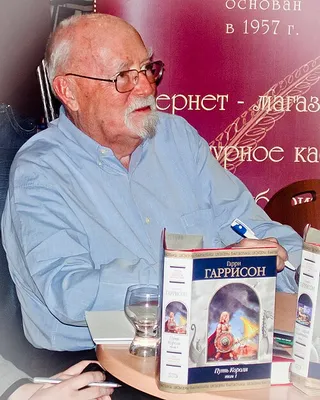
Harry Harrison was an influential American science fiction author known for adventure, satire, and his advocacy for Esperanto.
Harry Harrison, born Henry Maxwell Dempsey in 1925, was an American author celebrated for his science fiction works, particularly the "Stainless Steel Rat" series and the novel "Make Room! Make Room!," which inspired the film "Soylent Green." Initially starting as an illustrator for EC Comics, Harrison transitioned to writing, creating humorous, satirical, and action-packed adventures that often carried anti-military and anti-authority themes. He was a prominent figure in the science fiction community, co-founding the Irish Science Fiction Association and collaborating with Brian Aldiss on critical journals and anthologies.
Harrison's career spanned various roles, including writing for comic strips like Flash Gordon and ghostwriting novels. His writing style was characterized by fast-paced narratives, wit, and a sharp intelligence, often parodying traditional space opera tropes while subtly conveying liberal ideals. Beyond his literary contributions, Harrison was a dedicated advocate for the constructed language Esperanto, integrating it into several of his novels and holding leadership positions in Esperanto organizations. He lived in numerous countries throughout his life, including Ireland and the United Kingdom, before his passing in 2012.
Literary Style and Themes
Harry Harrison became widely recognized for his humorous and satirical science fiction. His most popular works, such as the "Stainless Steel Rat" series and "Bill, the Galactic Hero," often parodied classic space opera. These novels were characterized by fast-paced action and humor, but also contained subversive, anti-military, and anti-authority messages. Despite writing in the style of pulp fiction, Harrison infused his work with a liberal conscience and a keen awareness of literary and societal values. His writing also explored serious themes, notably overpopulation and resource consumption in "Make Room! Make Room!" His stories frequently blended adventure, humor, and satire, sometimes with an anti-war sentiment influenced by his own military service.
Advocacy for Esperanto
In his later years, Harry Harrison became a strong proponent of Esperanto, a constructed international language. He claimed to write and speak it with an ease he couldn't achieve in other languages, reportedly learning it out of boredom during his military service. Esperanto frequently appeared in his novels, particularly within the "Stainless Steel Rat" and "Deathworld" series. Harrison was actively involved in Esperanto organizations, serving as honorary president of the Esperanto Association of Ireland and holding honorary memberships in Esperanto-USA and the Universala Esperanto-Asocio.
Career Beginnings and Community Involvement
Before establishing himself as a writer, Harry Harrison began his career in the science fiction field as an illustrator, notably for EC Comics' "Weird Fantasy" and "Weird Science." He also worked with Wally Wood on various comic book projects. After transitioning to writing, Harrison penned short stories, ghostwrote novels, and wrote for syndicated comic strips like "Flash Gordon." He was an active member of the science fiction community, socializing with notable writers at the Hydra Club in New York. Later, he co-founded the Irish Science Fiction Association and, with Brian Aldiss, co-presided over the Birmingham Science Fiction Group, contributing to the field's critical standards through publications like "SF Horizons" and numerous anthologies.
Key Ideas
- Satirical science fiction with anti-military and anti-authority themes
- Adventure stories with underlying social commentary
- Advocacy for the constructed language Esperanto
Notable Quotes
“His books toed the line between science fiction adventure, humor, and satire, often with a strong anti-military bent informed by his time in the U.S. Army Air Forces.”
“a constant peer and great family friend”
“Imagine Pirates of the Caribbean or Raiders of the Lost Ark, and picture them as science-fiction novels. They're rip-roaring adventures, but they're stories with a lot of heart.”
“an extremely popular figure in the SF world, renowned for being amiable, outspoken and endlessly amusing. His quickfire, machine-gun delivery of words was a delight to hear, and a reward to unravel: he was funny and self-aware, he enjoyed reporting the follies of others, he distrusted generals, prime ministers and tax officials with sardonic and cruel wit, and above all he made plain his acute intelligence and astonishing range of moral, ethical and literary sensibilities.”
“In 1965 Harrison and Aldiss published the first issue (of two) of the world's first serious journal of SF criticism, SF Horizons. Together they edited many anthologies of short stories, each one illustrating the major themes of SF, and although not intended as critical apparatus the books were a way of delineating the unique material of the fantastic. As committed internationalists, the two men created World SF, an organization of professionals intended to encourage and enhance the writing of non-anglophone SF.”
Books by Carlos Steel
1 free public domain book · Read online or download