Bengt Ankarloo
The Malleus Maleficarum, a 1486 text by Heinrich Kramer, became a widely used handbook for prosecuting witchcraft, despite theological condemnation.
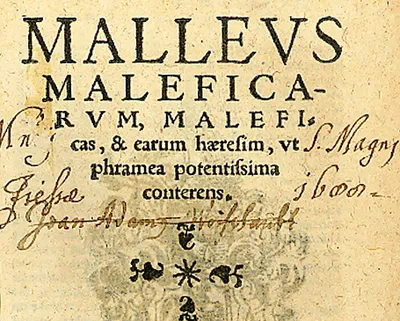
The Malleus Maleficarum, translated as the Hammer of Witches, is a significant treatise on witchcraft first published in 1486 by Heinrich Kramer, a German clergyman. While some view it as a compilation of existing demonological literature, it was presented by Kramer as an official stance of the Catholic Church. However, it faced condemnation from theologians at the University of Cologne for its methods and inconsistencies with established doctrine, although Pope Innocent VIII issued a papal bull, Summis desiderantes affectibus, which lent Kramer some authority. The book classified sorcery as heresy, advocated for torture to extract confessions, and recommended death as the solution to witchcraft, aligning with the severe punishments of the era, such as burning at the stake. Despite some internal church opposition and later scholarly debate about Jacob Sprenger's co-authorship, the Malleus gained popularity, particularly with secular courts during the Renaissance, contributing to intensified witchcraft prosecutions in the 16th and 17th centuries.
Origins and Content of the Malleus Maleficarum
Authored by Heinrich Kramer under the Latinized name Henricus Institor, the Malleus Maleficarum, published in 1486, is recognized as a prominent text on witchcraft. The work was presented by Kramer as reflecting the official position of the Catholic Church. However, top theologians at the Faculty of Cologne condemned it for recommending illegal procedures and for contradictions with existing Catholic demonological beliefs. Despite this censure, Pope Innocent VIII provided Kramer with papal approval through the bull Summis desiderantes affectibus, and Kramer continued to hold considerable prestige. The treatise classified sorcery as heresy, a serious offense at the time, and recommended that secular courts handle prosecutions. It suggested the use of torture to obtain confessions and advocated for death as the definitive solution to witchcraft, a punishment often involving burning at the stake for heretics.
Historical Context and Controversies
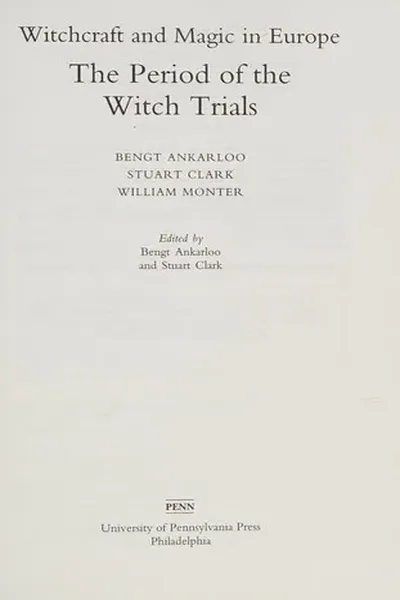
The Malleus Maleficarum emerged in a period where witchcraft was increasingly viewed as a serious threat. Prior to its publication, the Church's stance, as outlined in the Canon Episcopi around 900 AD, considered witchcraft a delusion. However, the acceptance of supernatural intervention, such as ordeals, was present in European Christian culture. Kramer's own prior attempts to prosecute alleged witches in Tyrol were unsuccessful, leading to his dismissal and expulsion, which some scholars, including Diarmaid MacCulloch, suggest motivated the book as an act of self-justification and revenge. Ankarloo and Clark posit that Kramer aimed to solidify his views, counter skepticism, identify witches as predominantly female, and persuade magistrates to adopt his prosecution methods. The papal bull Summis desiderantes affectibus, issued in 1484, granted Kramer and Jacob Sprenger specific authority, though scholarly debate exists regarding Sprenger's actual collaboration, with some evidence suggesting he actively opposed Kramer.
Influence and Legacy
The Malleus Maleficarum became a crucial handbook for secular courts across Renaissance Europe, though it was not utilized by the Inquisition itself, which denied its authority. Its influence contributed to a rise in brutal witchcraft prosecutions during the 16th and 17th centuries. While often misconstrued in modern times as an inquisitorial manual, historians emphasize that secular courts, not the Inquisition, adopted its methods. The book's accessibility in translation in the 1970s led some feminist and Neo-Pagan authors to mistakenly view Kramer as a typical inquisitor and his views as the Church's official stance, overlooking the Inquisition's earlier rejection of his procedures. The belief in the harmful powers of witches began to decline during the Age of Enlightenment, influenced by rationalism and empiricism.
Key Ideas
- Classification of sorcery as heresy
- Advocacy for torture in witch trials
- Recommendation of death penalty for witches
- Critique of skepticism regarding witchcraft
- Identification of women as primary practitioners of witchcraft
Notable Quotes
“Lucifer attacks through these heresies at that time in particular, when the evening of the world declines towards its setting and the evil of men swells up, since he knows in great anger, as John bears witness in the Book of Apocalypse [12:12], that he has little time remaining. Hence, he has also caused a certain unusual heretical perversity to grow up in the land of the Lord – a Heresy, I say, of Sorceresses, since it is to be designated by the particular sex over which he is known to have power. [...] In the midst of these evils, we Inquisitors, Jacobus Sprenger together with the very dear associate [Institoris] delegated by the Apostolic See for the extermination of so destructive a heresy [...] we will bring everything to the desired conclusion. [...] naming the treatise the "Hammer for Sorceresses," we are undertaking the task of compiling the work for an associate [presumably, an ecclesiastic] [...]”
Books by Bengt Ankarloo
2 free public domain books · Read online or download