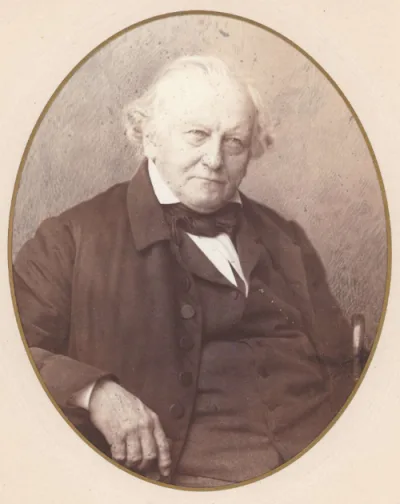
B. C. J. Lievegoed
B. C. J. Lievegoed viewed the four temperaments as most evident in childhood, influencing personality development.
B. C. J. Lievegoed's perspective on the four temperaments, drawing from ancient theories originating with Hippocrates and Galen, suggested these personality types become most apparent during childhood, roughly between the ages of six and fourteen. While these temperaments remain influential, Lievegoed proposed they become less dominant as individuals mature. This view aligns with the principles of Waldorf education and anthroposophy, which find the temperament theory valuable for understanding personality and aiding educators in comprehending children's learning processes.
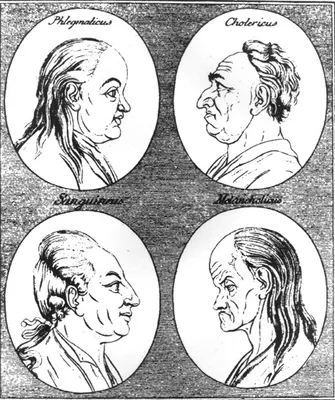
The ancient theory posited four fundamental temperaments—sanguine, choleric, melancholic, and phlegmatic—linked to bodily humors. Each temperament was associated with specific personality traits and traditional elemental correspondences: sanguine with air, choleric with fire, melancholic with earth, and phlegmatic with water. Lievegoed's contribution focused on the developmental manifestation of these types, emphasizing their peak expression in early life.
Lievegoed's Developmental Perspective on Temperaments
B. C. J. Lievegoed proposed that the four classical temperaments—sanguine, choleric, melancholic, and phlegmatic—are most clearly observable during childhood, specifically between the ages of approximately six and fourteen. He suggested that after this developmental stage, while still influential, these temperaments become secondary factors in an individual's overall personality. This perspective integrates ancient humoral theory with a developmental psychological framework, highlighting the formative impact of temperaments during a crucial period of growth.
The Four Temperaments in Ancient and Modern Thought
The theory of four temperaments has ancient roots, originating with Greek physician Hippocrates and further developed by Galen, who linked personality types to the balance of four bodily humors: blood, yellow bile, black bile, and phlegm. Each humor was associated with specific traits and an element: sanguine (air), choleric (fire), melancholic (earth), and phlegmatic (water). While modern medical science has moved beyond this humoral model, the concepts have persisted. Figures like Immanuel Kant, Alfred Adler, and C.G. Jung, among others, explored and adapted these ideas. More recently, movements like Waldorf education and anthroposophy utilize the temperament theory as a tool for pedagogical understanding, believing it offers insights into how children learn and develop.
Key Ideas
- The four temperaments (sanguine, choleric, melancholic, phlegmatic) are most clearly manifested in childhood (ages 6-14).
- Temperaments, though influential, become subordinate to other personality factors in adulthood.
- Temperament theory is valuable for understanding personality development, particularly in educational contexts (as used in Waldorf education and anthroposophy).
Books by B. C. J. Lievegoed
0 free public domain books · Read online or download