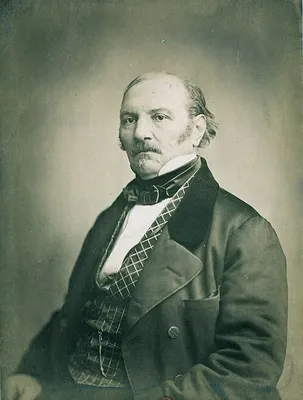
Allan Kardec, a French educator, founded Spiritism by codifying messages purportedly from spirits.
Hippolyte Léon Denizard Rivail, writing as Allan Kardec, was a French educator and writer who became the founder of Spiritism. Born in Lyon in 1804, Rivail had a broad education, excelling in philosophy and sciences, and was proficient in several languages. He was influenced by the educational theories of Johann Heinrich Pestalozzi and was involved in scholarly societies. His early career included teaching, educational writing, and even establishing a commercial bank.
Rivail's interest in the spiritual realm intensified around 1855 after witnessing phenomena attributed to spirits, initially exploring explanations like animal magnetism. However, after his own investigations into mediumship and psychic phenomena, he concluded that these communications were originating from spirits. He meticulously compiled and analyzed responses from multiple mediums, developing a philosophy he termed Spiritism. This philosophy, defined as a science concerning the nature, origin, and destiny of spirits and their relationship with the physical world, was systematically presented in a series of books known as the Spiritist Codification, beginning with 'The Spirits' Book' in 1857. Kardec continued to publish and promote Spiritism until his death in 1869.
Founding of Spiritism
Allan Kardec, born Hippolyte Léon Denizard Rivail, became deeply interested in psychic phenomena after encountering mediums and séances in the mid-19th century. Initially exploring scientific explanations such as animal magnetism, he eventually concluded that the communications observed were genuinely from spirits. He developed a rigorous method of investigation, posing questions to multiple mediums and documenting their consistent responses. This process led him to formulate the core tenets of Spiritism, which he defined as a scientific study of the nature, origin, and destiny of spirits, as well as their interactions with the material world. His work aimed to provide a rational framework for understanding spiritual realities and the purpose of human existence.
Methodology and Codification
Kardec's approach to understanding spirit communications involved extensive research and documentation. He compiled over a thousand questions addressing the nature of spirits, the afterlife, and the purpose of earthly life. These questions were posed to ten different mediums, whose responses were then systematically analyzed for consistency. Kardec noted specific indicators, such as mediums providing information unknown to themselves or others, demonstrating skills beyond their own capabilities (like xenoglossy), and accurately reflecting the personalities of deceased individuals. He synthesized these consistent messages into a cohesive philosophy, which he published in a series of foundational texts known as the Spiritist Codification. This extensive body of work aimed to systematically present his findings and establish Spiritism as a comprehensive doctrine.
Educational and Scholarly Background
Before his work with Spiritism, Rivail was a respected educator and writer. He was a student and colleague of Johann Heinrich Pestalozzi, contributing significantly to the advancement of pedagogical methods in France and Germany. He held advanced degrees, was fluent in multiple languages, and was a member of numerous scholarly societies, demonstrating a strong foundation in science, philosophy, and education. His early career involved organizing free educational courses for the underprivileged and writing extensively on educational reform. This background provided him with a structured, analytical approach that he later applied to his investigations into spiritual phenomena.
Key Ideas
- Spiritism: A science studying the nature, origin, and destiny of spirits and their relation to the corporeal world.
- Mediumship: The ability to communicate with spirits, analyzed through rigorous investigation and documentation.
- Spiritist Codification: A series of foundational books that systematically present the principles of Spiritism.
- Pestalozzian Pedagogy: Influence on educational methods, emphasizing practical and theoretical learning.
Books by
4 free public domain books · Read online or download