Alfred D. Holcombe, Suzanne M. Holcombe
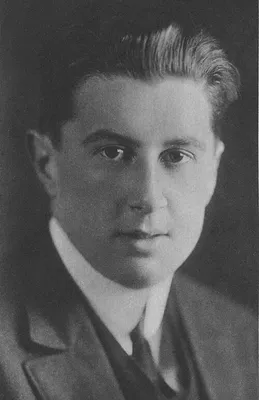
R. Norris Williams was a prominent American tennis player who survived the Titanic disaster and later achieved international acclaim.
Richard "Dick" Norris Williams II was a distinguished American tennis player, born in Geneva, Switzerland, to American parents. He achieved significant success in the sport, winning the U.S. National Tennis Championships in men's singles twice, in 1914 and 1916. He was recognized as the U.S. No. 1 player in 1916 and ranked world No. 2 in 1914. His career also included victories in numerous other tournaments, including the Swiss Championship and intercollegiate titles at Harvard. Williams was also a member of victorious U.S. Davis Cup teams and won a gold medal in mixed doubles at the 1924 Olympics.
Beyond his athletic achievements, Williams was a survivor of the RMS Titanic disaster in 1912, an experience that profoundly impacted him. He also served in the U.S. Army during World War I, earning military honors. After his tennis career, he became an investment banker in Philadelphia and served as president of the Historical Society of Pennsylvania. Williams was inducted into the International Tennis Hall of Fame in 1957. He passed away in 1968 at the age of 77.
Tennis Career Highlights
R. Norris Williams II established himself as a formidable force in the world of tennis. His early success began with winning the Swiss Championship in 1911, followed by his enrollment at Harvard University, where he secured intercollegiate singles titles in 1913 and 1915, and doubles titles in 1914 and 1915. He is perhaps best remembered for his two U.S. National Championships singles victories, triumphing in 1914 and 1916. Williams also claimed the U.S. Clay Court Championships in 1912 and 1915, and multiple Pennsylvania Lawn Tennis Championships. His international prowess was further demonstrated by his participation in the victorious U.S. Davis Cup teams of 1925 and 1926, and a gold medal in mixed doubles at the 1924 Olympics. His aggressive playing style, characterized by a daring attack and a focus on hitting winners, made him a thrilling, though sometimes erratic, competitor. He was inducted into the International Tennis Hall of Fame in 1957.
Titanic Survival and Its Aftermath
Williams was a passenger aboard the RMS Titanic during its maiden voyage in April 1912, traveling in first class with his father. He survived the catastrophic sinking after the ship struck an iceberg. During the ordeal, Williams displayed remarkable presence of mind, even breaking down a cabin door to free a trapped passenger. He and his father jumped into the frigid water as the ship went down; tragically, his father perished. Williams managed to reach a collapsible boat and was eventually rescued by the RMS Carpathia. The severe frostbite he sustained to his legs nearly led to amputation, but he opted for a rigorous recovery regimen that allowed him to continue his tennis career. This harrowing experience was later recounted by Williams to author Walter Lord.
Later Life and Military Service
Following his distinguished tennis career and survival of the Titanic disaster, R. Norris Williams II served in the United States Army during World War I, receiving the Croix de Guerre and the Legion of Honor for his service. After the war, he transitioned into a successful career as an investment banker in Philadelphia. Demonstrating a commitment to preserving history, Williams also served as the president of the Historical Society of Pennsylvania. His life, marked by both athletic achievement and significant historical events, concluded with his death from emphysema in Bryn Mawr, Pennsylvania, in 1968.
Notable Quotes
“I saw one of the four great funnels come crashing down on top of him. Just for one instant I stood there transfixed – not because it had only missed me by a few feet … curiously enough not because it had killed my father for whom I had a far more than normal feeling of love and attachment; but there I was transfixed wondering at the enormous size of this funnel, still belching smoke. It seemed to me that two cars could have been driven through it side by side.”
Books by Alfred D. Holcombe, Suzanne M. Holcombe
2 free public domain books · Read online or download