Alexander Whyte
Alexander Whyte was a Scottish divine, Moderator of the Free Church of Scotland, and prolific author on religious and philosophical figures.
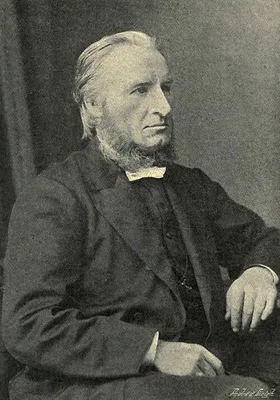
Alexander Whyte (1836–1921) was a prominent Scottish clergyman and educator within the Free Church of Scotland. Born in Kirriemuir, his early life included an apprenticeship as a cobbler and work as a schoolteacher before pursuing divinity studies at the University of Aberdeen and New College, Edinburgh. He entered the ministry, serving in Glasgow and then Edinburgh, eventually becoming Principal and Professor of New Testament Literature at New College. Whyte was a respected educator and a prolific writer, producing numerous works that explored the lives and thought of various religious and philosophical figures, including John Bunyan, Jakob Böhme, and St. Teresa of Avila. He also engaged in ecumenical dialogue, maintaining correspondence with Cardinal Newman. He received the Freedom of the City of Edinburgh in 1909 and retired from his positions in the years leading up to his death in Buckinghamshire, though he was buried in Edinburgh. His family included notable children, such as a journalist and politician, and a feminist author.
Early Life and Education
Born in Kirriemuir, Forfarshire, Alexander Whyte's early life was marked by humble beginnings. His mother, Janet Thomson, was an unmarried woman who gave him his father's surname. After his mother joined the Free Church of Scotland, Whyte began an apprenticeship as a cobbler before transitioning to teaching. His aptitude for learning was recognized by a local minister who taught him Latin and Greek, paving the way for university studies. He pursued divinity at the University of Aberdeen and New College, Edinburgh, graduating in 1866, with some financial support from his father. During his studies, his half-sister came from America to assist him and met his future colleague, Rev. Thomas Macadam.
Ministry and Academic Career
Whyte's ministerial career was primarily with the Free Church of Scotland. He began as a colleague in Glasgow before moving to Edinburgh to serve at Free St. George's, succeeding Dr. Robert Candlish. His significant academic contribution came when he became Principal and professor of New Testament literature at New College, Edinburgh, in 1909. He was an active educator and author, publishing extensively on a wide range of subjects. His literary output included explorations of figures like John Bunyan, St. Teresa of Avila, and Jakob Böhme, demonstrating a broad interest in theological and spiritual writers. Whyte also played a role in ecumenical efforts, notably through his correspondence with Cardinal Newman.
Later Life and Legacy
In his later years, Whyte retired from his pastoral duties at Free St. George's in 1916 and from his role as Principal of New College in 1918. He resided in Buckinghamshire from around 1915 until his death in 1921, although his remains were returned to Edinburgh for burial in Dean Cemetery. His significant contributions were recognized with the Freedom of the City of Edinburgh in 1909. Whyte's intellectual and spiritual legacy is preserved through his extensive writings and his influence on theological education. His family life also produced notable individuals, including a son who became a journalist and politician, and a daughter who was a feminist author and advocate for social reform.
Books by Alexander Whyte
1 free public domain book · Read online or download