A. E. Waite
Arthur Edward Waite was a prolific British author and mystic known for his extensive writings on the occult and Western esotericism, and co-creation of the Rider-Waite Tarot.
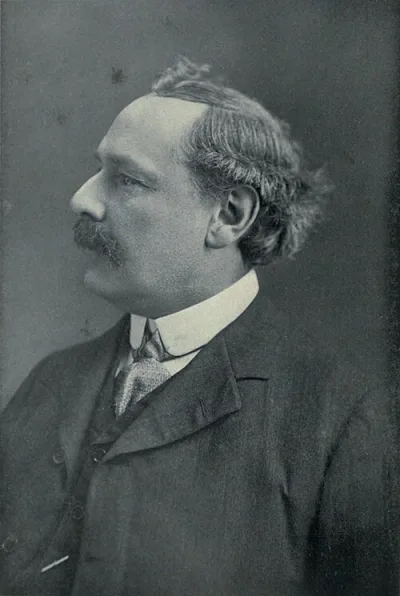
Arthur Edward Waite (1857-1942) was a British poet and scholar who made significant contributions to the study of the occult and Western esotericism. His work is notable for its systematic approach to the history of occultism as a spiritual tradition. Waite was deeply involved in various esoteric and masonic organizations, including the Hermetic Order of the Golden Dawn, the Societas Rosicruciana in Anglia, and Freemasonry, where he pursued higher degrees and sought to understand the "Secret Tradition."
Beyond his organizational affiliations, Waite was a prolific writer, producing numerous texts on diverse subjects such as divination, ceremonial magic, Kabbalism, alchemy, and the Holy Grail. He also ventured into fiction and edited anthologies. His most enduring legacy is arguably the Rider-Waite Tarot deck, co-created with Pamela Colman Smith, which revolutionized tarot by illustrating all 78 cards and continues to be highly influential.
Early Life and Esoteric Awakening
Born in Brooklyn, New York, in 1857, Arthur Edward Waite was raised in England after his father's death at sea. Educated privately and briefly at St. Charles' College, Waite's spiritual journey was influenced by his mother's conversion to Catholicism and his sister's death, which led him to explore psychical research. By age 21, he was a regular visitor to the British Museum Library, delving into various branches of esotericism and in 1881 discovering the writings of Éliphas Lévi, a pivotal influence on his intellectual development.
Involvement in Esoteric Orders
Waite was a prominent figure within several influential esoteric societies. He joined the Hermetic Order of the Golden Dawn in 1891, progressing through its ranks and experiencing periods of withdrawal and rejoining. His involvement extended to Freemasonry, where he became a member in 1901, and the Societas Rosicruciana in Anglia (SRIA) in 1902. In 1903, he founded the Independent and Rectified Order R. R. et A. C. Waite's engagement with Freemasonry was particularly focused on its higher grades and the Rectified Scottish Rite, which he believed embodied the "Secret Tradition."
Literary Contributions and Scholarship
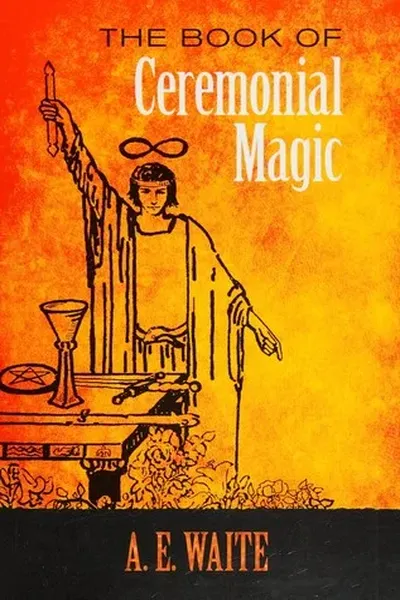
As a writer, Waite produced a substantial body of work covering divination, ceremonial magic, Kabbalism, alchemy, and the Holy Grail. While his writings were well-received in esoteric circles, his lack of formal academic training sometimes limited his historical perspective. He translated and reissued significant mystical works and authored influential texts such as "The Book of Ceremonial Magic" (1911) and "The Holy Kabbalah" (1929). Waite also explored allegorical fiction with novels like "Prince Starbeam" and edited poetry anthologies, demonstrating a broad literary scope.
The Rider-Waite Tarot
Waite's most widely recognized contribution is his collaboration on the Rider-Waite Tarot deck, first published in 1909 with illustrations by Pamela Colman Smith. He authored the accompanying guide, "The Key to the Tarot," later expanded as "The Pictorial Key to the Tarot." This deck was groundbreaking for illustrating all 78 cards, a departure from the common practice of depicting only the Major Arcana. The Rider-Waite Tarot has had a profound and lasting impact on modern tarot practice and interpretation.
Key Ideas
- Systematic study of Western occultism as a spiritual tradition
- Exploration of the "Secret Tradition" in Freemasonry
- Comprehensive writings on diverse esoteric subjects including Kabbalah, alchemy, and ceremonial magic
- Revolutionary approach to Tarot with fully illustrated cards
Notable Quotes
“Waite's name has survived because he was the first to attempt a systematic study of the history of Western occultism—viewed as a spiritual tradition rather than as aspects of protoscience or as the pathology of religion.”
Books by A. E. Waite
0 free public domain books · Read online or download