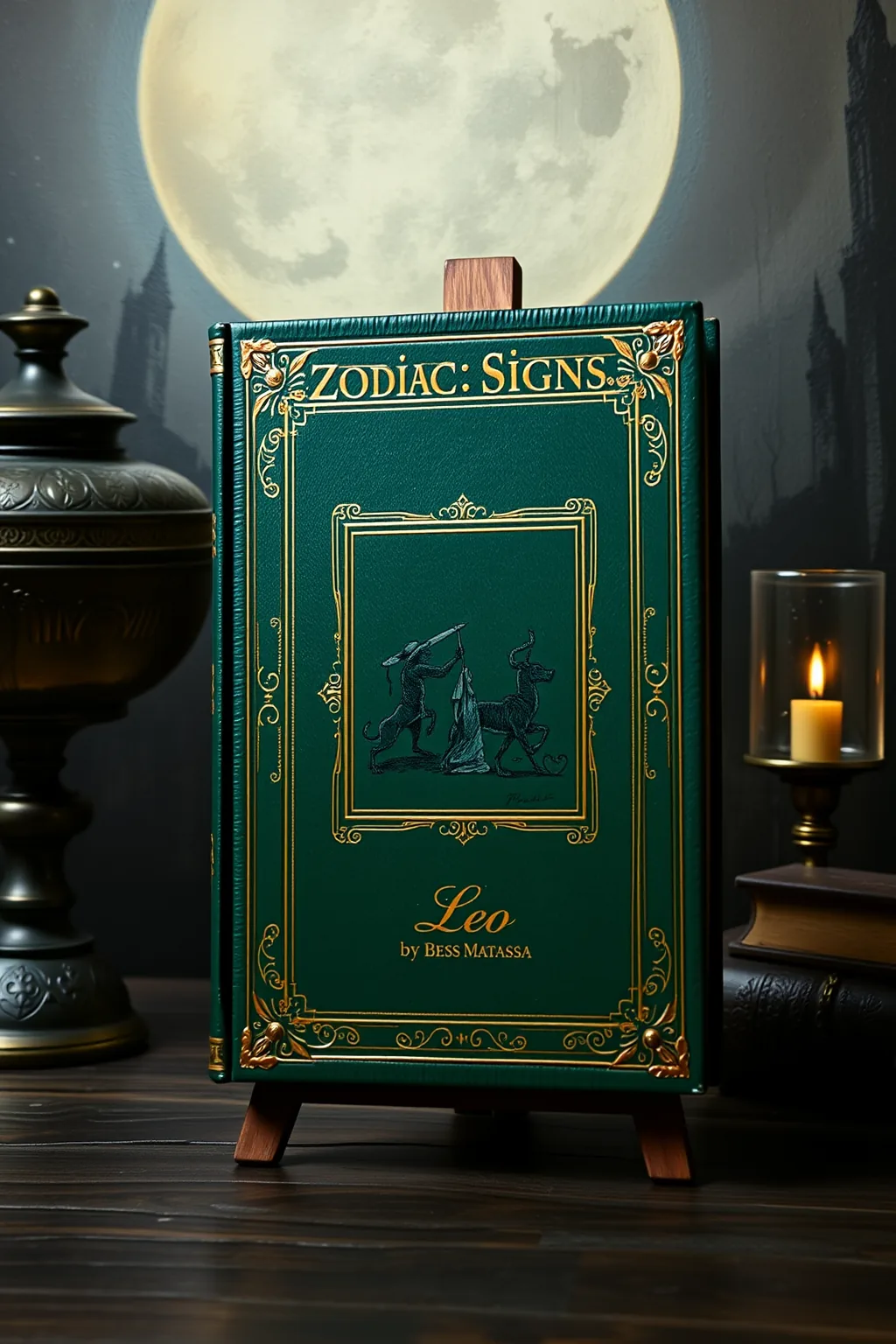
Zodiac Signs: Leo
 74
74

Zodiac Signs: Leo
Bess Matassa’s "Leo: A Contemporary Astrological Guide" offers a refreshingly grounded approach to understanding this fiery sign. Moving beyond generic sun-sign horoscopes, Matassa unpacks the Leo archetype with a focus on personal growth and practical application. The book’s strength lies in its detailed examination of Leo's developmental stages, from childhood needs for validation to adult leadership styles. A particularly insightful passage discusses the "performance" aspect of Leo, framing it not as artifice but as a vital means of authentic self-expression. However, the work occasionally leans towards affirmation rather than critical analysis, which might leave those seeking deeper shadow work wanting more. For instance, the exploration of Leo's potential for ego inflation feels somewhat glossed over. Despite this, Matassa’s practical advice on integrating Leo traits into friendships and romantic partnerships is commendable. It’s a useful, accessible guide for Leos and those who love them.
📝 Description
74
Published February 4, 2020, Leo: A Contemporary Astrological Guide demystifies astrological principles.
Bess Matassa's book focuses on the fifth sign of the zodiac, Leo. It presents astrology not as a predetermined fate, but as a tool for self-awareness and understanding one's place in the cosmos. The book suggests that understanding Leo is key to discovering personal life paths. It is written for people looking for practical astrological advice that can be used in everyday life and for personal growth. The text discusses how a Leo Sun sign affects individuals from childhood to adulthood. It also touches on how to integrate this understanding in educational and professional settings, and in various relationships like friendship, romance, and family. The aim is to give readers useful knowledge based on their astrological makeup.
The book centers on the archetypal energy of Leo, which is often linked to the Sun, bravery, creativity, and leadership. It looks at the 'solar' aspect of Leo, highlighting self-expression and the desire for recognition. Key ideas include the Leo's "inner child" and its need for fun and performance, as well as the "royal" way Leo approaches authority.
This book continues a tradition of astrological interpretation that gained momentum in the 20th century, moving from fatalistic views towards psychological and self-exploratory models. This shift was influenced by figures like Dane Rudhyar and his humanistic astrology. Published in 2020, the book aligns with a contemporary resurgence in interest in esoteric subjects, often amplified by online platforms and accessible digital publishing. It offers modern interpretations of ancient astrological archetypes.
💡 Why Read This Book?
• Understand Leo's "solar" nature and its drive for self-expression, learning how this manifests from childhood needs for play to adult leadership, as detailed in the section on 'the Leo's inner child.' • Gain practical insights into Leo's approach to relationships, particularly as a friend and lover, by exploring the book's focus on "heart" dynamics and the desire for admiration. • Discover how to navigate professional environments as a Leo, understanding the "royal" approach to responsibility and challenges discussed within the work's adult developmental analysis.
⭐ Reader Reviews
Honest opinions from readers who have explored this book.
❓ Frequently Asked Questions
What is the primary symbol associated with the Leo zodiac sign in this book?
The primary symbol for Leo in Bess Matassa's guide is the Sun, representing vitality, ego, and the core of self-expression. The book explores how Leo's "solar" nature influences their need for recognition and creative output.
When was 'Leo: A Contemporary Astrological Guide' by Bess Matassa first published?
The book 'Leo: A Contemporary Astrological Guide' by Bess Matassa was first published on February 4, 2020, as part of a new series of sign-by-sign guides.
How does the book explain Leo's development from child to adult?
The book details Leo's developmental arc by examining how their childhood need for play and admiration evolves into adult leadership qualities and a "royal" approach to responsibility and authority.
What role does the 'heart' play in Leo relationships according to the book?
The book emphasizes the "heart" of Leo relationships, suggesting that their generosity, loyalty, and desire for admiration are central to how they function best as friends and lovers.
Is this book suitable for beginners in astrology?
Yes, the book is designed for practical application and understanding one's astrological sign. Its clear explanations of concepts like the "solar" nature of Leo make it accessible for beginners.
What is the book's perspective on astrology: destiny or tool?
The book presents astrology as a "cosmic calling rather than a fated destiny." It frames astrological signs as vital tools for self-discovery and understanding one's purpose on Earth.
🔮 Key Themes & Symbolism
The Solar Archetype
The book studies the Leo archetype as intrinsically linked to the Sun, the celestial body governing vitality, ego, and self-expression. This "solar" quality drives the Leo's desire for recognition and creative output. Matassa explains how this fundamental energy influences their approach to life, from childhood play to adult leadership, emphasizing a need to shine and be seen.
Childhood Needs and Adult Roles
A significant theme is Leo's developmental journey. The work explores how the "inner child" of Leo requires affirmation and opportunities for performance, which translates into adult roles of leadership and authority. This section examines how the Leo "grows from child to adult," integrating their innate need for admiration into a responsible "royal" presence.
Leo in Relationships
The book focuses on the "heart" of Leo's interpersonal connections, detailing how they function as friends, lovers, and family members. It highlights Leo's inherent generosity, loyalty, and the desire for appreciation within these bonds. Understanding these dynamics is presented as key to fostering fulfilling relationships where Leo can express their warmth and protective nature.
Professional Life and Performance
Leo's aptitude for the spotlight extends to their professional life. The book discusses how Leos navigate "school and work" by embracing challenges and often taking on leadership positions. Their "royal" approach to responsibility and their capacity for performance are explored as assets in career development, aiming for recognition and impact.
💬 Memorable Quotes
Direct passages from the work, attributed to the author.
“Astrology is a vital tool for understanding our place in the world and the universal forces that move us.”
— This statement positions astrology not as a mystical prediction tool, but as a practical framework for self-awareness and cosmic connection, emphasizing its utility in comprehending one's role within larger universal patterns.
“Learn about how your sign grows from child to adult...”
— This practical directive highlights the book's focus on developmental astrology. It promises readers an understanding of how their core Leo traits evolve over a lifetime, offering insights into personal growth stages.
“...fits in at school and at work, and functions best as a friend, lover, parent, and more.”
— This excerpt details the book's application-oriented approach. It assures readers that the astrological insights provided will offer guidance on navigating various social roles and professional environments effectively.
“In these practical and empowering guides to the zodiac signs, contem”
— This snippet emphasizes the actionable and confidence-building nature of the series. It suggests the guides are designed to equip readers with the knowledge to positively influence their lives through astrological understanding.
💡 Key Ideas
Editorial paraphrase of the work's core concepts — not direct quotes.
A cosmic calling rather than a fated destiny, our astrological sign is a key to uncovering our mission here on earth.
This paraphrased concept reframes astrological signs from deterministic pronouncements to empowering guides. It suggests that one's sign reveals a purpose or calling, offering a proactive path towards fulfilling one's earthly mission.
🌙 Esoteric Significance
Tradition
This work belongs to the modern psychological and humanistic branch of Western esotericism, evolving from Hermetic and Kabbalistic roots but emphasizing self-actualization over ritual or divination. It draws from the tradition that views the zodiac not as predictive fate but as a symbolic language for understanding human potential and archetypal energies, aligning with 20th-century developments in depth psychology and spiritual self-help.
Symbolism
The central symbol is the Sun, representing the Leo's core identity, vitality, and the drive for self-expression. The lion itself serves as a potent motif, symbolizing courage, nobility, and leadership, but also potential pride or dominance. The book likely explores these facets, linking them to Leo's "royal" nature and their need for admiration and creative performance.
Modern Relevance
Contemporary thinkers and practitioners in fields like coaching, therapy, and personal development frequently integrate astrological archetypes, including Leo's themes of leadership and authenticity. Authors such as Caroline Casey, who founded the Pachakuti Mesa Lineage, and various online astrological educators continue to explore zodiacal symbolism for self-discovery and cultural commentary, demonstrating the enduring relevance of these archetypes.
👥 Who Should Read This Book
• Individuals identifying as Leo or seeking to understand Leo partners/family: Gain practical advice on leveraging Leo's strengths in relationships, creativity, and personal expression, informed by the "heart" dynamics discussed. • Beginners in astrology: Benefit from clear, accessible explanations of core concepts like the "solar" nature of Leo and its developmental stages from child to adult. • Those interested in psychological astrology: Explore how Leo archetypes manifest in personality, offering insights into self-awareness and personal growth through the lens of contemporary astrological interpretation.
📜 Historical Context
Published in 2020, Bess Matassa's "Leo: A Contemporary Astrological Guide" arrives in an era marked by a resurgence of interest in esoteric studies, amplified by digital platforms. This work builds upon the foundation laid by mid-20th-century astrologers like Dane Rudhyar, who shifted the focus from deterministic fate to psychological self-understanding. Rudhyar's humanistic astrology, particularly his 1970 book "The Astrology of Personality," significantly influenced the move towards astrology as a tool for personal growth. Matassa’s book continues this trajectory, offering accessible interpretations of the Leo archetype for a modern audience. While not facing overt censorship, contemporary astrological works often contend with skepticism from scientific rationalism, positioning themselves as guides for personal meaning-making rather than empirical science. The landscape is diverse, with competing schools of thought ranging from evolutionary astrology to traditional Hellenistic techniques, but Matassa’s contribution aligns with the popular psychological and self-help orientations that dominate contemporary practice.
📔 Journal Prompts
Leo's "solar" drive for recognition: How can I authentically express my creativity and need for admiration this week?
The "inner child" of Leo: What playful or performative activity would nourish my spirit today?
Reading through the "royal" path: How can I approach a challenge at work or in my community with Leo's courage and responsibility?
Leo as a friend/lover: In what ways can I offer generosity and loyalty to someone important to me?
Understanding the "lion's den": How can I face a fear or difficult situation with Leo's inherent bravery?
🗂️ Glossary
Solar Nature
Refers to the core essence and vitality of a person, strongly influenced by their Sun sign. For Leo, this signifies a radiant, life-giving energy focused on self-expression and leadership.
Inner Child
In psychological astrology, this concept represents the part of the psyche that retains the needs, joys, and vulnerabilities of childhood. For Leo, it highlights a need for play, admiration, and creative expression.
Royal Approach
Describes a dignified, responsible, and authoritative manner of handling situations, often associated with Leo. It implies leadership qualities, generosity, and a noble bearing.
Performance
In the context of Leo, this refers to the natural inclination to express oneself outwardly, often in a dramatic or engaging way. It's not necessarily theatrical but a fundamental way of embodying one's identity.
Heart Dynamics
Relates to the emotional core and motivations within relationships. For Leo, it emphasizes qualities like warmth, generosity, loyalty, and the desire for sincere affection and appreciation.
Cosmic Calling
A concept suggesting that one's astrological sign represents a purpose or mission in life, guiding actions and aspirations rather than dictating a fixed fate.
Lion's Den
A metaphorical space representing challenges, difficult situations, or arenas where courage and bravery are required, often associated with Leo's willingness to confront obstacles.