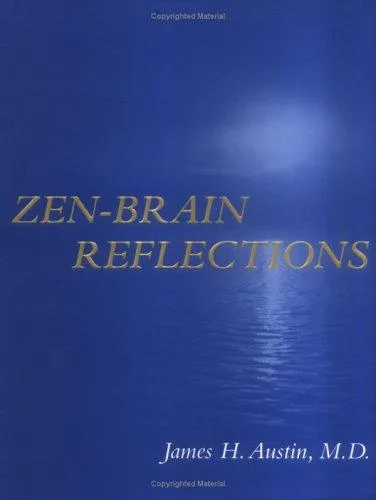
Zen-Brain reflections
 81
81

Zen-Brain reflections
James H. Austin’s Zen-Brain Reflections offers a rare bridge between the clinical detachment of neurology and the embodied wisdom of Zen practice. Austin, a neurologist, avoids the pitfalls of both overly dry scientific reporting and unsubstantiated mystical claims. His detailed examination of brain states during meditation, particularly the concept of "noetic" experiences, is compelling. A notable strength is his willingness to integrate personal accounts with scientific data, particularly when discussing the subtle shifts in perception and cognition. However, the book occasionally feels like a scholarly treatise, which might alienate readers seeking a more direct, experiential guide. The discussion on the neurological correlates of "peak experiences" is particularly illuminating. Ultimately, Zen-Brain Reflections provides a valuable, science-informed perspective for those exploring the depths of contemplative consciousness.
📝 Description
81
In 2010, Zen-Brain Reflections published, connecting neuroscience and Zen meditation.
James H. Austin's 2010 book, Zen-Brain Reflections, examines the relationship between the brain and contemplative practices, particularly Zen Buddhism. Austin, a neurologist, investigates the physiological and psychological changes that dedicated meditation and spiritual inquiry can induce. The work synthesizes scientific observation with the lived experiences of practitioners, presenting a unique view on altered states of consciousness and their potential advantages. Austin approaches his subject with both scientific discipline and an openness to the phenomena he studies.
This book is for anyone interested in the meeting point of mind and brain, especially those drawn to contemplative traditions. It will resonate with neuroscientists curious about meditators' subjective accounts, psychologists studying consciousness, and practitioners of Zen or similar mindfulness disciplines who want to understand the scientific basis of their experiences. Individuals wondering how focused mental training can alter brain function and perception will find this book valuable.
Zen-Brain Reflections enters the conversation between the material science of the brain and the inner world of contemplative traditions. While Zen Buddhism has a long history of self-observation, Austin's work reflects a more recent scholarly effort to map these internal states onto biological processes. It stands as a bridge between the ancient lineage of monastic inquiry and contemporary neurological research, seeking to validate subjective reports through objective measurement.
💡 Why Read This Book?
• Gain an understanding of "noetic" states, learning how the brain may facilitate experiences of profound insight through specific neural processes as detailed in Austin's neurological research. • Explore the scientific basis of "neuroplasticity" in relation to meditation, discovering concrete examples of how sustained practice can alter brain structure and function, as presented in the book's analysis. • Understand the neurological correlates of "peak experiences" described by meditators, moving beyond anecdotal accounts to examine potential physiological underpinnings discussed by Austin.
⭐ Reader Reviews
Honest opinions from readers who have explored this book.
❓ Frequently Asked Questions
What is the primary focus of James H. Austin's "Zen-Brain Reflections"?
The book primarily focuses on the intersection of neuroscience and contemplative practices, particularly Zen Buddhism, exploring how dedicated meditation can lead to observable changes in brain function and subjective experience.
Who is James H. Austin, and what is his background?
James H. Austin is a neurologist and author. His background in medical science provides a unique lens through which he examines the neurological effects of meditation and spiritual experiences.
When was "Zen-Brain Reflections" first published?
"Zen-Brain Reflections" was first published in 2010, reflecting a growing interest in the scientific study of meditation and consciousness.
Does the book discuss specific meditation techniques?
While the book uses Zen as a primary example, it discusses broader concepts related to focused attention and contemplative states that are applicable to various meditation practices, not just specific Zen techniques.
Is "Zen-Brain Reflections" suitable for beginners in meditation?
The book can be beneficial for beginners seeking a scientific perspective, but its detailed neurological discussions might be more accessible to those with some existing knowledge of meditation or neuroscience.
What does the term "noetic" refer to in the context of this book?
In "Zen-Brain Reflections," "noetic" refers to the quality of profound knowledge or insight that can arise during deep meditative states, often accompanied by a sense of certainty and spiritual significance.
🔮 Key Themes & Symbolism
Neuroplasticity and Meditation
The book extensively explores how consistent meditative practice, particularly Zen, can induce "neuroplasticity" – the brain's ability to reorganize itself by forming new neural connections. Austin presents scientific findings that suggest meditation can lead to structural and functional changes in brain regions associated with attention, emotional regulation, and self-awareness. This theme highlights how mental discipline can actively reshape the physical brain, moving beyond theoretical concepts to observable neurological phenomena documented in studies.
Noetic Experiences
A central concept is the exploration of "noetic" experiences – states of consciousness characterized by a profound sense of direct knowing or insight, often accompanied by spiritual or mystical feelings. Austin examines the neurological correlates that might underlie these subjective reports, drawing parallels between descriptions from Zen practitioners and findings in neurological research on altered states. This theme bridges the gap between subjective spiritual experiences and their potential biological basis within the brain's intricate network.
Peak Experiences and Consciousness
Austin explores the phenomenon of "peak experiences," moments of intense joy, insight, or spiritual transcendence that can occur during deep meditation. The work investigates the neurological signatures that may accompany these powerful states, analyzing how the brain's activity patterns might shift to produce such profound subjective realities. This theme offers a scientific framework for understanding the heightened states of awareness reported across various contemplative traditions.
The Mind-Brain Connection
Fundamentally, , "Zen-Brain Reflections" investigates the intricate connection between the mind and the brain. Austin uses his expertise as a neurologist to clarify the biological mechanisms that might underpin spiritual awareness and contemplative insights. The book emphasizes that subjective mental states are not separate from physical brain processes but are deeply interwoven, offering a scientifically grounded perspective on consciousness itself.
💬 Memorable Quotes
Direct passages from the work, attributed to the author.
“The brain is not a fixed entity but a dynamic organ capable of change.”
— This highlights the principle of neuroplasticity, suggesting that through practices like meditation, individuals can actively influence and reshape their own neural architecture over time.
“Noetic states offer a sense of direct knowing, bypassing ordinary rational processes.”
— This points to the concept of 'noetic' experiences, where clear insights or truths are perceived directly, often described as a form of intuitive understanding that feels deeply certain.
“Meditation can facilitate experiences that feel profoundly meaningful and real.”
— This speaks to the power of contemplative practices to induce 'peak experiences' or altered states of consciousness that are deeply impactful and perceived as highly significant by the individual.
“The study of consciousness requires attention to both objective data and subjective reports.”
— Austin emphasizes the necessity of integrating scientific measurement with the first-person accounts of those undergoing contemplative experiences to gain a holistic understanding of the mind.
“Consistent mental discipline can lead to lasting transformations in perception.”
— This reflects the idea that sustained practice, like that found in Zen, can result in enduring changes in how one perceives the world and one's place within it, supported by neurological shifts.
🌙 Esoteric Significance
Tradition
While not strictly belonging to a single esoteric lineage, "Zen-Brain Reflections" engages with the contemplative and philosophical dimensions of Zen Buddhism, a tradition with deep roots in Eastern spirituality. It bridges this tradition with Western scientific inquiry, particularly neurology. The work aligns with the modern esoteric interest in finding empirical validation or scientific parallels for traditionally mystical or spiritual states of consciousness, moving beyond purely philosophical or faith-based interpretations.
Symbolism
The book doesn't focus on traditional esoteric symbols but uses scientific concepts as its symbolic language. For instance, "neuroplasticity" itself becomes a symbol for the potential for personal transformation and the malleability of consciousness. "Noetic states" act as symbolic representations of direct, intuitive knowledge, a concept found across many mystical traditions, here framed within neurological activity. The "brain" itself serves as the ultimate symbol of the locus of consciousness and experience.
Modern Relevance
Contemporary thinkers and practitioners in fields like mindfulness-based stress reduction (MBSR), positive psychology, and even secularized forms of Buddhism draw upon the kind of research Austin's work represents. Neuroscientists continue to explore meditation's impact on well-being and cognition. The book remains relevant for those seeking to understand the scientific underpinnings of practices aimed at enhancing mental clarity, emotional resilience, and self-awareness through contemplative means.
👥 Who Should Read This Book
• Neuroscience students and researchers interested in the objective study of consciousness and altered states of awareness induced by meditation. • Practitioners of Zen Buddhism and other mindfulness disciplines seeking to understand the potential neurological correlates and impacts of their practice. • Philosophers and psychologists investigating the nature of subjective experience, peak moments, and the mind-brain relationship from a scientific perspective.
📜 Historical Context
Published in 2010, James H. Austin's "Zen-Brain Reflections" arrived during a period of burgeoning scientific engagement with contemplative practices. The late 20th and early 21st centuries witnessed a growing number of neuroscientists, like Richard Davidson at the University of Wisconsin-Madison, investigating the brain's response to meditation. Austin's work contributed to this field by attempting to bridge the gap between clinical neurology and the subjective reports of Zen practitioners. While earlier figures like Aldous Huxley had explored consciousness through various lenses, Austin’s approach was distinctly grounded in contemporary neuroscience. The reception of such work was generally positive within academic circles interested in consciousness studies, though some traditionalists remained skeptical of reducing spiritual experiences to neurobiological processes. This era marked a significant shift from earlier philosophical discussions to empirical research on the mind-body connection.
📔 Journal Prompts
Noetic experiences and their potential neurological basis.
The brain's capacity for change through dedicated practice.
Manifestations of peak experiences in contemplative states.
The observable effects of focused attention on neural pathways.
Personal reflections on altered states of consciousness.
🗂️ Glossary
Neuroplasticity
The brain's ability to reorganize itself by forming new neural connections throughout life. In the context of the book, it refers to how meditation can physically alter brain structure and function.
Noetic Experience
A subjective state characterized by a sense of profound knowledge, insight, or spiritual certainty that feels directly perceived, often bypassing conventional rational thought processes.
Peak Experience
A term coined by psychologist Abraham Maslow, referring to moments of intense happiness, fulfillment, and spiritual ecstasy, often experienced during intense concentration or altered states of consciousness.
Contemplative Practice
Mental training that involves focusing attention and awareness to achieve a mentally clear and emotionally calm and stable state. Zen Buddhism is a primary example discussed.
Neurological Correlates
The specific patterns of brain activity or structure associated with a particular mental state, experience, or cognitive function.
Altered State of Consciousness
Any state of awareness that deviates from normal waking consciousness, often characterized by changes in perception, thought, emotion, and sense of self, as can occur during deep meditation.
Subjective Report
An account of an individual's personal experiences, feelings, and perceptions, as opposed to objective, externally verifiable data.
🔮 Readers Also Liked
Browse all →









More by James H. Austin
All books →





More Free Spiritual Development Books
View all →