Why Rat Comes First
 78
78

Why Rat Comes First
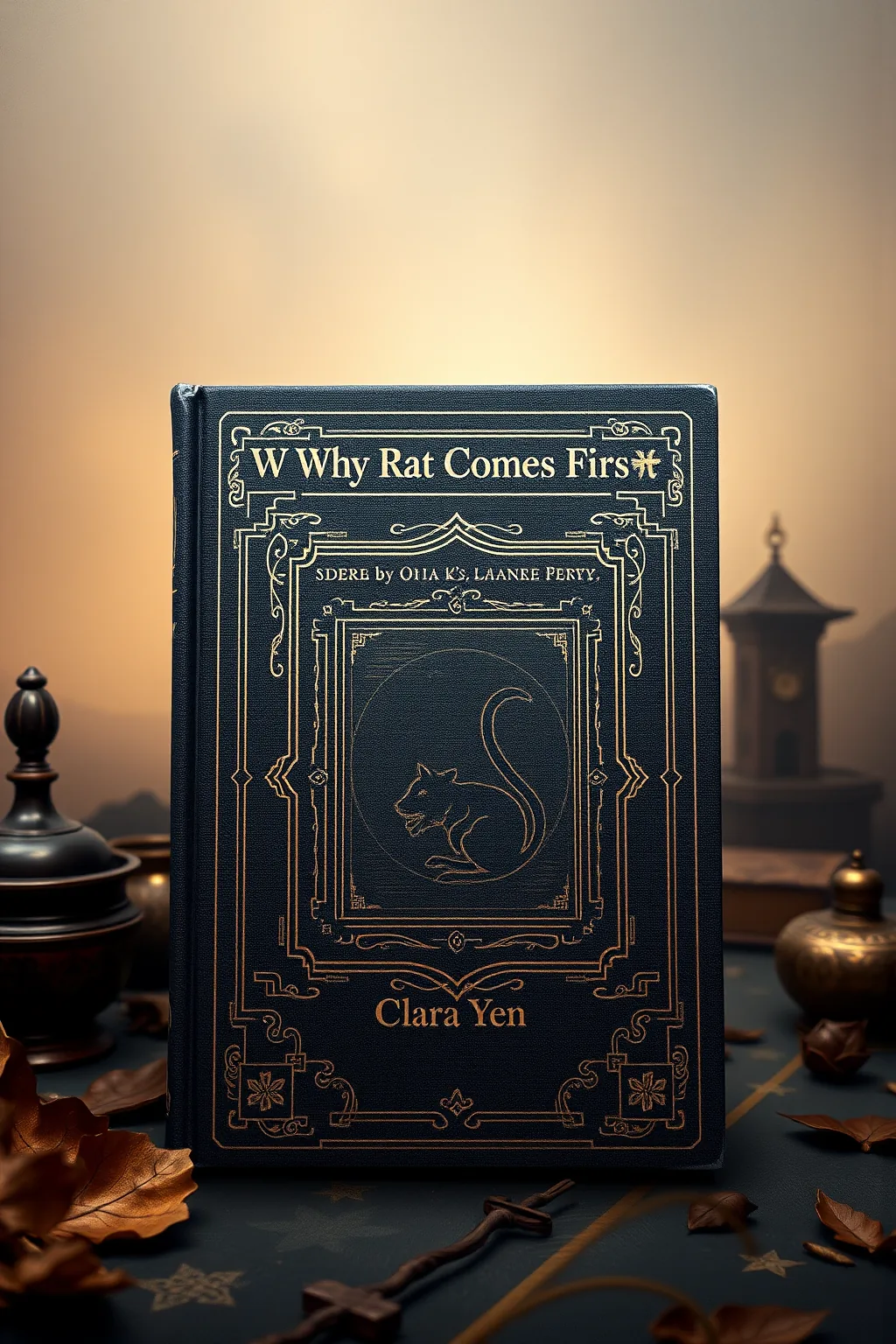
Clara Yen’s *Why Rat Comes First* is a curious artifact from the early 1990s esoteric scene, offering a dense, symbolic exploration of cyclical order. The book’s strength lies in its unwavering commitment to its unique conceptual framework, particularly its unique interpretation of the 'Rat' as a primordial initiator. This focus provides a specific lens through which to view cosmic sequences, moving beyond more common Western astrological or mythological starting points. However, the book’s primary limitation is its profound insularity. Yen assumes a level of prior esoteric knowledge that may leave many readers adrift. The prose, while deliberate, can feel overly academic and lacking in the visceral connection often sought in mystical texts. A particularly striking passage discusses the inherent paradox of the first position, which is both a beginning and a reflection of the entire cycle it initiates. This intellectual density is both its triumph and its potential downfall.
Ultimately, *Why Rat Comes First* is a text for dedicated initiates, not casual explorers.
📝 Description
78
Clara Yen's 1992 text, Why Rat Comes First, transmits occult teachings directly.
Clara Yen's *Why Rat Comes First*, published in 1992, is an occult philosophy text. It does not aim to be a historical survey but rather a direct channel for specific mystical doctrines. The book guides readers through a sequence of ideas, frequently using allegorical stories and symbolic meanings. Its complex subject matter requires careful study, offering a distinct view of cosmic order and humanity's place within it. The writing is dense and depends on a shared understanding of symbolic language, making it a difficult but rewarding book for those familiar with its specific vocabulary.
This work is for dedicated students of esoteric philosophy already versed in basic mystical principles, not for casual newcomers. Readers wishing to deepen their grasp of symbolic systems and cosmological structures will find material for thought. Those interested in the foundations of certain Eastern-influenced mystical schools, especially those concerned with cyclical time and animal symbolism, will find pertinent discussions here. It appeals to readers who value texts demanding sustained intellectual engagement and yielding layered meanings over simple summaries.
Published in 1992, *Why Rat Comes First* appeared when Eastern philosophies and esoteric traditions saw a rise in interest within Western counter-culture and academic spheres. The early 1990s featured many translated texts and original works on various spiritual paths, often overlapping with New Age ideas. Yen's book shares a tradition of speculative cosmology and symbolic interpretation with earlier movements like the late 19th century Theosophical Society, though it is not directly affiliated.
💡 Why Read This Book?
• Gain insight into a specific calendrical cosmology by understanding the symbolic role of the 'Rat' as the primordial initiator, a concept distinct from common Western zodiacal interpretations. • Explore the esoteric principle of inherent nature and destiny tied to one's position within a cyclical cosmic order, as detailed in the book's unique symbolic language. • Contemplate the philosophical implications of beginnings and sequences through Yen's dense prose, offering a challenging yet rewarding engagement with a specific esoteric tradition from 1992.
⭐ Reader Reviews
Honest opinions from readers who have explored this book.
❓ Frequently Asked Questions
What is the primary symbolic meaning of the 'Rat' in Clara Yen's book?
In *Why Rat Comes First*, the 'Rat' symbolizes the primordial initiator or the starting point within a specific esoteric cosmological or calendrical system, representing the genesis of a cycle.
When was *Why Rat Comes First* originally published?
Clara Yen's *Why Rat Comes First* was first published in 1992.
Is *Why Rat Comes First* an introductory text to esoteric studies?
No, the book is not considered an introductory text. It assumes a foundational understanding of esoteric principles and symbolic language, making it more suitable for advanced students.
What kind of symbolic systems does the book engage with?
The book engages with symbolic systems related to cyclical time, cosmic order, and the inherent qualities associated with different positions within a sequence, particularly through animal symbolism.
What makes the book's approach to sequences unique?
Its uniqueness stems from its specific, non-Western interpretation of the 'Rat' as the first element and its detailed exploration of the symbolic functions and interrelationships of subsequent positions in its described order.
What is the author's background or affiliation?
Information regarding Clara Yen's specific esoteric affiliations or background is not prominently detailed in the initial publication, positioning the work as a focused transmission of its core ideas.
🔮 Key Themes & Symbolism
Primordial Initiation
The concept of the 'Rat' as the primary initiator is central. This isn't merely about the first in a line, but about the essential energetic spark that begins a cycle. The book explores how this initial force shapes all subsequent developments, not deterministically, but by setting the fundamental tone and potential. It suggests that understanding the nature of this genesis is key to comprehending the entire unfolding process. This theme challenges typical linear thinking, proposing a cyclical and symbolically driven origin point that influences the entire cosmic or personal journey.
Cyclical Order and Sequence
A significant portion of the text is dedicated to mapping out a specific order within a cyclical framework. This order is not arbitrary but governed by esoteric principles that dictate the function and relationship of each element. Yen explores how each position, from the first 'Rat' to its successors, holds a unique significance and contributes to the overall harmony. The book encourages readers to see existence not as a straight line, but as an intricate, repeating pattern where understanding one's place within the cycle offers useful insights into universal mechanics and personal destiny.
Symbolic Representation
The book functions through a rich symbolic language, where concepts are often conveyed through allegory and metaphor rather than direct explanation. Animal imagery, particularly the titular 'Rat,' serves as a potent symbol for foundational principles. The text posits that these symbols are not mere decorations but are fundamental keys to unlocking deeper truths about the universe and consciousness. Readers are invited to decipher these symbols to grasp the underlying esoteric architecture, moving beyond the literal to perceive the energetic and spiritual realities the symbols represent.
Inherent Nature and Destiny
Yen's work posits that one's position within the established cosmic or calendrical sequence inherently defines certain characteristics and potentials. This is not presented as a rigid, unchangeable fate, but as a blueprint of innate tendencies and lessons to be learned. Understanding this inherent nature, as dictated by one's symbolic placement, is presented as a path to greater self-awareness and alignment with universal flows. The book suggests that by recognizing these defining principles, individuals can better navigate their path and fulfill their unique role within the grander scheme.
💬 Memorable Quotes
Direct passages from the work, attributed to the author.
“The Rat, in its primal position, sets the cadence for all that follows.”
— This statement captures the core idea that the beginning of any cycle, represented by the Rat, is not merely a starting point but an influential force that dictates the rhythm and nature of everything that unfolds subsequently.
“Sequence is not chaos, but a deliberate unfolding of inherent qualities.”
— This highlights the book's perspective that the order presented is divinely or cosmically ordained, with each element possessing a specific purpose and characteristic that emerges naturally within its designated place in the sequence.
“To understand the end, one must first comprehend the genesis.”
— This aphorism emphasizes the book's focus on origins and beginnings. It suggests that true comprehension of any process or outcome is rooted in a deep understanding of its initial spark and foundational principles.
“Each position within the cycle carries its own sacred duty and wisdom.”
— This interpretation underscores the idea that no position in the described sequence is inherently superior or inferior; each holds a vital and unique function within the cosmic order, contributing to the whole.
“The initial spark defines the potential, not the predetermined path.”
— This suggests that while the beginning (the Rat) sets the stage and defines inherent possibilities, it does not rigidly dictate every step. It leaves room for agency and the unfolding of individual experience within the established framework.
🌙 Esoteric Significance
Tradition
The work appears to draw from traditions that emphasize cyclical time and animal symbolism as foundational to cosmology, possibly influenced by certain interpretations of East Asian calendrical systems but presented through a unique, syncretic lens. It doesn't strictly adhere to established Hermetic or Kabbalistic frameworks but shares their interest in symbolic order and universal laws. Its departure lies in its singular focus on a specific, non-Western-derived sequence, treating it as a primary esoteric teaching rather than an element within a broader, established system. The text functions as a self-contained transmission of knowledge.
Symbolism
The 'Rat' is the paramount symbol, representing not just the first creature but the primordial spark of creation, the initiating force that begins a cycle. Its position signifies genesis, potential, and the setting of fundamental energies. Other animal symbols, though not explicitly detailed here, would likely represent successive stages or qualities within this cycle, each embodying specific archetypal roles. The sequence itself becomes a symbolic map of cosmic unfolding, where understanding each element's place reveals the interconnectedness of the whole system.
Modern Relevance
Contemporary practitioners of comparative mythology and esoteric studies might engage with *Why Rat Comes First* to explore alternative or less common symbolic systems. Its unique take on cyclical order could inform modern interpretations of time and sequence in personal development or spiritual practice. Thinkers exploring archetypal psychology or narrative structures might find its allegorical approach valuable for understanding foundational mythopoetic elements. The book offers a distinct perspective for those seeking to move beyond mainstream esoteric frameworks.
👥 Who Should Read This Book
• Students of comparative cosmology and symbolic systems seeking to understand unique calendrical and cyclical frameworks beyond Western traditions. • Esoteric practitioners interested in the symbolic significance of animal archetypes and their role in initiating and structuring cosmic cycles. • Advanced seekers of arcane knowledge who appreciate dense, allegorical texts requiring deep contemplation and interpretation of foundational mystical principles.
📜 Historical Context
Clara Yen's *Why Rat Comes First*, released in 1992, emerged during a period of significant cross-pollination between Western esoteric thought and Eastern philosophies. The early 1990s witnessed a surge in interest in cyclical time, animal symbolism, and cosmological frameworks beyond the Abrahamic traditions, fueled by accessible translations and burgeoning New Age movements. While not directly a product of the late 19th-century Theosophical Society’s grand syntheses, it shares a common ancestor in the exploration of hidden orders and symbolic languages. Unlike the more widely known systems like the Tibetan or Chinese zodiacs, Yen's work presents a unique, specific cosmology. Its dense, allegorical style might have found resonance among practitioners of Hermeticism or those exploring comparative mythology, but its highly specialized nature likely limited its broad reception. Contemporary authors like Joseph Campbell were popularizing mythological structures, but Yen's text offered a more focused, less overtly anthropological take on symbolic sequence.
📔 Journal Prompts
The Rat's role as initiator: what does this primordial spark signify in your own understanding of beginnings?
Reflect on the concept of 'sequence as deliberate unfolding' presented in the text.
How does the symbolism of the Rat as the first element challenge conventional ideas of order?
Consider the idea that 'each position within the cycle carries its own sacred duty'.
Explore the potential implications of understanding one's 'inherent nature' based on symbolic placement.
🗂️ Glossary
Primordial Initiator
The foundational force or entity that begins a cosmic or cyclical process. In *Why Rat Comes First*, this role is assigned to the symbolic representation of the Rat.
Cyclical Order
A framework where events or processes occur in repeating patterns or cycles, as opposed to a linear progression. The book posits a specific esoteric cyclical order.
Sequence
The arrangement of elements or events in a specific order. The book explores a symbolic sequence, likely related to time or cosmic hierarchy.
Inherent Nature
The fundamental characteristics or qualities that are intrinsic to a being or concept, often seen as determined by its origin or position within a system.
Allegorical Narrative
A story or description where characters, events, and settings represent abstract ideas or moral qualities, used to convey deeper symbolic meaning.
Cosmological Framework
A system of beliefs or theories that describe the origin, structure, and evolution of the universe. The book presents a specific esoteric cosmological framework.
Symbolic Language
A system of communication that uses symbols to represent ideas, concepts, or spiritual truths, often employed in esoteric traditions.
🔮 Readers Also Liked
Browse all →








More by Clara Yen
All books →

More Free Astrology & Cosmology Books
View all →