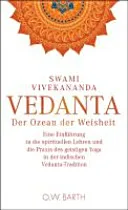
Vedanta
 76
76

Vedanta
Swami Vivekananda’s "Vedanta" offers a compelling distillation of complex Indic thought, presented with a clarity that belies the profundity of its subject. His ability to connect ancient philosophical concepts to the lived experiences of his audience, particularly evident in his discussions on the unity of existence, is remarkable. The text avoids overly academic jargon, making profound ideas accessible without sacrificing intellectual rigor. However, a potential limitation for some readers might be the inherent abstractness of the ultimate concepts, requiring sustained contemplation. The passage detailing the nature of Maya, describing the world as a veil of appearances, is particularly striking, demanding a re-evaluation of perceived reality. Ultimately, Vivekananda's "Vedanta" serves as a powerful invitation to explore the deepest questions of self and cosmos.
📝 Description
76
Swami Vivekananda presented Vedanta not as dogma, but as an inquiry into existence, consciousness, and ultimate reality.
Vivekananda's interpretation of Vedanta, rooted in the Upanishads, seeks to unify diverse spiritual paths. He stressed the innate divinity within each person and the possibility of its realization through various practices. This work is for those interested in the philosophical foundations of Hinduism, beyond mere ritual. It will appeal to readers of comparative religion, Eastern philosophies, and those contemplating the nature of consciousness.
Those seeking a structured yet accessible introduction to Advaita Vedanta, or individuals questioning the self and reality, will find ample material for reflection. Vivekananda's lectures in the late 19th and early 20th centuries were crucial in bringing Vedanta to the West. His 1893 Parliament of Religions address challenged Western spiritual views, positioning Indian thought as a complex philosophical system. This era saw growing Western intellectual interest in Eastern religions, though Vivekananda’s approach was distinctly philosophical.
Vivekananda's work is a significant articulation of Advaita Vedanta, a major school of Hindu philosophy. This tradition, drawing heavily from the Upanishads, posits the non-dual nature of reality, where the individual soul (Atman) is identical to the Absolute (Brahman). It emphasizes the illusory nature of the perceived world (Maya) and the path of knowledge (Jnana Yoga) as a means to liberation (Moksha). His efforts aimed to present this sophisticated philosophical system to a Western audience, bridging cultural and spiritual divides.
💡 Why Read This Book?
• Gain a direct understanding of Brahman and Atman, the core concepts of Advaita Vedanta, allowing you to explore the non-dual nature of reality as presented by Vivekananda. • Grasp the practical application of Maya, the concept of cosmic illusion, and learn how to discern between the real and the ephemeral in your daily life. • Discover the four principal Yogas—Jnana, Bhakti, Karma, and Raja—as outlined by Vivekananda, providing a roadmap for spiritual realization tailored to different temperaments.
⭐ Reader Reviews
Honest opinions from readers who have explored this book.
❓ Frequently Asked Questions
When did Swami Vivekananda first introduce Vedanta to the Western world?
Swami Vivekananda introduced Vedanta to the Western world primarily through his lectures and participation in the Parliament of Religions in Chicago in 1893, marking a significant moment for Indic philosophy abroad.
What is the central tenet of Advaita Vedanta as explained by Vivekananda?
The central tenet of Advaita Vedanta, as explained by Vivekananda, is the non-dualistic principle that the individual soul (Atman) is identical with the ultimate reality (Brahman).
How does Vivekananda explain the concept of Maya?
Vivekananda explains Maya as the cosmic illusion that makes the phenomenal world appear real and distinct, obscuring the underlying unity of Brahman. It is the power that creates multiplicity.
What are the four paths to spiritual realization (Yogas) discussed in Vedanta?
The four paths are Jnana Yoga (the path of knowledge), Bhakti Yoga (the path of devotion), Karma Yoga (the path of selfless action), and Raja Yoga (the path of meditation and mind control).
Is Vedanta a religion or a philosophy?
Vedanta is often described as both a religion and a philosophy. It is the philosophical culmination of the Vedas, offering a worldview and a spiritual path rooted in deep metaphysical inquiry.
What is the goal of Vedanta practice?
The ultimate goal of Vedanta practice is Moksha, liberation from the cycle of birth and death (samsara), achieved through the realization of one's true nature as divine and identical with Brahman.
🔮 Key Themes & Symbolism
The Unity of Existence
At the heart of Vivekananda's Vedanta lies the concept of non-duality, the assertion that all perceived separations are illusory. Brahman, the singular, infinite, and unchanging reality, is the substratum of all that exists. The individual self, Atman, is not separate from Brahman but is, in essence, Brahman itself. This understanding is not merely an intellectual exercise but a realization that dissolves the ego's perceived boundaries and fosters a profound sense of interconnectedness with all beings and the universe.
The Nature of Maya
Vivekananda addresses Maya not as an absolute nothingness, but as the creative power that veils the true nature of reality and projects the universe of multiplicity. It is the cosmic illusion that makes the One appear as many, the Absolute as the relative. Understanding Maya is crucial for spiritual progress, as it involves recognizing the phenomenal world as a relative truth, a superimposition upon the Absolute. This insight allows the aspirant to look beyond appearances and grasp the underlying unity.
Paths to Realization
Recognizing that individuals approach truth from different temperaments, Vivekananda expounds on four principal Yogas as practical methods for achieving self-realization. Jnana Yoga emphasizes intellectual discrimination and the study of scriptures to discern the real from the unreal. Bhakti Yoga channels emotional energy into divine love and surrender. Karma Yoga focuses on selfless action performed without attachment to results. Raja Yoga cultivates mental discipline through meditation, leading to direct experience of the Self.
The Divinity Within
A core part of Vivekananda's message is the inherent divinity of the human soul. He rejected the notion of humans as inherently sinful or weak, instead proclaiming that 'Each soul is potentially divine.' The spiritual journey is thus an unfolding, a process of uncovering the already present divine nature. This perspective empowers individuals, shifting the focus from external salvation to the internal discovery and manifestation of one's true, eternal, and blissful self.
💬 Memorable Quotes
Direct passages from the work, attributed to the author.
“Each soul is potentially divine.”
— This statement captures the optimistic and empowering core of Vedanta as presented by Vivekananda. It asserts that divinity is not something to be acquired but an intrinsic quality of every being, waiting to be recognized and expressed.
“The goal is to realize the oneness of existence.”
— This highlights the ultimate aim of Vedanta philosophy: to transcend the illusion of separation and perceive the fundamental unity of all things in the Absolute Reality, Brahman.
“Do not be afraid of anything. You are the Atman, the pure, the free, the eternal.”
— This serves as a powerful affirmation, encouraging the practitioner to shed fear and recognize their true identity as the unconditioned Self, free from the limitations of the physical body and mind.
“The Vedanta is the oldest philosophy, and the most advanced.”
— This assertion positions Vedanta not merely as an ancient system but as a comprehensive and sophisticated framework for understanding reality that remains relevant and profound today.
“Truth is the one thing that has to be told, and that has to be taught.”
— This emphasizes Vivekananda's commitment to the dissemination of Vedantic truths, viewing the sharing of this profound understanding as a vital mission for human upliftment.
🌙 Esoteric Significance
Tradition
Vedanta, particularly the Advaita school championed by Vivekananda, sits within the broader Vedic and Upanishadic traditions of India. While not typically categorized alongside Western esoteric lineages like Hermeticism or Kabbalah, its exploration of consciousness, the illusory nature of the material world (Maya), and the ultimate identity of the individual soul with the Absolute (Brahman) shares common ground with Gnostic and Neoplatonic ideas concerning emanation and divine unity.
Symbolism
Key symbols in Vedanta include the Om (Aum) mantra, representing the primordial sound and the totality of existence, encompassing past, present, and future. The concept of the lotus flower often symbolizes spiritual unfolding and purity, with the thousand-petaled lotus at the crown of the head representing the Sahasrara chakra, the seat of ultimate consciousness realization. The neti neti ('not this, not that') method, while a conceptual tool, functions symbolically to negate all limited descriptions to arrive at the unconditioned Absolute.
Modern Relevance
Vivekananda's presentation of Vedanta continues to resonate in contemporary New Age spirituality, mindfulness practices, and various forms of yoga and meditation. Thinkers and practitioners exploring consciousness studies, non-dual awareness, and the integration of science and spirituality often draw upon his accessible explanations of Advaita principles. His emphasis on the inherent divinity within and the practical application of spiritual principles in daily life makes his teachings a foundational resource for many seeking holistic self-development.
👥 Who Should Read This Book
• Students of comparative religion and philosophy seeking to understand a foundational text of Indic thought that bridges ancient wisdom with modern sensibilities. • Individuals interested in non-dualistic philosophies and exploring concepts like consciousness, reality, and the self from an Eastern perspective. • Seekers of spiritual growth who are looking for practical paths (Yogas) to self-realization and a deeper understanding of their own inner potential.
📜 Historical Context
Swami Vivekananda's engagement with Vedanta occurred during a period of intense intellectual and spiritual exchange between India and the West in the late 19th century. His important address at the 1893 Parliament of Religions in Chicago brought Indian philosophical traditions, particularly Vedanta, to a global stage. This era saw a burgeoning interest in Eastern thought among Western intellectuals, partly fueled by figures associated with the Theosophical Society, who were also exploring concepts like karma and reincarnation. However, Vivekananda distinguished himself by presenting Vedanta through the lens of Advaita philosophy, emphasizing its rational and universal aspects rather than syncretic or esoteric interpretations. His lectures, delivered between 1893 and his return to India in 1897, were compiled and published, significantly shaping Western perceptions of Indian spirituality and influencing subsequent movements and thinkers in both East and West.
📔 Journal Prompts
Reflect on the concept of Atman and its relationship to Brahman as presented by Vivekananda.
Consider the implications of Maya for your perception of everyday reality.
How might the practice of Karma Yoga influence your daily actions and intentions?
Explore the meaning of 'Each soul is potentially divine' in your personal context.
Meditate on the Om symbol and its representation of the totality of existence.
🗂️ Glossary
Brahman
The ultimate, unchanging, and infinite reality that is the source and substratum of all existence in Hindu philosophy. It is the Absolute, often described as Sat-Chit-Ananda (Being-Consciousness-Bliss).
Atman
The individual soul or self. In Advaita Vedanta, Atman is identical with Brahman, representing the true, eternal essence of a being, distinct from the ego or personality.
Maya
The cosmic illusion or creative power that veils the true nature of reality (Brahman) and projects the phenomenal world of multiplicity and apparent separateness.
Jnana Yoga
The yoga or path of knowledge, emphasizing intellectual discrimination, study, and contemplation to achieve realization of the Self (Atman) and its identity with Brahman.
Bhakti Yoga
The yoga of devotion, characterized by intense love for the Divine, surrender, and worship as a means to spiritual union.
Karma Yoga
The yoga of selfless action, performing duties and actions without attachment to the results, thereby purifying the mind and preventing the accumulation of karmic bonds.
Raja Yoga
The royal path of meditation and mental discipline, involving practices like concentration and introspection to achieve control over the mind and direct experience of the Self.